Johnson & Johnson (J&J), the New Brunswick, New Jersey-based healthcare company, announced a $1 billion investment in a Pennsylvania cell therapy manufacturing facility. The commitment stands as one of the clearest signals yet that the company views domestic production capacity, not just drug discovery, as a strategic differentiator. Competing coverage of J&J's investor story has focused almost entirely on pipeline assets and earnings beats. The manufacturing infrastructure play has received far less scrutiny.
The timing matters. Cell therapies, which involve engineering or modifying a patient's own cells to treat disease, are among the most logistically complex products in modern medicine. Building dedicated, large-scale domestic manufacturing ahead of broad commercial demand is a capital-intensive bet that not every pharmaceutical company has made. J&J is making it.
J&J's $1 Billion Cell Therapy Facility and the Logic of Production Scale
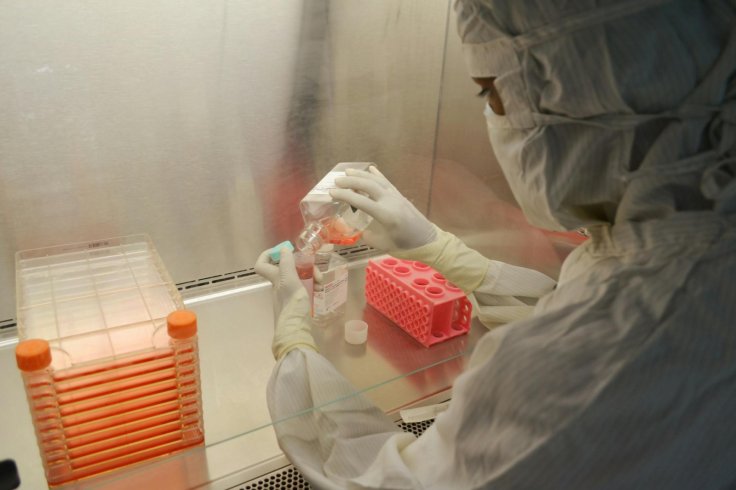
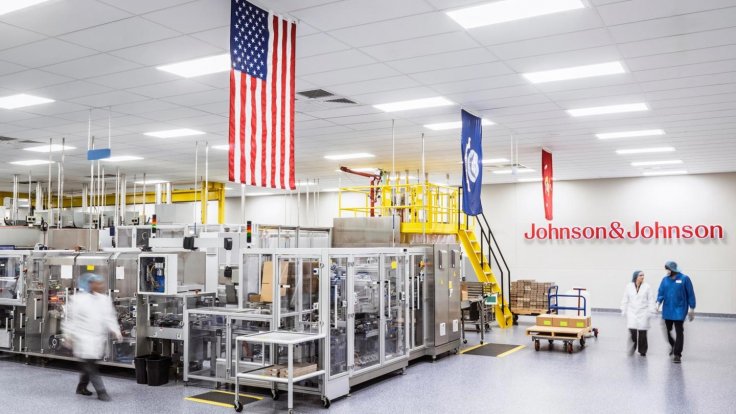
Cell therapy manufacturing is not a generic drug operation. Every batch is patient-specific, cold-chain-dependent, and subject to tightly controlled regulatory conditions. Companies that cannot manufacture at scale reliably face a hard ceiling on commercial revenue, regardless of how strong their clinical data looks. J&J's Pennsylvania investment signals that the company intends to own that constraint rather than be limited by it.
The facility announcement arrives as J&J carries a market capitalization near $584 billion, having completed its transformation into a focused pharmaceutical and medical technology company after spinning off its consumer health division as Kenvue Inc. in 2023. Kenvue, which houses brands such as Tylenol and Band-Aid, announced a chief executive officer transition and strategic review in July 2025, a development that drew its own investor attention. S&P Global, the credit rating agency, affirmed Kenvue's 'A' rating following that announcement, providing some stability to the separated entity's credit profile.
J&J's immunology pipeline adds further texture to the manufacturing investment thesis. The company's pipeline includes ICOTYDE (icotrokinra), a biologic therapy for plaque psoriasis, alongside TREMFYA and the earlier-stage compound JNJ-4804. One-year clinical results for ICOTYDE confirmed lasting skin clearance, with long-term studies showing increasing complete clearance rates over time. For investors, durable clinical data across multiple time points reduces the risk of post-approval attrition, a pattern that has hurt rival immunology franchises.
The $500 million R&D co-funding agreement that J&J entered with Royalty Pharma plc, a Dublin-based royalty acquisition company that funds pharmaceutical development in exchange for future revenue participation, adds a capital-efficient dimension to the immunology push. Rather than bearing the full cost of late-stage development internally, J&J shares financial exposure while retaining commercial rights. That structure preserves balance sheet flexibility for capital-intensive moves like the Pennsylvania facility.
Also Read: Trump NATO Exit Threat Triggers Legal Clash And Alliance Crisis
FDA Approvals and MedTech Momentum Broaden the Investment Case
Beyond the cell therapy and immunology story, J&J's medical technology segment has generated its own newsworthy momentum. The U.S. Food and Drug Administration (FDA) approved J&J's TECNIS PureSee Intraocular Lens in March 2026. The lens, designed for cataract surgery patients, expands J&J's vision care portfolio at a point when the aging U.S. population is driving sustained demand for ophthalmic devices.
Not every data point has been favorable. Two clinical trials evaluating the Impella heart pump, a percutaneous cardiac assist device, showed no patient benefit, according to findings reported at a major cardiology conference. J&J has not publicly disputed the trial results. The data introduces uncertainty into one product line within the MedTech segment, though the broader portfolio carries multiple other approved and pipeline-stage devices.
Wall Street analysts project a consensus earnings-per-share compound annual growth rate (CAGR) of 8.9% for J&J between 2026 and 2030, according to Seeking Alpha. That figure has not been confirmed by a second independent source and should be treated as a single-source projection. J&J reported its fourth-quarter and full-year 2024 results via StockTitan, and the company hosted an investor conference call for first-quarter results in early 2026, maintaining the consistent earnings communication cadence that institutional investors typically require.
What the Manufacturing Bet Means for Long-Term Investors
The strategic logic connecting J&J's individual moves is worth examining in sequence. A $1 billion domestic manufacturing facility for cell therapies builds a physical moat that is slow and expensive for competitors to replicate. A $500 million co-funding deal with Royalty Pharma preserves the capital needed to fund that construction while advancing autoimmune drug development. FDA approvals in vision care extend revenue diversification into MedTech. And durable clinical data from the immunology pipeline reduces the binary risk that often defines biotech-style investment theses.
Jennifer Taubert, J&J's executive vice president and worldwide chairman of pharmaceuticals, has described the company's approach to pipeline investment as focused on first-in-class and best-in-class assets that address unmet medical needs. That framing, drawn from J&J's investor relations materials at investor.jnj.com, reflects a consistent emphasis on differentiation rather than volume.
The Impella trial data serves as a practical counterweight. Two trials failing to demonstrate patient benefit is a meaningful development for any device program, and it illustrates that J&J's MedTech segment is not insulated from clinical setbacks. Investors weighing the Pennsylvania facility and the immunology co-funding against the Impella results are looking at a company that is simultaneously building infrastructure for future growth categories while absorbing near-term setbacks in mature device lines.
Also Read: FDA Approves Lilly's Weight-Loss Pill, Igniting Clash With Novo Nordisk
J&J's market capitalization near $584 billion places it among the largest healthcare companies globally. The combination of earnings growth projections, active deal-making, regulatory approvals, and the Pennsylvania manufacturing commitment gives institutional investors a multi-vector thesis that does not rest on any single pipeline asset. The cell therapy facility, in particular, represents a form of strategic optionality: even if specific drug candidates are delayed or fail, the manufacturing infrastructure positions J&J to deploy capacity across multiple future programs.
Disclaimer: This article was produced with the assistance of artificial intelligence tool but vetted by human editor.


