
Israel announced on Monday that it intercepted a second aerial attack by Yemen, with an alarming, rapidly spreading war that already involves Iran, Lebanon and the Persian Gulf.
On March 30, the Israel Defense Forces (IDF) announced that its air defenses spotted and shot down drones over Israeli airspace early in the morning. The launches were attributed by the military officials to the Yemeni Houthis, who are commonly considered to have an alliance with Iran.
The event follows a preliminary assault on the weekend, which was the direct involvement of the Houthis in the war associated with the U.S and Israeli actions against Iran. The expanding frontline is now extended to the Red Sea to the Persian Gulf, and this is worrying security analysts about the possibility of a new multi-front war.
Houthis join Iran war with attacks on Israel
Ansar Allah (the Houthis) occupies much of northern Yemen, including the capital Sana'a. The group had announced previously that it had fired ballistic missiles on Israeli military targets in retaliation for attacks on Iran and its supporters.
Houthi military spokesperson Yahya Saree issued a video statement indicating that the Houthis attacked what he termed as sensitive Israeli military installations.
The Israeli military said it noticed "incoming projectiles in Yemen, but they were intercepted by the air defense systems when they were near populated areas." No one was injured, and there were no significant damages reported by the officials.
The strikes are an indicator of the first prolonged military engagement of the Houthis in the ongoing war. The war started on Feb. 28, when Israel and the United States organized coordinated airstrikes on Iranian military and nuclear-associated facilities. The next reaction of Iran was the salvo of missiles and drones on Israeli land and U.S. installations in the region.
Iran-proximate armed forces in Lebanon and Iraq have also conducted attacks related to the war, establishing numerous pressure points along the borders of Israel.
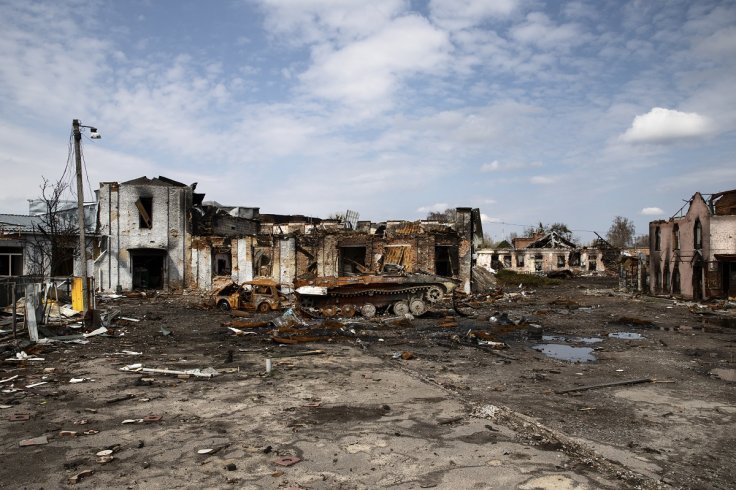
Israeli operations expand across the region
The conflict has been on the increase, with Israel having increased air operations. The Israeli army has stated that they "have made over 140 airstrikes on targets within Iran, destroying missile infrastructure and military facilities" within Tehran and other cities.
Meanwhile, Israel has maintained its activities in the southern part of Lebanon against the militant group Hezbollah, which is also another organization that is supported by Iran. Others, including Danziger, Israeli officials have suggested that they might create a security buffer zone along sections of the Lebanese border.
The United States has added a military presence in the region. According to the U.S. officials, more Marines and special operations units have been stationed in the Middle East bases as Washington evaluates the possibilities of an escalation scenario.
President Donald Trump stated that there is still an open diplomatic channel with Tehran despite military activities. Trump mentioned that he has contacts with Iranian leaders and made remarks that they are speaking to them. "They're very reasonable."
Iran has threatened to retaliate in case of any ground intrusion on its land and has been on the offensive with missile and drone attacks, which are linked to the war.
Risk to shipping routes and energy markets
The activities of the Houthis have strategic repercussions outside Israel. The team is positioned on one of the most significant sea routes in the world.
Yemen borders the Bab al-Mandab Strait, which is a narrow sea connecting the Red Sea with the Gulf of Aden. The route is a strategic route of oil transportation to the Suez Canal and Europe.
During conflicts in the region, Houthi officials have earlier threatened to attack shipping in the region. The same attacks during the previous crises compelled shipping companies to divert ships and increased the cost of energy.
The most recent increase was met with a rapid response from oil markets. Brent crude even peaked to above $115 a barrel as the traders evaluated the threat of interruptions to supply routes in the Middle East.
Public reaction and widening fears
Rising concern about the rate at which the conflict is spreading in the region was evident in online discussions. With the involvement of the Houthis, another armed force is involved in a war that already includes Israel, Iran, U.S forces and other Iran-aligned militias.
The development raises the potential of more fronts opening in the Middle East, especially along strategic route corridors and border areas in and around Israel. After Hamas, Hezbollas, now Houthis, the Iranian proxy groups are surfacing gradually.
Also Read: Iran Releases AI Video Showing Statue of Liberty Under Attack After Rejecting Trump Deal [WATCH]


