Satellite images indicate a hole in the shape of a crescent in the roof of one which was once a primary school. The building in Minab had girls, who were likely to draw flowers and to multiply, before February 28. It is ashes now and the question which every war poses: how did they get into a marking?
The explosion that happened in the middle of the school day in the Shajareh'Tayyebeh Elementary School led to the death of more than 165 individuals, according to the Iranian state media. Most were children. The UN and human rights organizations noted that it was not the right action and the largest death toll of civilians in this war as a result of the attack. The possible cause is U.S. airstrikes which also struck a nearby Revolutionary Guard facility according to associated data of AP, satellite pictures, expert opinions, and an unnamed U.S. official.
Pentagon Secretary of Defense Pete Hegseth informed reporters during a Pentagon press conference that it is under investigation by the military. "I never attack civilian targets, of course," he insisted.
The intent and the result are separated by a long distance and children continue to be caught on either side of the war throughout history. The schoolgirls of Minab are not the first. It is history that they will not be the last.
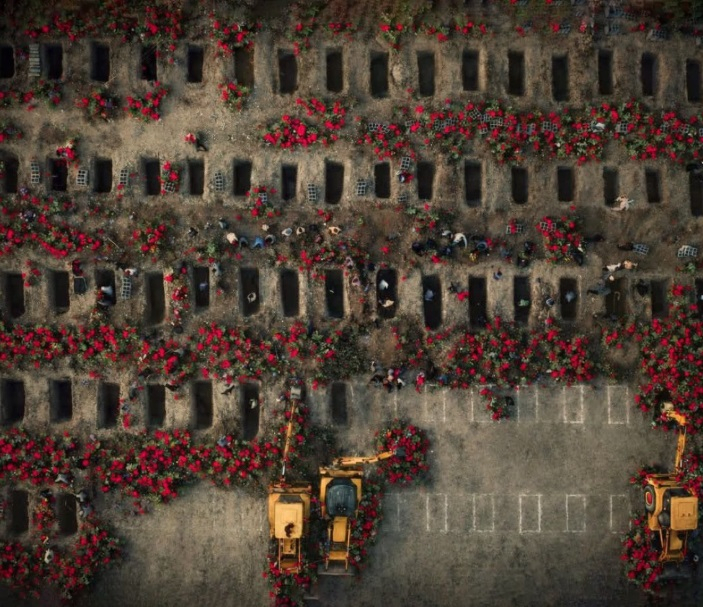
The school was alongside a walled compound in the maps that indicated the Seyyed Al-Shohada Cultural Complex of the Guard. About 150 meters further inland, within that compound, there were the living quarters of the 16th Assef Coastal Missile Group, which was one of the forces that guard the Strait of Hormuz. Farzin Nadimi, a senior fellow at Washington Institute of Near East Policy who has written on the military of Iran, indicated that the school was likely to educate children of personnel of the Guard. Video of new graves in a neighboring cemetery were displayed on Iranian TV after the attack.
Schools are also vulnerable to the proximity of a military target and it is difficult to determine what occurs when a military target is struck. A school is a danger whenever military things are nearby or even contained within it in case of war. In some cases, combatants position themselves near civilians in an assumption that they will be safe under the provisions of war. The information is sometimes outdated, and a former target building has been surreptitiously turned back into a classroom. It happens that the systems that monitor the patterns of life overlook the minute patterns of children coming with the backpacks.
The walled compound is where all the strikes are concentrated, according to Corey, a researcher who analyses fighting zones with satellite pictures. That is one level of block level precision. Most of the strikes are then heading to direct hits to the buildings. Another level of accuracy is that of another level of accuracy. According to him, the point of damage is caused by air-to surface bombs which burst on hitting instead of floating above the building.
Sean Moorhouse, who had served in the British Army as an explosives officer and a veteran of the war, remarked that the apparent damage was comparable to the damage caused by several of the 2,000 pound high explosive warhead hits. He said that it was "not a defective Iranian missile that struck the school but the fact that it was precisely aimed" demonstrates that.
The head of Armament Research Services, N.R. Jenzen-Jones, reported that there were several parallel or very nearly parallel strikes. The reason he raised such a problem with modern war is because of a typical fact in modern war: in case it is known that an American or Israeli attack struck on the school, there can be multiple failures in the targeting cycle. It could be an intelligence failure perhaps very early in its process and that perhaps it wrongly identified the target or failed to revise a targeting list after the use of the building changed.
That is the military analytical language of clinical language. It means something less complicated: a person, somewhere, by using a map and coordinates, did not understand that there were children there, or did not put enough weight on their presence to put the strike off.
The Pentagon itself sticks to regulations regarding the minimization of civilian casualties indicate that an evaluation commences once investigators have determined that the U.S. military could be at fault to some degree. One of the U.S. officials informed the AP that the strike was probably American. CENTCOM spokesperson Capt. Tim Hawkins stated that it would be improper to make any comments, since the incident is still under investigation. White House press secretary Karoline Leavitt informed reporters that she had no news and did not directly respond whether President Trump was content with the speed of the investigation.
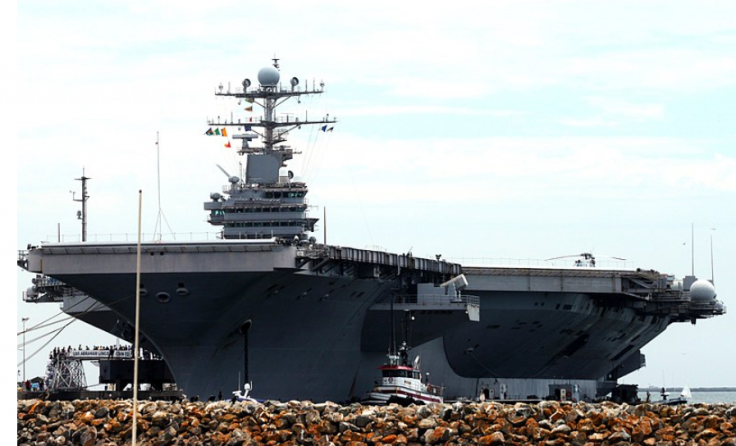
Israel that claimed to have not participated in the strike has directed its attacks towards regions near its borders and no strike has been reported south of Isfahan, which is 800 kilometers away. U.S. has claimed to have hit in the Hormozgan province and also maintains warships in the Arabian Sea such as the USS Abraham Lincoln aircraft carrier within the range of the school.
There is a reason why schools are given distinct boundaries by war laws. Children do not have an opportunity to choose to be close to a military target. They are not able to make judgement about the risk of the location where their parents are employed or the construction of the classroom where they are. They simply attend school, as children do, and occasionally the sky bursts.
What took place in Minab is not something new, and it has taken place elsewhere with varying names. Seven boys were killed in 2007 in an airstrike of a religious school that was believed to be a Taliban staging ground by the U.S. Taliban killed the boys in order to get human shields, the White House spokesman Tony Snow blamed those deaths on Taliban.
In 2017, a school accommodating displaced families was burnt down near Raqqa in Syria. At least 84 civilians including 30 children were killed according to human rights watch. The coalition claimed that it had targeted an ISIS facility; the UN Commission of Inquiry did not find any evidence of such allegation.
There is always a justification. There is always a military logic. There are always dead children.
Elise Baker, a senior staff lawyer at the Atlantic Council, was unequivocal about the legal dimensions: "Strikes can only legally target military objectives and combatants, but the school was a civilian object and the students and teachers were civilians. The school's proximity to Guard facilities and the attendance of children of Guard members at the school does not change that conclusion: It was a civilian object."
The families of Minab have buried their daughters now. The fresh graves are marked, the rubble uncleared. U.N. Human Rights Office spokesperson Ravina Shamdasani spoke to what comes next: "The families of the little girls who were killed are entitled to the truth of how this happened."
That truth may eventually emerge from the Pentagon investigation. It may name an intelligence failure, a targeting error, a tragic mistake. It may explain the sequence of events that led to the crescent-shaped hole in the roof of an elementary school. But it will not answer the question that mothers in Minab will carry for the rest of their lives, the one that has no answer in any language, in any war, in any accounting of acceptable losses.


