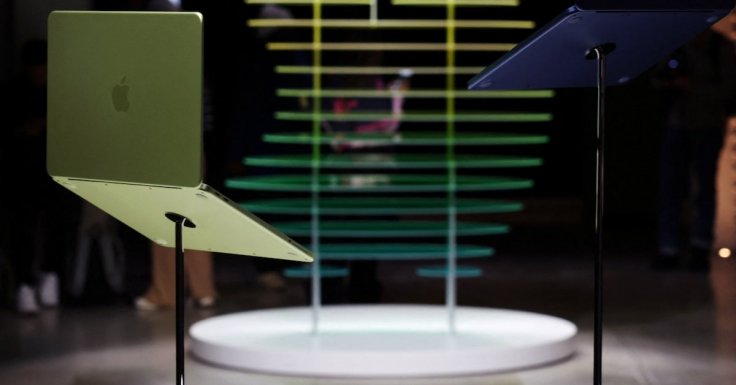
- Apple's MacBook Neo rated most repairable MacBook since 2012.
- iFixit teardown highlights screw-mounted battery replacing glued design.
- Laptop receives repairability score of 6 out of 10.
- Device targets student market competing with low-cost Chromebooks.
Apple's MacBook Neo, the colourful $499 laptop announced last week and aimed squarely at the student market, has earned an unexpected distinction: it is the most repairable MacBook Apple has released since 2012, according to a teardown analysis published Friday by repair specialists iFixit.
The finding is a striking departure for a company long criticised by right-to-repair advocates for gluing components together, soldering parts in place and designing devices that discourage independent servicing. For the MacBook Neo, Apple reversed course on several fronts.
The Battery Is the Big Story
The most significant change, according to iFixit, is the battery. Where previous MacBook batteries were glued into the chassis making replacement a delicate and often damaging operation the Neo's battery sits in a tray secured by 18 screws.
"Screws still beat adhesive every time." - iFixit, MacBook Neo Teardown, March 13, 2026
The new battery arrangement, iFixit said, sent cheers across the iFixit office. The keyboard and camera module are also now swappable without specialist tools, and the device's Repair Assistant software accepts replacement parts without triggering software locks a persistent complaint with recent iPhone and MacBook models.
Score of 6 out of 10 Strong, for Apple
Despite the improvements, iFixit still docked the Neo points for soldered RAM and storage components that cannot be upgraded or replaced after purchase. The device received a repairability score of 6 out of 10.
"That's a strong score" for a MacBook. - iFixit, MacBook Neo Teardown, March 13, 2026
Manufacturers including Dell and Lenovo have previously used iFixit ratings to guide product design. The MacBook Neo's score of 6 compares favourably to recent MacBook Air and MacBook Pro models, which have typically scored between 1 and 4.
Apple's Chromebook Challenger
Apple unveiled the MacBook Neo on March 4, positioning it as a direct competitor to Google's low-cost Chromebook range that dominates the US education market. The device starts at $499 for students and comes in multiple colours a visual departure from Apple's traditionally subdued laptop palette.
Also Read: Apple Launches $599 MacBook Neo Powered by iPhone A18 Pro Chip
The repairability shift aligns with growing pressure from right-to-repair legislation passed in several US states and across the European Union, which now requires consumer electronics to meet minimum standards for replaceability of key components.
Why Earlier MacBooks Were So Hard to Repair?
Initially, Apple laptops were quite user-friendly, you could open them up with just a screwdriver, change the battery, upgrade the RAM or hard disk yourself, almost like fixing something at home without much trouble. But between 2012 and 2016, everything changed. Apple started focusing only on making things extremely thin and light. Repairing them became secondary, the priority was sleek design and less weight.
Many models ended up feeling like solid blocks of aluminium with glass on top and glue holding everything inside. Even iFixit has pointed out this clearly: older Mac laptops had keyboards that you could replace with a simple screwdriver. But now, in the current MacBook Air, you have to disassemble the entire machine just to reach the keyboard, and even then it is attached to a big piece of machined aluminium that also needs to be replaced along with it.
The trouble really began after the early unibody models around 2012, which still had small access panels for battery, RAM, and hard disk upgrades. Then the Retina models came, and the worst was the 2015 12-inch MacBook, iFixit gave it the lowest score possible, 1 out of 10. Everything was glued tightly just to achieve that ultra-thin look. Opening it felt like a big struggle.
Later, the M1, M2, M3, and M4 series from 2020 to 2025 usually scored only 3 to 4 out of 10. For example, the M1 MacBook Pro got 4 out of 10 in 2021, though it was an improvement over the previous glued mess, upgrades were still impossible. The batteries used those stubborn pull-tabs (some models had a partial tray, but it was still difficult), keyboards were riveted to the top case, storage was soldered directly on the board, and those pentalobe screws made entry hard right from the beginning.
Even the latest M4 and M5 Air and Pro models have the same issues: soldered storage and RAM, riveted keyboards, proprietary screws, and battery replacement that is anything but straightforward.
Pre-20212 Models Easier to Repair
If you go back before 2012, to models like the PowerBook G3 Pismo, the old white MacBook, or the iBooks, they were much easier. Batteries came out with simple latches or slide tabs, no glue at all. Keyboards lifted off with one tab or latch. RAM and Wi-Fi cards were behind easy shields or just four Philips screws in some iBooks.
Hard disks had pull tabs, you could slide them out easily. People used to upgrade RAM and storage themselves without any problem; those models are still remembered as some of the most serviceable laptops ever.
Also Read: New Auberon Collaboration Brings Smarter Building Operations to Regional Developers
In simple terms, the older designs treated repair as something normal, take a screwdriver, open a panel, and fix or upgrade. But the thinness obsession turned it into a constant battle against glue, special screws, and soldered components. Doing it yourself or going to an independent repair shop became costly, risky, and often not possible at all.
Now with the new MacBook Neo model, there is a small relief as it uses screws instead of glue in many places and has a much simpler, flatter layout inside. Of course, it still has some typical modern Apple limitations like soldered RAM, but compared to the previous M models, this is definitely the best MacBook in terms of repairability. At last, Apple seems to be thinking a bit more about practical use!


