- CIA reportedly working to arm Kurdish groups against Iran.
- Trump administration discussing support with Kurdish leaders.
- Iranian Kurdish forces may launch operations in western Iran.
- Analysts warn plan could destabilize region further.
The US intelligence agency is reportedly envisioning methods to arm Kurdish soldiers in an attempt to stir an insurrection within Iran as a result of the worsened relations between Washington and Tehran, following the recent air strikes and retaliatory attacks. According to a CNN report citing sources, the Trump administration has been discussing with Iranian opposition groups and Kurdish leaders in Iraq on how they can be supported in terms of military provision.
The attempt to enlist Iranian Kurdish militants to go ahead and stage attacks along the Iran-Iraq borders that may pressurize the security service in Tehran and eventually bring about a broader instability in Iran. The armed Kurdish groups in Iran mainly act in the semi-autonomous Kurdistan region of Iraq, border with Iran. All of these groups mobilize thousands of fighters and have traditionally been in opposition to the Iranian government.
During the course of the ongoing conflict, a number of the organizations have made statements indicating that a military action might be imminent and requesting the Iranian troops to defect. Iran has already reacted with attacks on the position of the Kurds, according to Iranian officials, who claimed that dozens of drones had been deployed to strike Kurdish rebels at the border.
Negotiations between American leaders and the Kurdish delegates seem to have been getting more intense within recent days. Trump called a senior Kurdish official Mustafa Hijri on Tuesday who is the president of Democratic Party of Iranian Kurdistan. The group belongs to the Kurdish groups that were at one time attacked by the Iranian security forces. The Kurdish leader claimed that ground operations are being organized by the opposition forces into the areas of western Iran in the next few days and showed confidence that the current situation has created an opportunity that can be exploited to take on the Iranian government.
The source told CNN that there is a big chance now that the Kurdish militias believed that both the United States and Israel will support them. It would involve collaboration with Kurdish officials in Iraq where the weapons and militants would have to transit through Iraqi Kurdistan before they get to Iranian territory.
Plan is to Seek to Extend Iranian Stretch Strkey Resources
Individuals close to the talks indicated the plan under deliberations would entail Kurdish forces taking on the Iranian security agencies along the border compelling Tehran to reallocate its military resources out of big cities. One source explained it by saying that its goal would be to keep the Iranian forces at bay and allow protests or uprisings in the main Iranian cities without a military response.
A second American official added that Kurdish fighters would aid in instability in the North of Iran and may possibly construct a buffer zone which would limit dangers to Israel. Meanwhile, the Israeli forces have been reported to increase their attacks on the infrastructure of the military in Iran, along the Iraq border, which one source claimed could enable the preparation of routes in the event of ground operation.
An Israeli source informed CNN that those attacks may grow in the days to come as bigger regional military plans. The discussions notwithstanding, the intelligence tests also indicate that the Kurdish groups within Iran, at present, have no resources and the political strength to unseat the government in self-reflections.
According to one of the sources with knowledge about the U.S intelligence analysis, the Kurdish factions would need intensive external assistance in order to create a significant threat to Iranian troops. People involved in the talks also say that some influential Kurdish leaders are seeking political assurances in Washington before they are willing to invest in a mass military operation.
Analysts Warn Regionals at Risk
According to security experts, the proposal is a wider agenda of Washington to destabilize the leadership of Iran in the ongoing conflict. Former Pentagon official and a national security analyst with CNN Alex Plitsas affirmed that the given strategy seems to be aimed at speeding up the internal resistance to the Iranian regime. Plitsas said that the ordinary people of Iran are never armed as a whole, and without the collapse of the security services, they will hardly be able to take power unless someone decides to arm the people.
"I believe that U.S. plays optimism that this will be the same impetus others on the ground in Iran will feel like doing the same. However, other critics of the plan report that the plan may be fraught with risks specifically to the neighboring Iraq, and Kurdish areas that are already burdened with security concerns." he added.
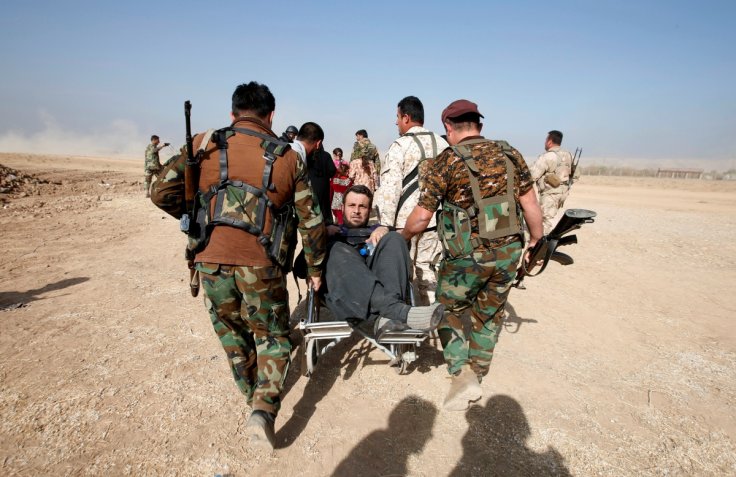
Jen Gavito, the former senior State Department official in charge of Middle East policy, argued that arming militia would make the already tense security situation volatile. Already we have a shaky state of security, on either side of the border, Gavito said. This can destroy the sovereignty in Iraq and essentially it can empower military police-like militias with no accountability and little ideas in the knowledge of what the same can trigger.
Even the Kurdish political circles are not spared, as they have varying ideologies and have always been at loggerheads. Certain officials on the talks have been concerned that such divisions would complicate such a coordination with the U.S. forces. One official of the Trump administration asserted that there is a team of individuals that are focused on their interests. Whether the involvement of them promotes their interests is a question.
The US has a history of collaborating with the Kurdish forces in the Middle East especially in Iraq and Syria wars. The assistance of Kurdish militias by America seriously contributed to the campaign against the Islamic state in both nations. Yet, U.S. policy changes have often left Kurdish communities feeling frustrated such as the former American withdrawals in Syria that exposed Kurdish allies to the progress of other nations in the region.
Analysts opine that perhaps history may be considered in the readiness of Kurdish leaders to join any new action against Iran. In the meantime, the talks between U. S. authorities and the Kurdish communities seem to be at the planning level and there is still no public admission on whether Washington will ever be content to provide military assistance.