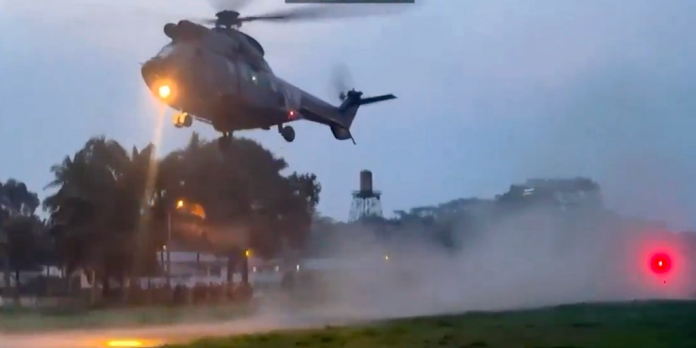
- U.S. and Ecuador launch joint operations targeting drug traffickers.
- Operations announced by U.S. Southern Command Tuesday.
- President Daniel Noboa pledged new phase against narco-terrorism.
- Authorities dismantled cartel-linked trafficking network, arresting 16 suspects.
The US and Ecuador have also initiated bilateral military actions in an effort to fight drug trafficking cartels and what the authorities term as narco-terrorist organizations that are running activities in the South American nation. The shift is a step towards deeper security collaboration between Washington and Quito as Ecuador cracks down more on organized crime.
U.S. Southern Command (SOUTHCOM), the regional military command of the United States of America, declared the operations. In a declaration SOUTHCOM claimed the campaign is against Designated Terrorist Organizations who are interested in drug trafficking and applauding the cooperation of Ecuador in addressing the crime networks that contribute to violence in the hemisphere.
The move comes after the SOUTHCOM commander Francis Donovan met with Ecuadorian officials including President Daniel Noboa to discuss security partnership and bolster U.S. support of the anti-narcotics campaign in Ecuador.
Criminal Cartels Crackdown
The move by the military is witnessed when Ecuador is experiencing increased drug related violence attributed to international drug trafficking activities that symptoms transfer cocaine between the producing nations and the markets in North America and Europe. Approximately 70 percent of the drug manufactured in Colombia and Peru is estimated to transit through the country or ports of Ecuador and then is exported to other countries.
Authorities claim that the present activities are part of what Noboa once termed as the new stage of the battle against drug trafficking and illegal mining in Ecuador. In March, he declared that the country would start collaborating with regional partners, such as the United States, in terms of a larger security plan.
The U.S. Embassy in Ecuador reported that one of the biggest law-enforcement operations related to the campaign shut down a transnational trafficking network linked to Hernan Ruilova Barzola and also linked to the Los Lobos cartel. The operation, which involved the U.S. agencies, the European police force (Europol), and the Ecuadorian government, saw the seizure of some 16 suspects and about six tonnes of cocaine in Europe.
Greater U.S. Anti-Narcotics Strategy
These combined efforts are in line with a wider U.S. initiative to step up military activities in counter-drug operations operations in Latin America in the second term of President Donald Trump. U.S. forces have over the last several months reportedly carried out dozens of strikes against the alleged drug-smuggling vessels in the Caribbean Sea and eastern Pacific.
It is also through Washington that there has been enhancement in intelligence sharing training and logistical support to regional partners. In the case of Ecuador, the U.S. officials are suspected to be helping in the planning, intelligence and operational support as the Ecuadorian troops undertake the ground raids.
The partnership points to the increasing role that Ecuador plays in narcotics trafficking routes across the world. The country, which seemed to be comparatively stable as compared to its neighbors, has become more of a transit base where cocaine is shipped by the strong criminal groups which are related to the Mexican and Colombian cartels.
Rising Violence in Ecuador
Drug trafficking has created an upsurge in violence over the last few years in Ecuador. The level of homicide has increased and the organizations of crime have struggled over the dominance of ports and smuggling routes where cocaine consignments are transported to foreign countries.
Noboa has in turn countered this by the mobilization of the military within the country, the increased exercise of security authorities and the initiation of closer collaborations with international partners in an effort to deal with cartels and criminal gangs that conduct operations within the country.
Although the specifics of the recent collaborative efforts are secret, government leaders in both nations indicate that the operation shows a deepening of the relationship, which will help reduce the gains of drug trafficking syndicates in the region. The operations are the most recent in a growing regional attempt to interrupt cocaine supply chains and put pressure on organized crime rings that the government believes have jeopardized security and governance in Latin America.


