Last week, Mayor Zohran Mamdani stepped onto the stage at the Museum of the City of New York, joined by municipal employees who were invited to take part in iftar, the evening meal that marks the end of the daily fast during Ramadan.
"It is not every day that we see in one room the sheer breadth of Muslim life in New York City," Mamdani said, as he greeted everyone and added, "I will say it once again, Ramadan mubarak, my friends." It was a joyful and proud moment, not just for New York City's nearly one million Muslims, but also for countless others in Muslim communities across the country.
Unmoved Mamdani
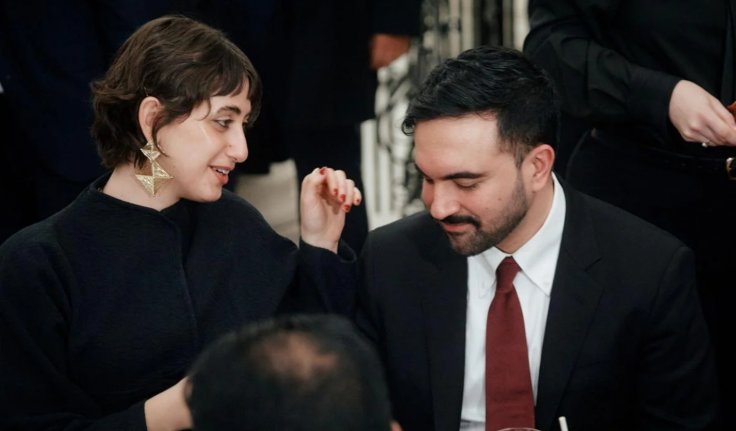
Over the past year, Mamdani's rise has been nothing short of remarkable — going from a relatively low-profile Democratic Socialist in the state legislature to leading the largest city in the United States. But in his March 12 speech, he made it clear that the gathering was about more than just celebration — it was also a statement of resistance.
"For nearly as long as there has been a New York City, there have been Muslim New Yorkers," he said. "But for nearly as long, those with power and a platform have sought to dehumanize us."
His remarks were partly in response to Alabama Republican Senator Tommy Tuberville, who earlier that day shared a controversial post online. It had an image of Mamdani at a public iftar alongside a photo from the 9/11 attacks, paired with the message: "the enemy is inside the gates."
Addressing the crowd in Harlem, Mamdani didn't hold back, calling Tuberville's post "bigotry." "When I hear such hatred and disdain unchecked in its rancor, I feel an isolation and a loneliness that many of you have felt as well," Mamdani said.
Criticism from the right had already started building the previous year, as his political rise gathered momentum. With an approachable, easygoing style and a sharp command of social media, he rapidly grew into one of the most prominent and influential Muslim political figures in the country.
Constant Attacks
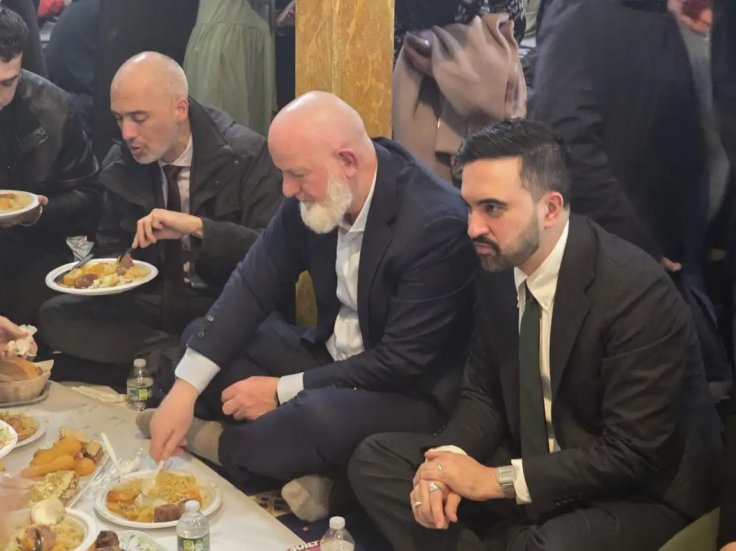
Tuberville's post wasn't the only attack Mamdani faced during Ramadan. After he spoke out against President Trump's decision to launch a war against Iran, prominent New York talk radio host Sid Rosenberg lashed out at him online, calling him a "cockroach" and accusing the mayor of being anti-Jewish.
At a press conference, Mamdani pushed back strongly, calling Rosenberg's remarks racist. "To be called animals, insects, to be called a jihadist mayor, to be called a cockroach, this language is painfully familiar to me as a Muslim New Yorker, but also as someone born in East Africa," he said.
The backlash against Rosenberg was swift, and he later issued a partial apology on his radio show. While he admitted he shouldn't have resorted to name-calling, he still doubled down on his criticism, saying Mamdani's policies were dangerous and should deeply concern New Yorkers.
Just days later, on March 7, tensions flared again when a small group of far-right protesters gathered outside Mamdani's official residence in Manhattan.
They voiced fears of what they called an "Islamic takeover" of the city. Counter-protesters soon arrived, and the situation escalated into a clash. Authorities later said two Muslim men from Pennsylvania were accused of throwing improvised explosive devices during the confrontation.
FBI officials said the attempted attack was influenced by ISIS, but the devices never went off and no one was hurt. The two men were arrested and are now awaiting trial.


