- Hollywood film and TV employment fell from 142,000 in 2022.
- Los Angeles filming days dropped from 36,792 in 2022.
- Streaming expansion disrupted traditional revenue model for studios.
- Production increasingly moving to other regions offering tax incentives.
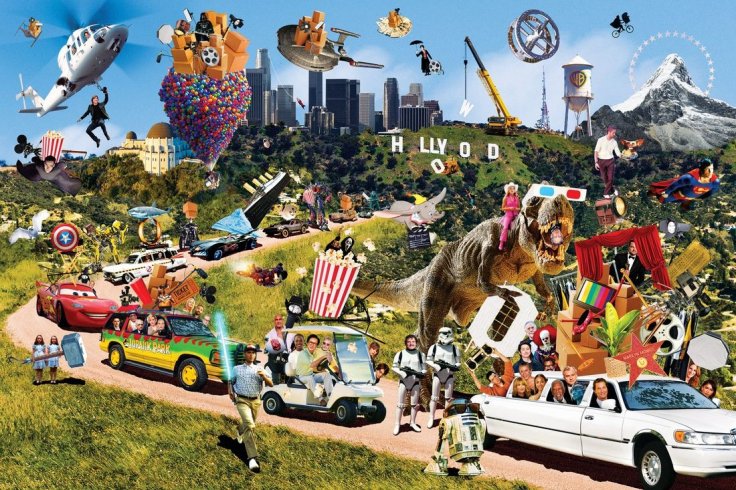
Hollywood was not just a place, which had been well over a century. It was the epicentre of the cultural universe an international brand that was created on glamour, talent, storytelling and the sort of magic that made people on both sides of the globe visit its studio lots and along its star-lined boulevards.
Dick Lippin is the founder, chairman and CEO of The Lippin Group, one of the leading communications agencies in the entertainment industry, a place he has spent the last 40 years of his life working within that machine. In The Hollywood Reporter, his verdict is not spared. The business he had founded his career to serve is gone, he writes.
The figures behind Lippin evaluation are drastic. The motion picture industry in Los Angeles County has 142,000 employees in 2022. In 2024, the number fell to about 100,000, and that is a loss of 42,000 jobs over two years of time, according to the Bureau of Labor Statistics.
The Los Angeles film office, called FilmLA, logged only 19,694 days of filming in Los Angeles in 2025, compared to 36,792 in 2022. According to one report by Luminate, the drop was of staggering proportions, reported as being 24 percent a year-on-year decrease in major scripted film and television projects shooting in the city. TV episodes made in the whole industry reduced to 11,069 by 2024 after recording 16,012 in 2022. The writing and acting jobs are reduced by nearly 40 per cent of 2022.
In an imposition and broad summary provided by Fortune magazine this week, such was the situation put bluntly. Michael Lynton, a former head of Sony Pictures Entertainment has recently been to Los Angeles and the industry that he had once been in charge of was in fact no longer identifiable. He called it The sunny version of Detroit, The Hollywood Reporter. "It was crickets. There's nothing going on."
How Streaming Did What the Model Broke
Lippin describes the structural collapse as having one defining moment the development of streaming. The Hollywood ecosystem has lived 60 to 70 years running on predictability. A four season long network drama could go into syndication with 100 episodes and make the producers of the drama billions.
Theatrical movies that were successful also cascaded down a chain of dependable pay television and home entertainment incomes. This was not an ideal system, but it compensated the long life and continued investment in talent.
Netflix disbanded such a model. This forced the companies out of the business by purchasing all one hundred percent of their windowing rights on a perpetual basis, which meant that they laid the foundation of the financial viability of long-form storytelling, at least on the side of the business districts below the number one spot in the industry.
Also Read: 'I've Always Believed': Steven Spielberg Opens Up About Aliens and UFOs at SXSW
Over the next 10 years the studios scramicled all over to copy what Netflix had done and began their own streaming business at the same time drilling the theatrical and syndication business nourishing their content feeds.
Another level is added by the analysis of fortune. Jeff Bewkes, one of the past CEOs of Time Warner, under which he managed HBO, Warner Bros., Turner Broadcasting and New Line Cinema also states that movies have long since ceased to be the business of Hollywood. Television series production was always the actual throbbing engine and now it is running at half throttle.
Silicon Valley Takes Over
Lippin is also rather straightforward concerning the role of technology consolidation. Amazon bought off MGM and its library. Disney digested 20 th Century Fox. And now, in the bid that has caused a shockwave even in the creative industry, Netflix has been outbid by Paramount Skydance David Ellison who assures more than 6 billion dollars in synergies in its ownership of the iconic studio that houses HBO, DC, and one of the most valuable content libraries of all its caliber.
Ellison has a father, Larry Ellison, the founder of Oracle, which recently bought a stake in Tik Tok. It does not escape Lippin: the latest mogul in Hollywood is a heir of Silicon Valley, not a movie director. Co-CEO of Netflix based in Los Angeles is Ted Sarandos, the most influential face in the industry by far, but it is based in Silicon Valley.
The Audient Has Quit the Building
Perhaps the financial restructuring could withstand given that audiences were turning up. They are not. In 2024, North American box office revenue was still 8.87 billion, compared to the usual 10 to 11 billion in the pre-pandemic days even though the cost of tickets increased.
According to a survey conducted by Deloitte, only 56 percent of the Gen Z members are now more relevant to social media content than they are to traditional television and film. Kevin Goetz, an entertainment strategist at Scholastic Magazine, said: It is not a stage. It is the way it has evolved, and you cannot go back.
The remaining workforce is becoming precarious. In August 2025, the unemployment level in the entertainment industry is 10.9 percent, which is a figure that is more than 4.3 percent, the national average. In 2022 Los Angeles scripts production dropped to 18.3 percent, compared to the 21.9 percent in 2022, with productions migrating to Georgia, New Jersey, the UK, Ireland and Australia in search of lower labour costs and more liberal tax breaks.
Governor Gavin Newsom has branded the industry as kept alive on life support and has increased California annual film and television tax credit to 750 million but analysts have cautioned that a large portion of the jobs that have been lost will not be back no matter the incentive programmes.
A Way Back - When Tech and Studios Can Coexist
This does not make Lippin entirely hopeless. He cites the failure of AOL-Warner Bros. crisis at the start of the 2000s, when the entertainment industry decided that its fates of Hollywood and Silicon Valley were irreconcilable, and insists that the new wave of tech acquisitions do not have to share the same fate, as long as these two worlds begin their relationship in relatively good faith and with some sort of a jointly-held vision of the future of the global market.
The interests are not just confined to the industry. Authenticity Hollywood movies used to be one of the most important American exports in decades, both in terms of entertainment and exporting an American worldview to the world outside of the country.
Also Read: Oscars 2026: Younger Crowd to Present Academy Awards Amid Hollywood's Uncertain Future
Through its culture as well as business strength, the US entertainment industry produced up to twenty billion dollars every year. The question about whether or not that power is reproducible in the age of streaming in bits and pieces, artificial intelligence and ownership by Silicon Valley is the leading question of the most well-known creative business in the world.


