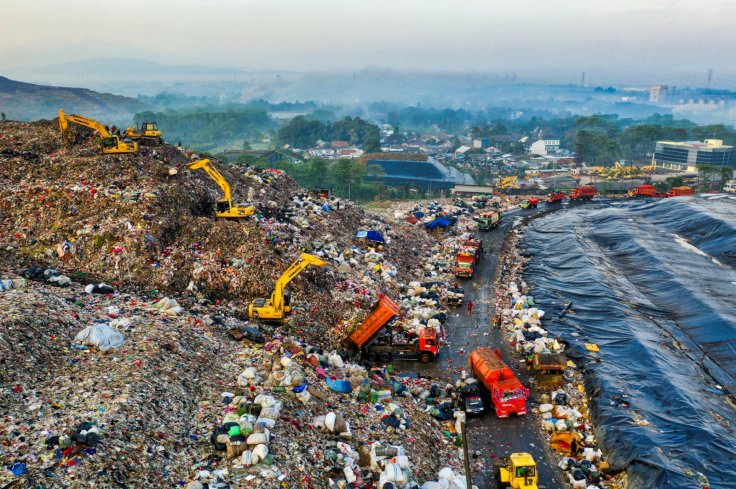
- Food waste generates 8–10% of global greenhouse gas emissions.
- Households produce 60% of waste, over one billion meals daily.
- UN targets halving global food waste by 2030.
Food loss and waste are responsible for between 8% and 10% of global anthropogenic greenhouse gas emissions annually, according to the United Nations Environment Programme (UNEP), placing the problem on par with the entire global transportation sector as a driver of climate change.
More than one billion tonnes of food are discarded at the consumer level each year, representing 19% of all food made available to consumers worldwide. The economic damage exceeds $1 trillion annually, a figure confirmed by multiple sources including China Daily and Carbon Pulse.
Yet despite the scale of the problem, the actors responsible for the largest share of waste, and those generating emissions far beyond their proportional footprint, have drawn relatively little scrutiny in American climate policy debates.
Hotels Punch Far Above Their Weight
The single largest source of food waste globally is the household. Consumers at home are responsible for 60% of total food waste, discarding more than one billion meals every single day, according to reporting by The Star citing UN agency data. That figure cuts across income levels and geographies, from American kitchens throwing out wilted produce to urban households across Asia discarding cooked leftovers.
The hotel industry tells a different and more concentrated story. Hotels account for 3% of global food waste and 1% of food-related greenhouse gas emissions, despite serving only 0.5% of all meals eaten worldwide, according to Skift, a travel industry publication. That disproportionate ratio, six times the waste of their meal share, has attracted little attention in mainstream climate discourse, even as major hospitality groups including Hilton and Accor face growing pressure from institutional investors on environmental, social, and governance metrics.
The gap is partly structural. Hotel buffet service, banquet catering, and room service operations generate predictable surplus at scale. Unlike a household that miscalculates a grocery run, a hotel kitchen preparing for 500 banquet guests operates under conditions where over-preparation is the professional default, and unsold food at the end of service has few reliable redistribution pathways.
China and India Lead Global Volumes
At the national scale, China generates more food waste than any other country, discarding more than 108 million tonnes annually, according to the Middle East Monitor. India follows, with more than 78 million tonnes per year. Together, those two countries account for a substantial portion of a global total that one UN-linked source places at approximately 1.3 billion tonnes of food produced for human consumption lost or wasted each year, roughly one-third of all food produced.
Those figures have not featured prominently in American coverage of food waste, which has tended to focus on domestic retail and consumer behavior. The United States does not escape scrutiny: American consumers contribute meaningfully to the 60% household share that UNEP and affiliated agencies attribute to the consumer stage of the food supply chain.
The environmental mechanism connecting waste to warming centers on methane. When organic food material decomposes in landfill conditions, it produces methane, a greenhouse gas with a warming potential roughly 80 times that of carbon dioxide over a 20-year period, according to UNEP. Food waste is also embedded in a broader municipal solid waste crisis: the world generates up to 2.3 billion tonnes of municipal solid waste annually, with food making up a significant portion of that stream.
"Reducing food waste is one of the most powerful multi-purpose solutions available to us," said Inger Andersen, Executive Director of UNEP, in a speech on the environmental and economic dimensions of food waste. "It addresses climate, it addresses nature, and it addresses the cost of living at the same time."
Urban Food Systems and the Push to Halve Waste by 2030
Cities are beginning to integrate food waste reduction into broader infrastructure planning. Urban centers in several countries are connecting food systems with water services and solid waste management to build what policymakers describe as circular economy solutions, redirecting organic waste toward composting, biogas production, and animal feed rather than landfill disposal. The approach treats discarded food not as an end-of-pipe problem but as a recoverable resource within a closed loop.

At the international level, the United Nations Food Waste Breakthrough initiative, a coalition of governments and businesses coordinated under the UN system, has set a target of halving global food waste by 2030. That goal aligns with Sustainable Development Goal 12.3, which carries the same deadline and the same benchmark. Progress toward either target has been uneven, and no binding enforcement mechanism exists.
UNEP has framed the case for action in terms that go beyond emissions reduction. "Food loss and waste undermine food security, strain natural resources, and impose enormous costs on economies," the agency stated in materials accompanying the International Day of Zero Waste. The agency noted that achieving meaningful reductions would require coordinated action across governments, the private sector, and individual consumers.
For American policymakers, the data presents a specific challenge: the largest single source of waste sits not in agriculture or food manufacturing, where federal programs already operate, but in the household, a domain that existing climate regulation rarely reaches. Whether that gap narrows in coming years will depend substantially on whether food waste earns a dedicated line in domestic climate legislation, something it has not yet secured.
Disclaimer: This article was produced with the assistance of artificial intelligence tool but vetted by human editor.


