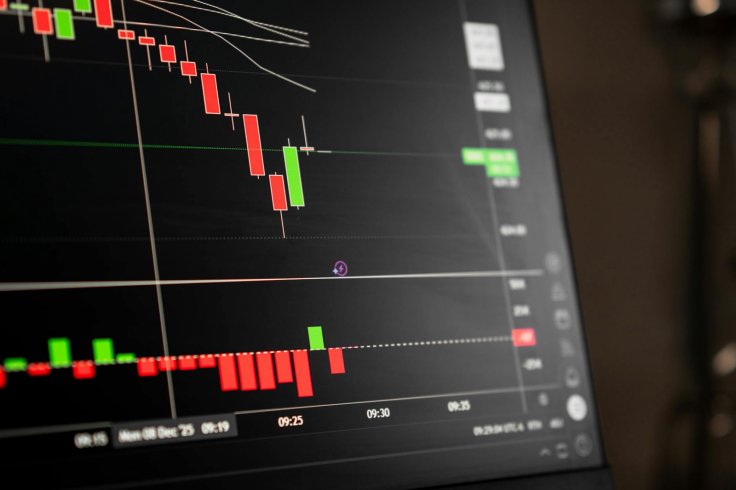
- Oil surges sharply (up to ~11%) as Trump signals intensified Iran strikes
- Global stocks end mixed amid volatile, headline-driven trading
- Inflation fears rise as bond yields climb and dollar strengthens
- Hormuz uncertainty remains key driver of market direction
Oil surges over 11% as Trump vows weeks more of Iran strikes. Stocks close mixed, recession odds climb to 30%, and the Fed faces a policy trap.
Oil prices exploded higher on April 2, 2026. U.S. crude posted a single-session gain of more than 11%. Markets were bracing for weeks more of active combat.
President Donald Trump, speaking publicly about the ongoing U.S. military campaign against Iran, said strikes would continue "for the next 2 or 3 weeks" and threatened to bring the country "back to the Stone Ages" if resistance persisted. The remarks landed on trading floors like an accelerant. West Texas Intermediate (WTI) crude, the U.S. benchmark, surged 10.19% in a single session, while Brent crude, the international benchmark, climbed above $107 a barrel with WTI approaching $105. At one point during the session, Brent futures touched $114.13 per barrel, a gain of 6.3% from the prior close.
The price surge did not arrive in isolation. Before the Iran conflict began, Brent crude traded near $70 a barrel. By early April, it had crossed $109 before easing to roughly $106. Oil markets logged a record 60% rally through March, driven by Middle Eastern supply disruptions that removed meaningful volumes from the global market. The cumulative monthly advance reached 56% by the time Trump's latest statements hit.
Stock Market Mixed Close Masks Extreme Intraday Volatility
Wall Street's scorecard at the close told only part of the story. The Dow Jones Industrial Average fell on the day, while the S&P 500 (Standard and Poor's 500, the broad-market index tracking the 500 largest U.S.-listed companies) gained 0.72% and the Nasdaq Composite edged higher.
The split outcome reflected investors pulling in opposite directions: energy stocks and commodity-linked equities benefited from the oil spike, while rate-sensitive and consumer-facing sectors absorbed the pressure of a war-driven inflation shock.
Intraday swings were severe enough that the final numbers offered little comfort to traders watching tick-by-tick. The market closed ahead of the Good Friday holiday, compressing liquidity and amplifying moves in both directions. The modest gains on the S&P 500 and Nasdaq sat against a backdrop of genuine uncertainty about how long the conflict, and the supply disruption it had caused, would last.
Federal Reserve Rate Policy Faces a War-Driven Inflation Trap
The oil shock has placed the Federal Reserve (the U.S. central bank, which sets benchmark interest rates) in a position with few clean exits. Goldman Sachs, the New York-based investment bank, raised its probability of a U.S. recession to 30% and estimated that sustained elevated oil prices would push U.S. inflation 0.2 percentage points higher, to 3.1%. Inflation running above 3% while recession risk climbs simultaneously is precisely the combination that limits the Fed's conventional toolkit.
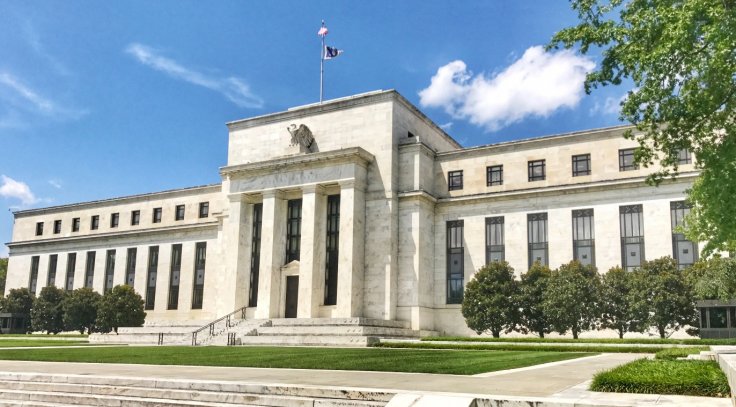
Traders in interest-rate futures markets largely abandoned bets on a Fed rate cut in 2026, according to 2news.com, with some positioning shifting toward the possibility of rate hikes instead. A rate increase during a period of rising recession risk would tighten credit conditions for businesses and consumers already absorbing higher energy costs.
A rate cut, on the other hand, risks further inflaming inflation at a moment when oil is already adding price pressure across the supply chain. Seeking Alpha reported that the broader economic impact of the oil spike ultimately depends on how financial conditions evolve in parallel.
The Fed has not issued formal guidance since Trump's April 2 statements, and no scheduled policy decision was imminent as of the session close. The central bank's next move carries unusually high stakes given that oil-driven inflation and potential demand destruction from a slowing economy are pulling its mandate in opposite directions simultaneously.
Pentagon Leadership Shake-Up Adds to Uncertainty During Active Combat
Compounding the market unease, Defense Secretary Pete Hegseth asked General Randy George, the Army's top uniformed officer and Chief of Staff of the United States Army, to step down amid the ongoing Iran campaign, according to WSLS. The request, made during active combat operations, added an institutional dimension to the day's volatility. Leadership transitions at the senior uniformed level during a shooting war carry operational and signaling weight that markets absorbed alongside the oil and rate-policy data.
Hegseth did not publicly provide a reason for the request, and no response from General George was forthcoming as of the session close. The Pentagon did not issue a statement elaborating on the circumstances.
Recession Forecasters Split on Depth of Economic Damage
The gap between optimistic and pessimistic economic projections has widened as oil sustains its run. Goldman Sachs' 30% recession probability sits at the higher end of Wall Street estimates, and the bank's inflation projection of 3.1% assumes oil prices stabilize near current levels rather than continuing to climb. A further sustained rally toward $140, a scenario that analysts at Economic Times noted was being actively modeled by some traders, would carry materially worse implications for consumer spending and corporate margins.
The transmission mechanism is straightforward. Higher crude prices feed directly into gasoline, diesel, jet fuel, and petrochemical feedstocks, raising costs across transportation, manufacturing, and agriculture. Those costs move through to consumer prices with a lag of roughly four to eight weeks, meaning the full inflationary impact of the March and early April oil surge had not yet registered in official price data as of the session close.
Seeking Alpha's analysis flagged that the oil spike's net effect on recession probability is not mechanically fixed, noting that broader financial conditions, including credit spreads, equity valuations, and the dollar's trajectory, will shape the final outcome. Traders appeared to be pricing some of that ambiguity into the mixed market close, holding risk assets selectively rather than selling across the board.
The session ended with no resolution on any of the underlying drivers. Trump's stated timeline of two to three more weeks of strikes left oil traders, Fed watchers, and equity investors facing a prolonged period of supply-side uncertainty with no clear off-ramp in sight.


