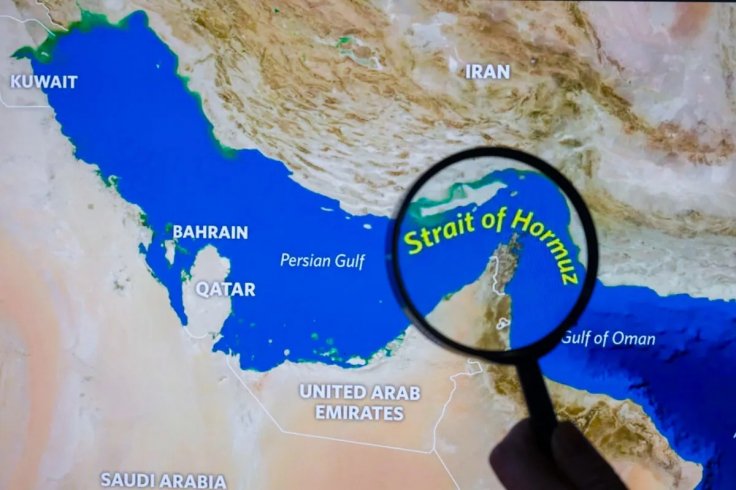
- Over 40 nations pressure Iran to reopen Strait of Hormuz, threaten sanctions
- U.S. absence from coalition signals diplomatic uncertainty
- Oil surges above $110 as shipping through Hormuz collapses
- Crisis highlights global energy vulnerability and push toward renewables
Over 40 nations threaten Iran with new sanctions as oil hits $112 a barrel. The US skipped the coalition meeting. Here is what is at stake.
More than 40 countries joined a virtual emergency coalition on or around April 3, 2026, pressing Iran to reopen the Strait of Hormuz, the 21-mile-wide chokepoint between the Persian Gulf and the Gulf of Oman through which roughly one-fifth of the world's traded oil passes. The United States was not among them.
UK Foreign Secretary Yvette Cooper convened and led the gathering, threatening Tehran with additional economic and diplomatic measures if the strait remains closed. The coalition warned Iran it faced "every diplomatic and economic measure" available to the participating states, according to the bordertelegraph.com.
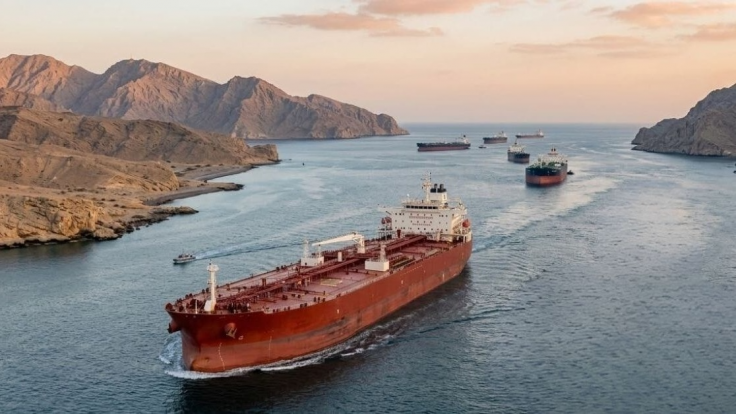
Iran has effectively sealed the strait through a combination of missile strikes, naval mines, and what TRT World described as selective transit permissions granted to certain vessels, causing commercial shipping traffic through the waterway to collapse by nearly 100 percent. The closure has produced what the Los Angeles Times called the largest fuel supply disruption on record, forcing tanker operators to reroute around the Cape of Good Hope, adding weeks and significant cost to journeys that previously took days.
Washington's Absence and the Diplomatic Vacuum It Left
The decision by the United States to skip the coalition meeting stands as one of the most consequential diplomatic signals of the crisis. President Donald Trump, according to the Japan Times, threatened severe damage to Iranian civilian infrastructure while simultaneously suggesting American forces could withdraw from the region within two to three weeks. That combination, a maximalist military threat paired with a potential exit timeline, left European and Gulf partners uncertain about Washington's long-term posture.
Britain has explicitly positioned its approach as separate from the US military track. Cooper's coalition leans on sanctions escalation and coordinated diplomatic pressure rather than force authorization, a distinction that carries weight at a moment when the UN Security Council has been unable to act. The Security Council postponed a vote on a resolution that would have authorized the use of defensive force to protect shipping in the strait, after Iran fired missiles at Israel and Gulf states in the lead-up to the scheduled vote. No revised date for that vote had been announced as of April 3, 2026.
The United Arab Emirates (UAE) committed to joining a multinational maritime force and pledged to deploy its own naval assets to support reopening efforts, according to Ynet News. The UAE's participation carries symbolic weight: it is one of the Gulf states whose ports and energy exports are directly strangled by the blockade.
Oil at $112 and the Forecast That Prices May Not Come Back
On April 2, 2026, West Texas Intermediate (WTI) crude surged 11.5 percent to $112.80 per barrel, while Brent crude reached $110.12, according to markets.financialcontent.com. Both benchmarks shattered the $110 threshold in a single session, triggering what commodity traders described as a global inflation panic.
The price trajectory may not reverse even if the strait reopens. An economic think tank, cited by the Korea JoongAng Daily, projected that oil prices are unlikely to return to pre-war levels, with worst-case modeled scenarios reaching $174 per barrel. The think tank's analysis was reported by a single outlet and could not be independently verified from a second source, but its framing reflects a broader market concern: that the structural disruption to Persian Gulf trade routes has permanently repriced energy risk.
Former UK national security adviser Peter Ricketts warned that military pressure alone will not resolve the standoff. Direct negotiations with Iran will likely be necessary to reopen the strait, Ricketts told The Independent. His assessment runs counter to the coalition's current public posture, which frames sanctions and maritime force deployment as the primary tools.
Iran has not responded publicly to the coalition's specific demands as of April 3, 2026. The Islamic Republic's position, as conveyed through its earlier actions, is that it retains the right to control access through the strait as a sovereign and strategic matter. Tehran has offered no formal response to the Cooper-led coalition's ultimatum, and no Iranian government statement addressing the 40-nation meeting was available at the time of reporting.
The UN's Energy Warning and the Long Argument for Renewables
The United Nations used the crisis to press a longer-term argument. In a statement published by UN News, the organization emphasized that the Hormuz blockade exposes the structural fragility of a global economy still dependent on a handful of maritime chokepoints for its fossil fuel supply. The UN called on member states to accelerate the transition to renewable energy sources as a matter of energy security, not just climate policy.
That framing recast the crisis in terms that extend well beyond the immediate military and diplomatic standoff. If nearly 100 percent of shipping through a single 21-mile strait can collapse the world's largest fuel supply system, the argument for diversifying away from oil-dependent supply chains becomes less a matter of environmental preference and more a structural imperative.
The Strait of Hormuz has been a flashpoint before. In July 2019, Iran's Islamic Revolutionary Guard Corps (IRGC) seized a British oil tanker in the strait, alleging violations of international maritime law, according to Al Jazeera. That incident lasted weeks before diplomatic resolution. The current blockade, by any available measure, is categorically larger in scope and consequence.
(With inputs from agencies)


