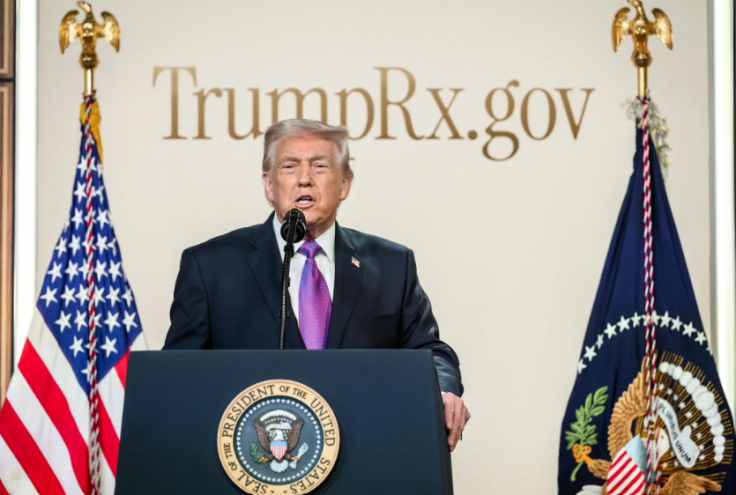
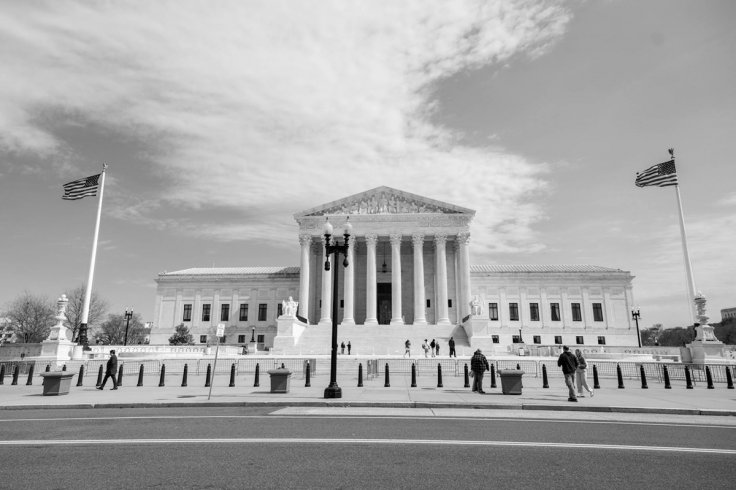
President Donald Trump sat inside the U.S. Supreme Court on Wednesday as the justices heard oral arguments on his executive order targeting birthright citizenship, making him the first sitting president in American history to attend the court's oral proceedings.
No protocol exists for a president in the gallery. The Supreme Court's public seating areas operate under strict rules of decorum: no applause, no outbursts, and no recording devices. A sitting head of state occupying one of those seats is simply without precedent, and the court offered no formal statement on any procedural adjustment made for the visit.
The executive order at the center of the case would deny citizenship to children born on U.S. soil if neither parent holds U.S. citizenship or lawful permanent resident status. The 14th Amendment to the U.S. Constitution, ratified in 1868, states that "All persons born or naturalized in the United States and subject to the jurisdiction there of are citizens." Every lower court that has reviewed the order found it likely unconstitutional and blocked its enforcement before it could take effect.
What the Legal Fight Turns On
The administration's argument rests on a narrow reading of the phrase "subject to the jurisdiction thereof" in the 14th Amendment's Citizenship Clause. Trump's legal team contends the amendment was drafted specifically to grant citizenship to formerly enslaved people and was never intended to extend to children of undocumented immigrants or temporary visa holders. That interpretation runs against more than a century of settled law. In 1898, the Supreme Court ruled in United States v. Wong Kim Ark that children born to non-citizen parents on American soil are citizens under the 14th Amendment.
Opponents of the order, including civil rights organizations, warn that reinterpreting the Citizenship Clause could weaken other constitutional protections that have long been treated as settled. The administration has not publicly addressed that concern directly.
Trump's appearance at the court came alongside public remarks that drew their own attention. Trump expressed criticism of Democratic-appointed justices ahead of the hearing, and ms.now reported that he called certain justices "stupid" and expressed shame over some of his own appointees who had ruled against him in prior cases. The Supreme Court did not respond to those remarks publicly.
A ruling is expected by early summer. Legal observers have framed the case as one of the most significant tests of executive power in Trump's current term, given that the order would, if upheld; fundamentally alter a citizenship standard that has been applied continuously since the late 19th century.
For now, the image of a sitting American president seated inside the nation's highest court, watching nine justices interrogate his own administration's lawyers is itself a marker. Whether it signals confidence, pressure, or simply spectacle is a question the court's eventual ruling will do far more to answer than the visit itself.
Disclaimer: This article was produced with the assistance of artificial intelligence.
Also Read: Trump Sets Two-Three-Week Deadline for US Military Exit From Iran


