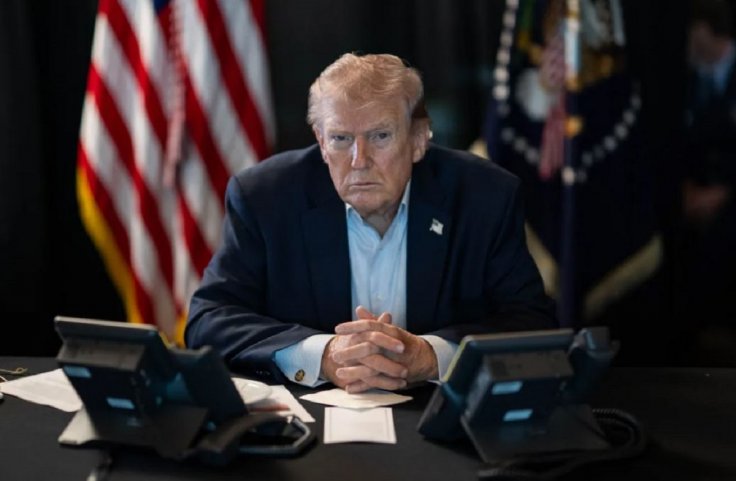
President Donald Trump announced that U.S. military forces will exit Iran within two to three weeks. It was the first specific withdrawal timeline offered since the start of the conflict. Trump said the primary objective had been met.
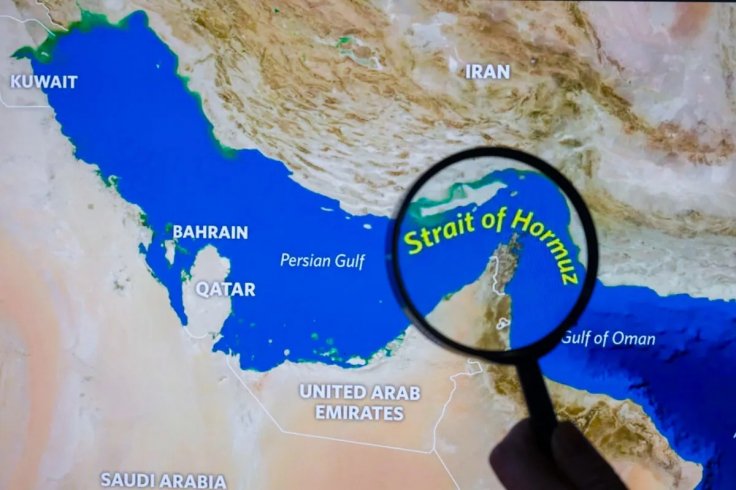
That objective, as Trump framed it, was preventing Iran from acquiring a nuclear weapon. The operation, designated Operation Epic Fury, began after months of escalating tensions over Iran's nuclear program and its control of the Strait of Hormuz, the narrow waterway through which roughly a fifth of the world's oil supply passes.
Trump told reporters the U.S. could end the war on that timeline and said Iran did not need to reach a formal agreement with Washington for American military operations to cease.
"We could be out of there in two to three weeks," Trump said, according to Ynet News. He also said he plans to address the nation to lay out the full exit strategy in detail.
The announcement landed as American drivers felt the conflict's sharpest economic consequence. U.S. gas prices surpassed $4 per gallon for the first time in nearly four years, driven by a dramatic surge in global oil prices tied directly to the war. That figure, reported by CBS News, has added domestic political pressure on the White House to show a credible path to de-escalation.
Gulf Allies Privately Push Back Against a U.S. Withdrawal
Trump's exit signal did not land cleanly across the region. Gulf states, including Saudi Arabia and the United Arab Emirates (UAE), have been privately urging Washington to keep fighting until significant leadership changes occur inside Iran, according to India Today.
Bahrain and Kuwait are also reported to be among the countries pressing for a longer campaign. None of those governments made their positions public.
The private lobbying puts Gulf capitals at odds with a White House that appears to be moving toward disengagement on its own terms. Trump, for his part, dismissed concerns about Iranian threats to strike properties of U.S. companies operating in the Middle East, expressing no alarm about those threats publicly.
One unresolved flashpoint is the Strait of Hormuz. Trump said he was "not ready, quite yet" to remove U.S. military assets from the effort to force Iran to reopen the strait.
That caveat introduced ambiguity into the two-to-three-week withdrawal claim: U.S. forces could begin leaving Iranian territory while still maintaining a naval posture in the surrounding waters. The White House did not clarify which assets would be removed and on what schedule.
Pakistan has emerged as a potential diplomatic bridge. Both Washington and Tehran have expressed confidence in Islamabad to help facilitate direct talks, according to Al Jazeera.
The nuclear talks held in early 2026 were described as the most intensive U.S.-Iran diplomatic contact in years, though Trump himself expressed uncertainty about whether a formal agreement would ultimately be reached.
Trump also returned to a familiar argument about his first term's nuclear diplomacy. He said his 2018 withdrawal from the Joint Comprehensive Plan of Action (JCPOA), the multilateral nuclear agreement negotiated under the Obama administration, had prevented Tehran from obtaining a nuclear weapon in the years since. Critics of that position have argued the JCPOA's inspection regime was precisely what constrained Iranian enrichment activity, a dispute that remains unresolved among arms control experts.
Congress Flying Blind on Iran Exit With No War Powers Vote
On Capitol Hill, the exit announcement did not satisfy lawmakers demanding more than a timeline. Members of Congress have been pressing the administration for a formal exit plan as the conflict dragged on, according to WRAL.
No authorization for the use of military force (AUMF) specific to Iran was passed before operations began, and no formal war powers debate has taken place in either chamber.
The absence of congressional authorization has become a fault line. Under the War Powers Resolution of 1973, the president is required to notify Congress within 48 hours of committing U.S. forces to hostilities and to withdraw those forces within 60 days absent congressional approval.
Whether the administration has complied with those statutory requirements has not been publicly adjudicated, and no response from the White House on the matter was forthcoming at the time of publication.
In a high-engagement Reddit thread on r/worldnews discussing U.S. strategy in the Strait of Hormuz, one user wrote, "Two to three weeks is a campaign slogan, not a strategy. What happens to the Hormuz situation the day after we leave?"
The administration's framing that no formal Iranian agreement is necessary before withdrawal creates its own diplomatic complications.
If U.S. forces depart without a signed framework governing Iran's nuclear program, the verification architecture that would allow Washington to confirm Tehran is not restarting enrichment activity remains unclear. High-level nuclear talks described as the most intensive in years continued into late March 2026, though no agreement had been announced.
Trump's planned national address is expected to provide the most detailed public accounting of the exit strategy to date. Whether it will address the Strait of Hormuz posture, the status of nuclear verification, or the timeline for any remaining assets is not known ahead of the speech. Gulf allies, Congress, and the American public are waiting on the same set of answers.
Disclaimer: This article was produced with the assistance of artificial intelligence.


