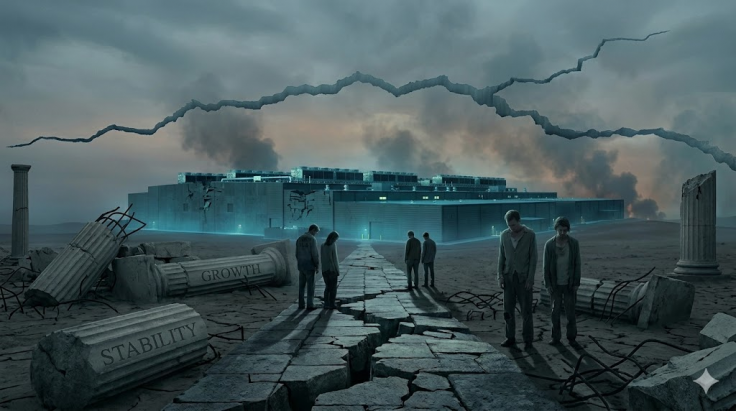
- Wall Street raises U.S. recession odds amid economic uncertainty
- Forecasts range from 30% to nearly 50% probability within year
- Rising oil prices and war cited as key economic risks
- Weak labor market and consumer pressures add to slowdown concerns
Fears of recession are on the increase at Wall Street with more and more economists forecasting a possible U.S. recession due to the increased energy prices, geopolitical unpredictability and the widening of cracks in the labor market.
The probability estimates of contraction in the next 12 months have been highly increased by economists. Data gathered on all major institutions has shown that the chances of recession have increased far beyond averages of approximately 20 percent which are an indication of increased risks associated with the current Middle East crisis and its financial consequences.
The Moody Analytics has increased its recession to 48.6 and Wilmington Trust has put the risk at 45. Goldman Sachs has increased its prediction to 30 percent and EY Parthenon gives the probability as close to 40 percent but with the risk that the risks may increase further in the event of the escalation of the conflict.
The change is a drastic re-evaluation of the previous expectations, with economic effects of the increasing oil prices and ongoing inflation getting more prominent.
Recession threats are too high and increasing, and that is a cause of concern to Mark Zandi, the chief economist at Moody's Analytics. Here we have the real danger of recession.
Oil Shock Becomes Potential Pivot
One reason why recession is being felt is due to the spike in energy prices that is the result of a process of breaking supply channels in the Middle East.
In the past, most U.S. recessions since the Great Depression had been predated by oil shocks with the exception of the COVID-19 downturn. Recent reports indicate that gasoline prices have increased by approximately $1.02 per gallon within the last month which is approximately an increase by 35 percent, further straining consumers and businesses.
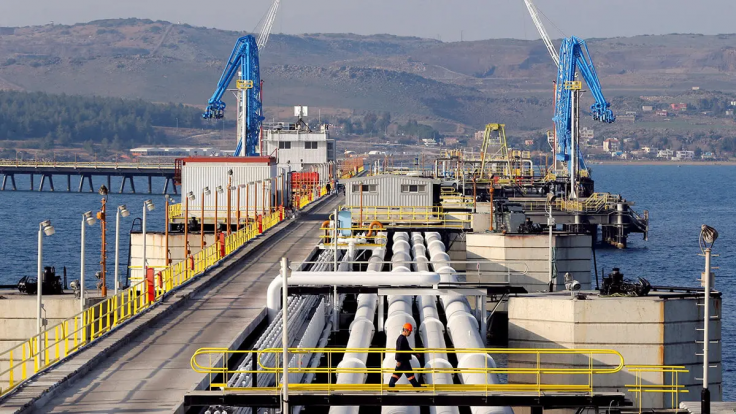
Economists caution that the long run high pricing of oil may soon be converted into decreased consumer expenditure and slow pace of economic growth.
The adverse effects of increased oil prices, Zandi remarked, are quick and immediate, thus in case high oil prices remained up through the second quarter, the possibility of recession would rise substantially.
The energy shock is also contributing to more general inflation issues, making it harder to make monetary policy decisions and restricting the capacity of central banks to stimulate growth by cutting interest rates.
Labor Market Experiences Indications of Tension
Other than energy prices, there is the growth of attention by the economists to the labor market incompetencies as a possible event to ignite economic stuttering.
The U.S economy could only add 116,000 jobs within the year 2025 with a net decline of 92,000 positions registered in January. The unemployment rate has not witnessed rapid changes, as the rate has remained steady at 4.4, but the analysts have argued that this is not a good indication that the economy is hiring new employees but that there are few layoffs.
Recruitment has been directed towards a few sectors, especially the healthcare sector that contributed over 700,000 new employment. Beyond these regions, the number of payrolls has fallen by more than half a million jobs in the last year.
"I believe that there is less risk of inflation than they believe, and more risk to the labor market on the downside than they mentioned", said Luke Tilley, the chief economist at Wilmington Trust.
The imbalance is an indication that there is a weakness within the employment trends and this might undermine consumer spending which is a major engine of economic development in the United States.
Consumer Feeling And Pressure Spending
There is also erosion of consumer confidence which indicates concerns of increasing costs and uncertainty relating to the economy.
According to the survey data, more households are becoming pessimistic with 65 percent of respondents forecasting that recession will occur in the next one year, compared to the last month.

Meanwhile, economists caution that recent consumer expenditure has been supported in part by wealth effects associated with increasing asset prices, specifically equities. This support may dwindle in case the gains in the stock market go wrong and hence the economy becomes even slower.
The data on the market shows a decline of more than 5% in the Dow Jones industrial average in the course of the conflict, which shows the extent that the investor sentiment and the household wealth could be affected.
According to the GDPNow tracker of the Federal Reserve Bank of Atlanta, gross domestic product is expected to rise at a rate of about 2 per cent in the first quarter of this year. This is however after slower growth of 0.7 in the last quarter which shows a lack of momentum.
Policy Issues And Prognosis
The changing economic environment has proven a complicated challenge to the policymakers who have to strike a balance between the increased inflation rates and the reduction in growth rate.
Federal Reserve Chair Jerome Powell has discouraged stagflation comparisons, noting that "with a rate of high inflation and unemployment in the 1970s the situation is different now". Nonetheless, economists caution that stagflation at its milder version, which is the one that is characterized by the slower growth and the ongoing price pressures are still possibilities.
Senior economist, Dan North, of Allianz, argued that "there was support underneath with references to the fiscal stimulus and regulatory relaxation that may contribute to the growth".
Nevertheless, the future direction is even more questionable. Economists observe that the resolution of the Middle East conflict would alleviate the energy prices and recession risks and a protracted conflict would probably increase the economic strain.
The recent projections highlight a low economic stability margin since the dynamics between the geopolitics, energy markets and the domestic economy characterize the future of the U.S. economy.


