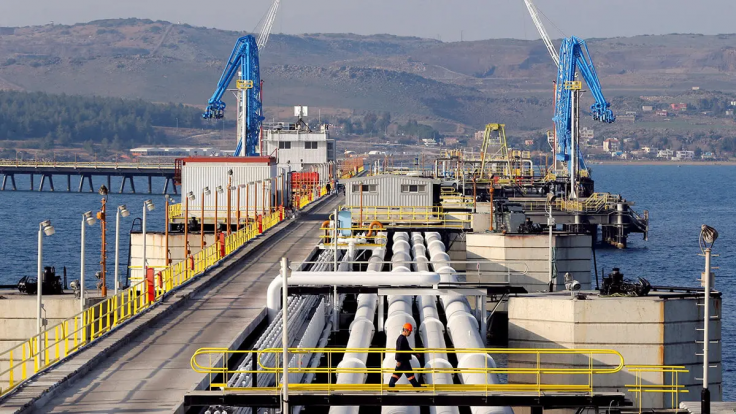
- Brent, WTI crude prices fell on ceasefire hopes in West Asia.
- Brent dropped below $97.18, WTI below $86.72 intraday Wednesday.
- Decline offers short-term relief for India's inflation and current account.
- Analysts warn volatility persists due to ongoing geopolitical uncertainties.
On Wednesday the international Crude oil prices dropped sharply due to the combination of an opportunity of the prospective ceasefire in West Asia, as the supply concerns were relieved and this provided short-term relief on the world markets and on the import-reliant economies like that of India.
The price of the Brent crude futures fell below 97.18/ barrel intraday whereas the price of U.S. West Texas Intermediate (WTI) crude went below 86.72/ barrel by 10.40 AM. The retraction has come after a recent run-up that saw Brent soaring towards 101 a barrel on the fear of a long term interruption in the Middle East.
The slump is occurring at a time of strong sensitivity of geopolitical progress in the energy markets, especially the disputes with Iran, the United States, and Israel. De-escalation signals are closely monitored by the traders and this would stabilise the supply expectations and diminish volatility.
According to analysts, the correction on oil prices would offer a short run reprieve to the Indian macroeconomic indicators, inflation, current account deficit (CAD) and currency stability.
The latest drop is a contrast to the previous week of spike as the crude price shot high on the anticipation of derailment of oil supplies by major routes including the Strait of Hormuz.
Inflation and External Balance Alleviation of India.
This is especially true of India that has to bring in about 85 percent of its oil needs, and hence fluctuations in the world oil prices affect it more than others. A prolonged increase in the crude usually augmented the imports bill in the country, augmented the current account deficit and put strain on the rupee.
The most recent fall in the price of oil, according to market experts, would take some of these pressures off, at least in the short run.
The commodity markets were fixed down last week, as oil levels went back to the past highs. Brent crude that had briefly topped $101 per barrel, dropped more than 10 per cent to about $91 per barrel, alleviating the short term concerns of the amount of money India is paying on its oil import bill, Current Account deficit, and the rupee.
They further stated that the changes in the price of crude directly and quantitatively affect the macroeconomic indicators of India.
They stated that in the case of India, eachinder $10 per barrel variation in crude normally has effect on the CAD 0.3-0.5 percentage point in the GDP and increases the CPI inflation by 20-30 basis points, considering pass through.
Reduction in input prices due to the low-crude prices can be used to lower the input cost of the sector especially the transportation and manufacturing industry which in effect may alleviate inflationary pressures.
Analysts however warned that the relief can be short lived because of the geopolitical risks and volatility in world markets.
Signs of Volatility in the Future.
With the recent correction, analysts were quoted stating that the oil prices are still close to the critical technical levels meaning the direction of the market in the subsequent sessions will be determined by the ability of the major technical support zones to be held.
The U.S. crude is now floating around the price of between 85 000 and 87 per barrel a range that is considered to be a significant support band. However, a long-term rise above the $9294 might restate the bullish feeling and address the prices towards the 98-100 ranges, and the weakness might cause the price to fall further to 81-82 levels.
Players in the market are hence taking a reserve posture, and some of the analysts are suggesting a buy-on-dips approach until the supporting positions are breached.
Meanwhile, the macroeconomic risks are also high. Analysts added, the external stand in India may be pressured once again in case the price of crude oil goes up once again or the outflows are increased to a greater rate.
They said it has a large trade gap and high gold imports and any further increase in either crude or capital outflows would soon rejuvenate depreciation pressures.
Global equity markets were not fully optimistic or pessimistic with the movement in oil prices. United States markets fell in the overnight session with the S&P 500 falling 0.84 percent and Nasdaq falling 0.37 percent, showing that the investors remained cautious.
Conversely, the Asian markets recorded good returns backed by a second cut in oil prices and a rise in the risk sentiment. The Nikkei in Japan shot up by 3.26 percent, South Koreas KOSPI shot up 3.36 per cent and Hong Kong Hang Seng shot up 1.30 percent.
The energy price fluctuations contrasts the way the regional markets are responding to energy price changes differently as the import-intensive economies have been positively affected due to reduced cost of crude oil.
Recent fall of oil has given temporary solution to the markets and policymakers but it is analysed that future is too much related to geopolitics in West Asia and changing conditions of demand and supply in the world.


