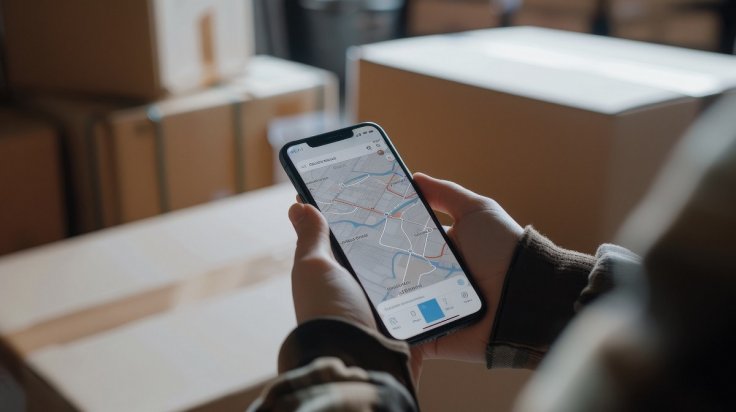
A newly launched mobile application promoted by the White House is drawing privacy questions after a developer said the software repeatedly collects precise user location data and sends it to a third party server.
The assertion emerged a day after the White House published its official smartphone application, which was aimed at delivering updates on the administration and live briefings to the people. The app requests GPS coordinates periodically, every 4.5 minutes, according to the snippets of a developer posted to the social platform X, and sends them to the servers of a commercial messaging platform.
Given the accuracy, the settings would imply that the application collects latitude and longitude coordinates of the users who enable location permission on a regular basis. The code implies that the data can be aligned to the infrastructure run by a push notification vendor.
As of Monday, the White House has not commented on the technical findings publicly.
White House App Launch and Purpose
On March 27, the administration introduced the app as a novel source of communication between the federal government and its citizens. Advertisements called it a platform that would bring President Donald J. Trump and his Administration to the people of America as never before.
Some of the features that have been advertised through the application are real-time news notifications, a livestream of official briefings, a media library of speeches and announcements, and a channel where the user can give feedback to the administration.
The former functions do not need more than basic network connectivity and push notifications. Ongoing geolocation functionality is not necessary when serving news alerts or video feeds, and this has raised some concern among privacy researchers who are investigating the software.
The routine of tracking seen in the code of the app seems to be linked to the software development kit applied by OneSignal, a popular platform that assists applications in delivering targeted notifications to users, according to the developer who analyzed the code of the app.
According to OneSignal documentation, its system is capable of updating location GPS coordinates periodically, provided there are permission settings turned on to share location. Those coordinates are used on the platform to divide users into regions or provide them with geographically-specific alerts.
The code listed on the post of the developer allegedly includes a timer of 270,000 milliseconds, which is 4.5 minutes, to update the foreground. Another setup is said to configure the background updates at longer periods of time.
App Permissions and Data Collection
Other emphasis has been on the permissions list of the application. There are screenshots circulating online that display the app asking to access exact and rough location, biometric devices like fingerprint sensors, network connectivity, and the capability to edit files in a shared storage.
Mobile operating systems still tend to grant users permission to access their location prior to an application gaining access to GPS data. Apps have the capability to acquire coordinates periodically once they are permitted to do so based on the settings of the software.
As security researchers observe, movement patterns, daily habits and visiting sensitive locations like workplaces, hospitals or places of worship can be found using location data. Scholarly studies into mobile software have discovered location coordinates to be one of the most common forms of data sent via apps to third-party domains.
A report that analyzed over 100 mobile applications found that approximately 40 percent of them shared user location information with third-party services, which was one of the most shared types of personal data.
Privacy Policies and Government Apps
In the past, official federal applications only collected basic device information that was required to either perform analytics or provide a message. The past White House privacy policy concerning its mobile services indicated that the government did not gather geolocation information on its application and received mostly aggregate use statistics of third-party services.
The introduction of claims on exact location polling has questioned privacy experts on the manner in which government-run applications reveal information practices to the end user.
Another common use by users is the automatic location permission, which is triggered by a mobile app.
In the meantime, the assertions of the technical details are not proven with references to independent statements of the government. Other security experts and privacy activists are still studying the code used in the application as they await an explanation on the manner in which the software uses location data from the White House.
Also Read: Trump Weighs Ban on Investor Home Buying to Tackle US Housing Affordability


