- Apple shifts AI strategy to integrate third-party models into ecosystem
- iOS 27 Extensions to allow external AI tools within Siri
- The company prioritizes the App Store revenue model over direct AI monetization
- Apple offers bonuses to retain engineers amid competition from rivals
Apple is re-evaluating its artificial intelligence strategy to focus on its core strength in hardware and services as it gears towards its Worldwide Developers Conference (WWDC) on June 8, 2026. It has forecast the company to bring a new solution: to integrate AI into its ecosystem and leave the capabilities up to third-party developers.
The strategy is a break to not compete directly with the major AI developers, including OpenAI, Google, and Anthropic. Rather, Apple is marketing its software as an interface through which it can incorporate third-party artificial intelligence (AI), the same point of contact, its App Store, that serves mobile apps.
The central part of the transition is a planned feature known as iOS 27 Extensions that will enable a user to install third-party chatbots on AI and operate them inside Siri, commonly known as the voice assistant of Apple. It should feature a special section called App Store where AI services markets could engage freely, ultimately forming an ecosystem inside an Apple building.
App Store Model and Siri Integration Move New AI
The Apple strategy is indicative of the fact that its internally developed AI system is falling behind rivals in high-end capabilities. Instead of trying to bridge that divide in a short timeframe, the company is prioritizing aligning its devices with major third-party systems.
The plan includes collaborations with third-party suppliers like the Gemini-generated AI provided by Google that improves the work of Siri. By taking these integrations together with Apple's own ground-company baseline AI tools, it is expected that Apple will offer an out-of-the-box functional user experience.
The leaders of the company assume that not many consumers will be willing to pay directly to Apple AI. As an alternative, the company tries to make money using its App Store commissioning system; this usually charges some percentage of the transactions made by third-party developers.
The model is reflective of a past practice within Apple regarding software. The in-house applications like iMessage and Maps are made to enable the sales of hardware, whereas the third-party applications can produce the continuous services income.
Mac Pro was pushed into annihilation in favor of Mac Studio
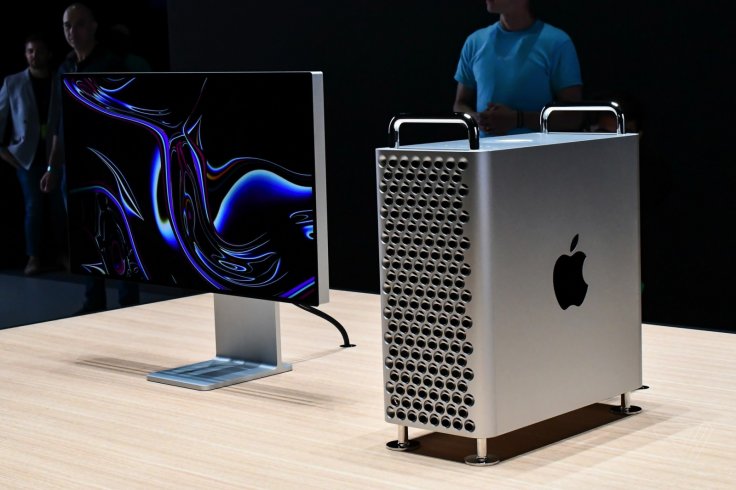
In the same direction of its AI strategy change, Apple has been successful in killing off its luxury desktop machine line, Mac Pro. The action comes after several years of looseness in the relevancy of the product following Apple switching to its own silicon chips.
Also Read: Snap as the Canary: Why Every Streaming Platform Should Be Watching This Trial
The Mac Pro, beginning with a price of 6999, was no longer competitive with the less expensive Mac Studio, which had the same performance in a smaller size. The Mac Studio, which is based on the M-series chips, has emerged as the main solution for the professional desktop segment of users in the company.
Apple had already tried to update the Mac Pro by using the M2 Ultra chip in 2023, although the upgrade did not differentiate between this and the Mac Studio. Subsequent improvements leaned more towards the Studio line, separating the two products further.
This abandonment also takes place after a change in manufacturing strategy. Recently Apple declared the Mac mini to be built in Houston, and this diminished the significance of the Mac Pro as the sole domestically made computer.
Apple Fights to Hire Engineers via Bonuses to Keep Them During the OpenAI Competition
Competition over talent is also posing a continued threat to Apple, in particular, with OpenAI, the artificial intelligence company, taking the lead with ChatGPT. The company has enlisted Apple hardware and design engineers, such as the ones that worked on the iPhone and Vision Pro.
To mitigate these losses, Apple has started to pay retention bonuses of up to 200,000 to 400,000 dollars; the compensation packages have been formulated in the form of a four-year plan. The incentives are aimed at the key product designers, especially those operating on iPhone.
Even with these, rival companies are presenting bigger remuneration implements, with the option of share schemes, which may involve very high sums. The rivalry has also created some domestic issues regarding the capacity of Apple to hold on to the top engineering talents.
Other workers have also complained that innovation has moved to AI-centric firms and startups, and this has changed the way cutting-edge work is perceived.
The hardware strength supporting Apple is trending as the AI landscape evolves
The updated strategy of Apple highlights a larger alteration of focusing on exploiting the existing ecosystem and not being the leader in fundamental models of AI. Hardware such as custom chips used to optimize on-device processing is still a major strength.
Apple is taking a route to develop a platform that stabilizes and generates profits by promoting fast AI software development by embedding the external supply of AI into its platform independently of distribution and monetization.
The updates are indicative of the way Apple is planning the battle through a highly shifting landscape of technology, where artificial intelligence is taking center stage as a major feature in devices and offerings to consumers.


