A word that barely existed a year ago has now entered the global lexicon. "Hushpitality," recently added to the Cambridge Dictionary, captures a quiet but powerful shift in luxury travel, one where silence, privacy and invisibility are no longer preferences, but premium products.
At its core, hushpitality is about control. Not just over space, but over sound, visibility and human interaction. For the world's ultra-wealthy, the traditional markers of luxury, grand lobbies, social buzz, visible opulence, are being replaced by their opposite. The new aspiration is absence: of noise, of crowds, and increasingly, of "other" people.
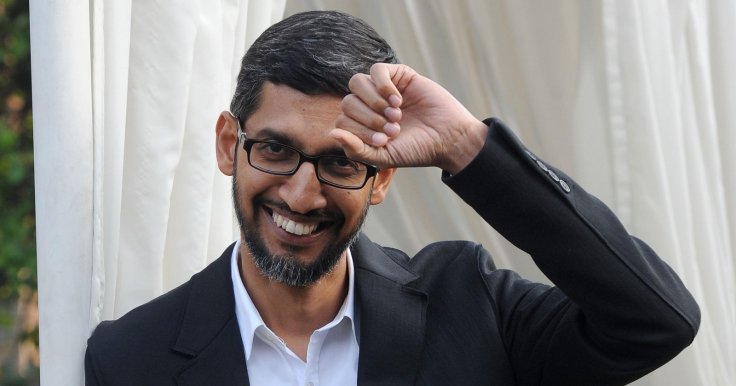
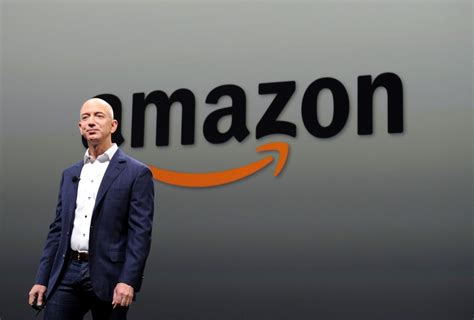
The new transformation is not theoretical but is already visible in how billionaires travel. Figures such as Jeff Bezos are associated with private-island stays that eliminate public exposure entirely. Meanwhile, executives like Sundar Pichai have been linked to "silent-floor" hotel concepts, spaces engineered for acoustic isolation, restricted access and near-invisible service.
What makes hushpitality noteworthy is not just its exclusivity, but its timing. It is emerging alongside a global tech narrative that emphasises accessibility and democratisation. The same leaders who speak about scaling technology for billions are, in their personal lives, prefer experiences designed to exclude almost everyone else.
The contradiction sits at the heart of the trend. Privacy, once a basic expectation, has now become the ultimate status symbol. In a world saturated with digital visibility, the ability to disappear, has become the rarest luxury money can buy.
The industry is rapidly adapting. Hospitality firms are building products specifically for this demand, from private yacht memberships to fully customised travel ecosystems. They prioritise discretion over display, replacing spectacle with seamless service. Even traditional luxury brands are expanding into aviation, real estate and specially-curated experiences to cater to clients who have effectively outgrown conventional hotels.
Data points reinforce the shift. Private jet usage has surged, and ultra-high-net-worth travellers, those with assets exceeding $30 million, are driving increasingly complex, high-value bookings centred on privacy and personalisation. The trajectory is clear: luxury is no longer about access to more, but access to less and exclusive.

Culturally, hushpitality marks a deeper change, signaling a move away from the performative wealth of the social media era toward something quieter, more controlled and arguably more exclusionary. Where luxury once sought to be seen, is now seeking to be unseen.
The formal recognition of the term by the Cambridge Dictionary is more than linguistic housekeeping. It is an acknowledgment that hushpitality has crossed from niche behavior into a defining feature of modern elite consumption.
In the end, the concept raises a broader question. As industries from technology to travel continue to speak the language of inclusion, who are their most advanced offerings really built for? In the age of hushpitality, the answer is increasingly clear: 'Not everyone.'


