China on Thursday appealed again for a ceasefire in the Middle East and safe passage through the Strait of Hormuz in conversations with European counterparts.
China's Foreign Minister Wang Yi, in separate phone calls with the European Union's top diplomat Kaja Kallas and Germany's Foreign Minister Johann Wadephul, appealed for joint efforts to push for an end to the war. According to a Chinese foreign ministry statement, Wang said: "All parties should work to build a broader consensus to this end and create the necessary conditions."
Beyond Phone Calls, Beijing Asserting Major Role
Beyond the calls at the surface, Beijing is positioning itself as a stabilising diplomatic actor. By engaging with figures like Wang Yi, Kaja Kallas and Johann Wadephul, China is signalling that it wants to be seen as a global mediator, not just an economic partner by emphasizing the ceasefire, maritime safety in the Strait of Hormuz, and civilian protection.
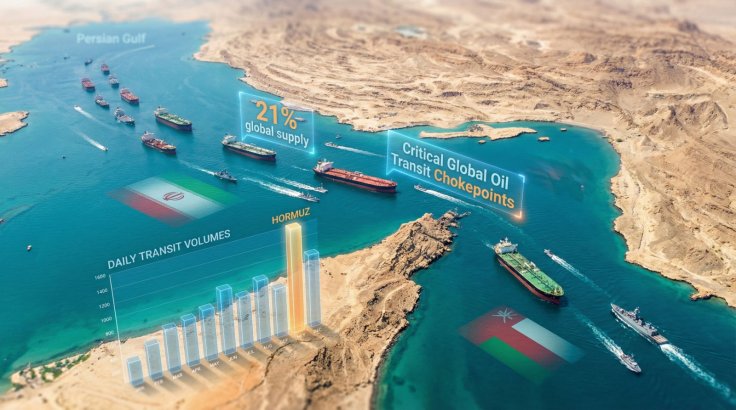
However, beneath this lies a strategic calculation tied to energy security and geopolitical positioning. China is the world's largest importer of crude oil, with a significant share flowing through the Strait of Hormuz. Any disruption threatens its economic stability and by advocating de-escalation, Beijing is effectively protecting its supply chains while projecting itself as a responsible stakeholder in global trade routes.
Multipolar World Emerging?
The move also feeds into a larger "multipolar world" narrative. China's criticism of U.S.-Israeli military actions and its call for "objective and impartial" diplomacy subtly challenges Western dominance in conflict resolution. It positions Beijing as an alternative diplomatic centre, especially appealing to Global South nations that are wary of Western interventionism.
Historically, China has followed a similar playbook. It avoids direct military entanglement but steps in diplomatically when its economic or strategic interests are at stake. A key example is its role in brokering the 2023 rapprochement between Saudi Arabia and Iran, a landmark deal that elevated China's credibility as a neutral mediator in a region long dominated by U.S. influence.
Unlike Washington, Beijing leverages trade ties and political neutrality rather than security alliances, keeping its Middle Kingdom Complex in tact.
In conflicts such as Syria or the Israel-Palestine issue, China has consistently called for ceasefires, respect for sovereignty and multilateral negotiations, while avoiding taking sides militarily. The familiar pattern allows it to maintain relations across rival blocs, Israel, Iran, Gulf states simultaneously.
In the current crisis, China's role is therefore twofold: immediate de-escalation to safeguard economic interests, and long-term positioning as a credible diplomatic power shaping a post-Western order in the Middle East.


