
- US urges India buy 100 million barrels Russian oil awaiting China.
- Energy Secretary Chris Wright says cargoes floating near Chinese refineries.
- Proposal aims calm oil markets during Iran conflict disruptions.
- Wright says move temporary, US Russia policy unchanged.
In a measure that is meant to stabilize the oil markets in the world, an effort has been made to ensure that India receives over 100 million barrels of Russian Crude that are floating in the oceans and are seeking processing seats at the Chinese refineries, a move that is expected to bring about a stabilisation of the situation in oil markets across the world, given that geopolitical temperatures have risen due to the conflict involving Iran.
On Sunday, speaking on the television networks in the United States, U.S. Energy Secretary Chris Wright confirmed Washington had made an explicit appeal to New Delhi in a temporary action to alleviate the strain on the price of world energy following the negative impact created on the Middle Eastern shipping paths.
In interviews with CNN and CBS News, Wright said that he did call up the Indians, so did Treasury Secretary (Scott) Bessent and told them, look, there is a whole bunch of oil that is floating to wait to unload at Chinese refineries.
The plan also entails redirecting Russian crude oil cargo waiting offshore to feed Chinese refinery capacity to Indian refineries, which may be done to cut down delay incurred, which is holding high volumes of oil in world waters.
As reported by Reuters, the size of the cargoes of crude to discharge around Chinese ports goes beyond 100 million barrels, indicating a reflection of the extent of the logistical blockage that has become a reality in the world oil supply chain.
Wright added that rerouting of those cargoes would aid in mowing down market fears on supply interruptions that have added to the volatility in crude prices that followed the Middle East tensions.
Wright said there was more than 100 million barrels of floating Russian crude in line to China.
The oil prices in the world have been experiencing soaring and falling in the past few weeks as traders evaluate the threat of oil supply disruption in the Gulf region. Brent crude also rose by 2.4 percent on Friday settling at $86.12, still higher than the 84.08 of the previous session, and U.S. West Texas Intermediate also went higher by 2.1 percent, closing at $82.67.
In response to these issues about tanker traffic via the Strait of Hormuz, which is one of the most critical oil shipping corridors worldwide, about one-fifth of the global oil resources are usually shipped through it.
Shipment of Energy is affected by Middle East Tensions
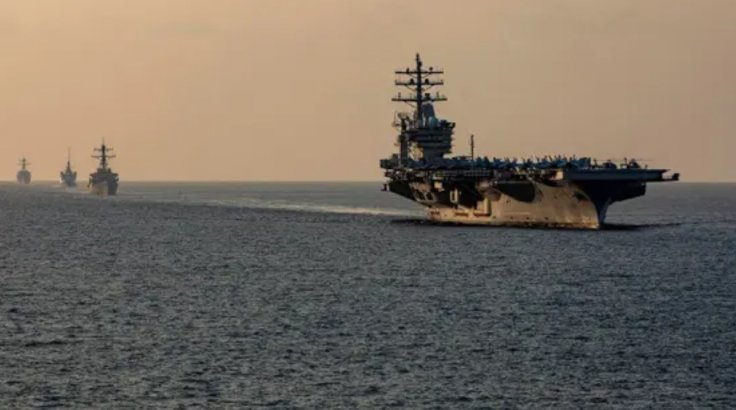
The current war with Iran has caused a new rhythm in the tanker traffic through the Strait of Hormuz and has created an uncertainty in the energy markets of the world and a question of the supply bottlenecks.
According to Wright, shipments through the waterway were underway again but at only a fraction of normal through a reevaluation of the security risks of the area by insurers, shipping companies and governments.
"And we are not anywhere close to normal traffic, that'll be a while", "But then, worst case, that is a few weeks. That's not months" said Wright.
Reuters reported that a number of tanker operators have limited or diverted transit of shipments to the Gulf due to the recent increase in security of the Gulf, leading to and increasing transit times and freight prices of delivering crude oil deliveries.
The Strait of Hormuz is vital to the energy choke points in the world not only because it joins the Persian Gulf with the Gulf of Oman and the Arabian Sea, but also due to its importance in global defense matters. All the exporters of crude oil to the international markets use the waterway to transport their product, Saudi Arabia, Iraq, the United Arab Emirates, Kuwait and Iran.
Even minimal interruptions in the strait can escalate volatility in the oil markets according to the energy analysts since traders usually charge a geopolitical risk premium when supply routes are not certain.
Wright, however, claimed the recent increase in oil prices seems to be brought about more by the anxiety of the market than the scarcity in the world energy supplies.
Wright said that the world has had plenty of oil at the moment.
The market is a bit experiencing fear premium. Nonetheless, the world is not lacking oil or natural gas at present times.
Reuters figures show that the world oil stocks are somewhat steady as compared to the past averages, and the output of all the key suppliers such as the United States, Saudi Arabia and Brazil have continued to be high.
The Emerging involvement of India in International Oil trade
Since the sanctions imposed in the West redefined the energy trade in the world after the conflict in Ukraine, India has become one of the greatest purchasers of Russian crude.

After 2022, Indian refiners also greatly began to purchase discounted Russian oil, which enabled Moscow to replace the once-destined exports to the European markets to the Asian markets.
The data presented by Reuters states that Russia has been the biggest supplier of crude oil in India during the last two years and in many instances; it supplied over a third of the total imports made in this nation.
The Indian refiners such as Indian oil corp, Bharat petroleum and Reliance industries have increased their capability of processing the Russian grades like Ural crude which is generally below the benchmark international grades.
The proposal of the U.S. authorities would not be a shift in how Washington overall deals with Russia, Wright emphasized, and that the request was merely a stabilisation measure of global markets during a temporary phase of inconvenience.
"It is not. The US policy towards Russia has not in any way changed at all" as Wright said when asked whether the move contradicted the current policies of sanctions.
Conversion of the cargoes to other destinations might also ease the congestion, around the ports in China, whereby the tankers were waiting weeks to secure refinery unloading slot owing to large volumes of imports and also because of the selection of operations schedule.
Shipping data mentioned in an article by Reuters shows that dozens of tankers of Russian crude have stood at anchor in the offshore waiting to be cleared before being allowed to unload.
According to analysts, should India manage to receive a share of these cargoes, it would alleviate the supply crunches, and also would enable the refineries to obtain more feedstock at reasonable prices.
Nonetheless, any other mass shift of shipments would also entail logistics coordination among shipping corporations, datry refiners and dealing firms that will be engaged in the trades.
The case reveals how geopolitics, logistics and market psychology interact in such a complex way to normally dictate the movement of oil prices in the world.
To date, the U.S. officials have justified the proposal to India as a temporary action that would calm the markets as the tanker traffic slowly goes back to the usual level in the Strait of Hormuz.
In the next few weeks, energy markets will not cease tracking the Middle East war and the state of affairs in the Gulf shipping industry.


