 The world's most powerful rocket, which will be used in a mission to the Moon, successfully re-entered the Earth nearly an hour after its launch.
 Researchers' analysis showed that the plasma waves have a very low frequency, unlike anything previously seen around Earth.
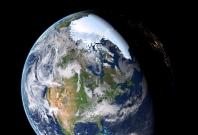 Scientists fear that a normal day could shorten by two hours if the planet continues to rotate faster.
 Several social media posts are going viral online, claiming that the world will go dark for six minutes on Saturday, August 2.
 NASA announced on Wednesday (July 23) that the space rock is likely to pass close to our planet on Monday (July 28).
 The discovery was made by astronomers using the Subaru Telescope, which is situated atop a dormant volcano in Hawaii.
 Uranus does have an internal heat source like its planetary siblings, which may have led scientists to misinterpret the data from Voyager 2.
 The reddish-brown meteorite rock, designated NWA 16788, was described as "unbelievably rare" by Sotheby's auction house.
Earth could complete a full rotation around the Sun on Wednesday (July 9) nearly 1.30 milliseconds faster than on average days.
 Enthusiastic stargazers, astronomers, and casual observers could get busier this week with an incredible lunar display taking place on Thursday (July 10).
 NASA's Lucy mission captured the highest resolution image yet of Donaldjohanson, the uniquely shaped asteroid.
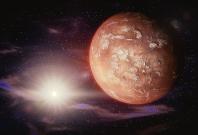 Mars may be more like Earth than previously thought, despite having a thinner atmosphere and a dry, dusty surface.
 Sky-watchers across the globe are all up for a visual treat as the full strawberry moon is coming next week!
 For the unversed, "Planet Nine" is a hypothetical planet which is reportedly larger than Earth that is thought to orbit beyond Neptune.
 Sky gazers are all set to enjoy the glimpse of a celestial event as the Eta Aquarids meteor shower is about to reach its peak next week between May 6 and May 7.


