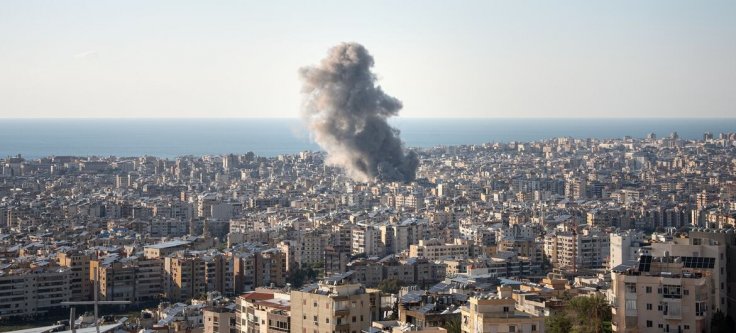
The US-Israel war on Iran entered its third week on Monday with no diplomatic off-ramp in sight, as Iran's foreign minister flatly denied ever requesting a ceasefire, European allies rejected President Trump's demand for warships at the Strait of Hormuz, Israel opened a ground front in southern Lebanon, and US intelligence delivered a sobering assessment: the Iranian regime is likely to remain in place, with the Islamic Revolutionary Guard Corps growing stronger, not weaker, under the pressure of the campaign.
The combination of military escalation and diplomatic paralysis has left global energy markets in sustained turmoil, with daily oil exports from the Persian Gulf down at least 60 percent from pre-war levels and Brent crude hovering above $100 a barrel for the ninth consecutive day.
Iran: 'We Never Asked for a Ceasefire'
President Trump claimed over the weekend that Iran wanted to negotiate and was ready to make a deal, a characterisation that Iranian Foreign Minister Abbas Araghchi rejected in the strongest possible terms in a CBS News interview on Sunday
Araghchi separately told Iranian state media that Tehran had "sent no message and had not requested a ceasefire," adding that the war "must end in a way that it will not be repeated." Iran's parliament speaker Mohammad Bagher Ghalibaf vowed that Iran would "continue the fight until the enemy truly regrets its attack," and said Tehran would not accept a ceasefire until "appropriate political and security conditions are created." He added that Iran had sufficient missile and drone reserves and the domestic production capacity to build more at "a much higher rate and at a much lower cost than the enemy's interceptor missiles."
Trump, speaking to reporters aboard Air Force One on Sunday, said he thought Iran would "negotiate at some point" but acknowledged: "I don't think they are ready." He said the United States was doing "very well with respect to the whole situation."
Allies Reject Hormuz Warship Demand
A central pillar of Washington's strategy to stabilise energy markets persuading trading partners to send warships to escort oil tankers through the Strait of Hormuz suffered a significant setback on Monday as European governments formally rejected the request. Germany was among the most direct in its response.
France, the United Kingdom and other European allies also declined to commit naval vessels, citing their non-involvement in a conflict they did not sanction. Trump reacted with visible frustration at a White House event, saying: "You mean 40 years we've been protecting you, and you don't want to get involved in something that's very minor?" He added that he was "almost doing it in some cases not because we need them, but because I want to find out how they react," describing the request as a loyalty test.
Japan and South Korea, despite their acute dependence on Gulf crude, have not formally responded. China has not publicly addressed the request. Lloyd's List estimates that even with full naval escorts in place, no more than about 10 percent of lost tanker volumes could realistically be restored, echoing the limited recovery seen during Houthi attacks on the Bab el-Mandeb.
Also Read: China Rushes to Cuba's Rescue, Expands Solar Support As US Cuts Oil Supply
Israel Opens Lebanon Ground Front
Israel launched ground operations in southern Lebanon on Monday, with forces from the 91st Division crossing the border to establish what Defence Minister Israel Katz described as a "security layer" for northern Israeli settlements against Hezbollah. Katz indicated Israel could occupy some Lebanese territory indefinitely and ruled out the return of displaced Lebanese people to their homes as long as Hezbollah remained a threat.
A joint statement from Canada, France, Germany, Italy and the United Kingdom said such an operation "should be avoided."
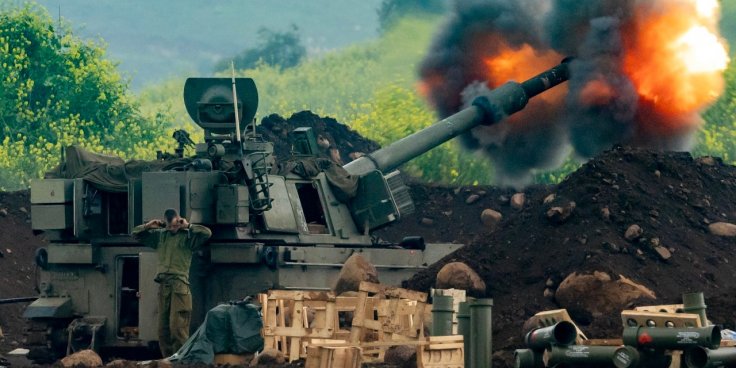
Lebanese parliamentary Speaker Nabih Berri, who speaks in some cases for Hezbollah, said there would be no talks between Lebanon and Israel until a ceasefire was in place. France offered to host direct negotiations between the two sides, proposing the disarming of Hezbollah as the central platform for any agreement.
'It Was Predicted': Intelligence Warned Trump Before War
Perhaps the most politically damaging development of the day came from the Washington Post, which reported that US intelligence assessments delivered before the war began had warned Trump that attacking Iran would likely trigger retaliation against US Gulf allies the very outcome Trump claimed on Saturday had come as a surprise.
France, the United Kingdom and other European allies also declined to commit naval vessels, citing their non-involvement in a conflict they did not sanction. Trump reacted with visible frustration at a White House event, saying: "You mean 40 years we've been protecting you, and you don't want to get involved in something that's very minor?" He added that he was "almost doing it in some cases not because we need them, but because I want to find out how they react," describing the request as a loyalty test.
Japan and South Korea, despite their acute dependence on Gulf crude, have not formally responded. China has not publicly addressed the request. Lloyd's List estimates that even with full naval escorts in place, no more than about 10 percent of lost tanker volumes could realistically be restored, echoing the limited recovery seen during Houthi attacks on the Bab el-Mandeb.
Israel Opens Lebanon Ground Front
Israel launched ground operations in southern Lebanon on Monday, with forces from the 91st Division crossing the border to establish what Defence Minister Israel Katz described as a "security layer" for northern Israeli settlements against Hezbollah. Katz indicated Israel could occupy some Lebanese territory indefinitely and ruled out the return of displaced Lebanese people to their homes as long as Hezbollah remained a threat.
A joint statement from Canada, France, Germany, Italy and the United Kingdom said such an operation "should be avoided."
Lebanese parliamentary Speaker Nabih Berri, who speaks in some cases for Hezbollah, said there would be no talks between Lebanon and Israel until a ceasefire was in place. France offered to host direct negotiations between the two sides, proposing the disarming of Hezbollah as the central platform for any agreement.
'It Was Predicted': Intelligence Warned Trump Before War
Perhaps the most politically damaging development of the day came from the Washington Post, which reported that US intelligence assessments delivered before the war began had warned Trump that attacking Iran would likely trigger retaliation against US Gulf allies the very outcome Trump claimed on Saturday had come as a surprise.
Two intelligence sources separately told the Post that pre-war assessments assessed the Iranian response as not "a guarantee, but it certainly was on the list of potential outcomes." US intelligence assessments also suggest there are no indications of an imminent collapse of the clerical and military establishment ruling Iran, with the IRGC assessed to be exerting greater control as conventional military structures are degraded by US and Israeli strikes. Trump has been receiving what one source described as "very sobering briefings" on the intelligence picture.
Gulf Attacks Continue, UAE Closes Airspace
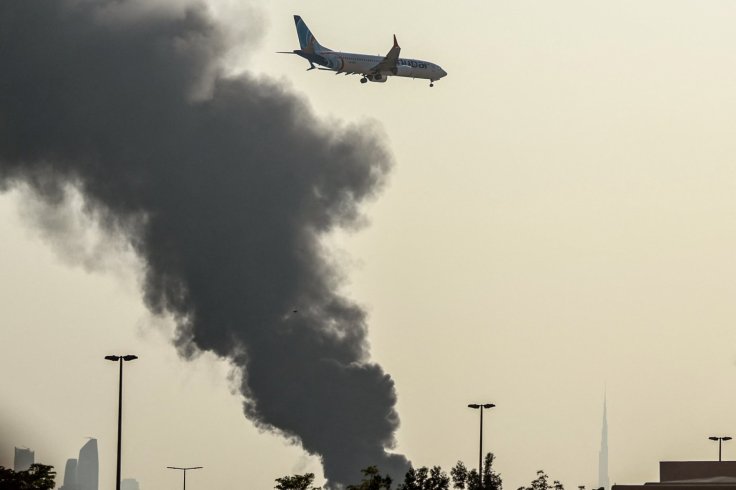
Iran continued strikes on US Gulf allies overnight into Monday. The UAE temporarily shut down its airspace in response to missile and drone threats before lifting the closure. Saudi Arabia's Defence Ministry said it intercepted a dozen drones. A fire broke out in an industrial area in Qatar after a missile was intercepted.
Dubai International Airport, the world's busiest, suspended flights after a drone attack sparked a fire nearby. Gulf oil exports are now running at least 60 percent below pre-war levels, with Iraq and Kuwait both having suspended operations at key oil terminals after local storage filled to capacity.
Also Read: Netanyahu Video Further Highlights AI Doubt, Authentic Footage Questioned
In Washington, Senate Minority Leader Chuck Schumer took to the Senate floor to accuse Trump of "flailing" on Iran strategy, saying: "Donald Trump created a mess in the Middle East, and he clearly has no plan for how to end it, and that is a huge problem for our country." The Federal Reserve meets on Wednesday. Chair Jerome Powell faces the most consequential press conference of the year, with markets watching for any signal that the energy-driven inflation shock will force a reassessment of the rate path.


