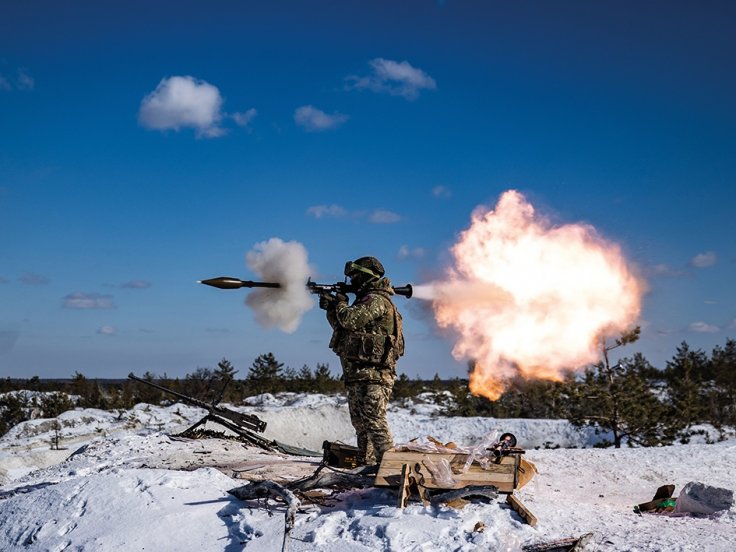
A fire erupted at the United Arab Emirates' Habshan gas processing complex. Debris from an intercepted Iranian projectile triggered it. Operations at the major facility were suspended. No injuries were reported.
The April 3 incident illustrated with unusual clarity the costs being absorbed by Gulf Arab states that are not party to the core U.S.-Israel-Iran conflict but find themselves inside its blast radius.
Since Iranian attacks began on Feb. 28, UAE air defenses have intercepted 433 ballistic missiles, 19 cruise missiles, and 1,977 drones. Even successful interceptions carry consequences: the falling debris that shut down Habshan required no enemy warhead to reach its target intact.
The Habshan complex, located roughly 100 miles southwest of Abu Dhabi city, is one of the UAE's principal onshore gas processing hubs. Al Arabiya reported the UAE confirmed debris had fallen at the site following an interception, with the suspension of operations described as a precautionary measure.
Gulf Infrastructure Under Sustained Iranian Attack
The UAE is not alone in absorbing damage. Iranian strikes have damaged Kuwait's critical water infrastructure and at least one oil refinery. More than two dozen U.S. troops were wounded in Iranian attacks on a Saudi air base.
Oracle and Amazon Web Services (AWS) data centers in the UAE were also reported to have been targeted, though that claim could not be independently verified from a second source.
Iran-backed Houthi forces, the armed movement that controls much of northern Yemen and has conducted maritime and missile attacks across the region since 2023, also joined the current round of hostilities. Israel said it intercepted the first incoming missile fired from Yemen since the broader conflict escalated.
The conflict's casualty toll on the Iranian side is contested. More than 1,937 Iranians have been killed in American and Israeli strikes since Feb. 28, citing student and advocacy sources. That figure has not been confirmed by a second independent body. Iran has threatened "crushing, broader attacks" in response to U.S. escalation warnings.
Netanyahu's 17 Calls and the Diplomatic Fog
Alongside the battlefield, two separate tracks define Washington's posture. The first is military and escalatory. President Donald Trump, in a prime-time national address, said U.S. military operations against Iran could be completed within two to three weeks. He separately threatened to strike Iran's critical infrastructure, including bridges and power plants, if Iranian attacks continued.
The second track is diplomatic, and murky. U.S. negotiations with Iran are proceeding through two separate channels simultaneously, with mixed signals from each about whether progress is real. No official U.S. or Iranian government statement has publicly confirmed the framework or the status of either channel.
Israeli Prime Minister Benjamin Netanyahu reportedly spoke to Trump at least 17 times before the initial U.S. strikes, personally lobbying for military action against Iran. The Israeli government did not dispute that account, and the White House had not issued a public response to the characterization as of the time of reporting.
Iran maintained its own escalatory posture throughout. Tehran issued warnings of broader retaliation following Trump's infrastructure threat, framing the conflict as an existential confrontation.
The United Nations Security Council (UNSC), which has primary international authority over the authorization of force, postponed a vote on whether to authorize protective operations for shipping in the Strait of Hormuz, the narrow waterway through which roughly one-fifth of the world's oil passes.

Iran War Polling and the 2026 Republican Midterm Risk
At home, the political arithmetic around the war is shifting in ways that complicate the administration's posture. Trump's own pollster delivered internal findings showing the Iran conflict is growing increasingly unpopular among American voters, with Republican strategists flagging the trajectory as a threat to the party's performance in the 2026 midterm elections.
The president's two-to-three week completion estimate for military operations sits alongside an unresolved diplomatic negotiation, a contested casualty narrative, and a Gulf security architecture that is absorbing Iranian fire without a clear international legal mandate to protect it.
The suspension of operations at Habshan on April 3 captured that condition precisely: a war with no defined endpoint producing real-world industrial consequences in countries not at the center of it.
Also Read: Hours After Trump Fired Pam Bondi, Hegseth Ousts Army Chief Randy George in Latest Pentagon Shakeup


