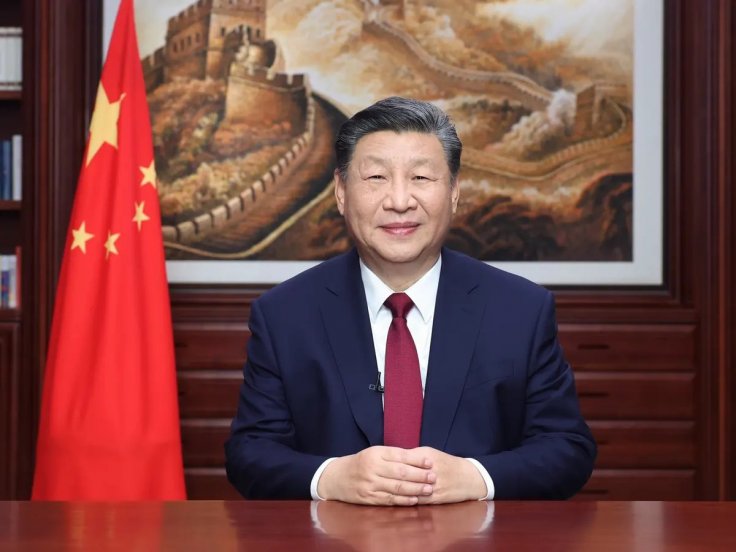
- China's parliament to open March 5 in Beijing.
- Government expected to set 2026 growth at 4.5–5%.
- Five-year plan to stress consumption and technology investment.
- Beijing likely to retain export-driven model amid tensions.
It is thought that China will achieve a minor dilution of its economic growth goals when lawmakers convene in Beijing this week at the meeting of the yearly convening of the National People Congress: a much-anticipated event which decides policy priorities the country will embrace in the upcoming year. The session begins March 5 with the premier, Li Qiang giving the government work report that describes the 2026 growth target and overall economic policy.
The majority of economists polled by Reuters believe that Beijing will set a rate of between 4.5 to 5 percent concerning the growth rate of its economy, as opposed to 5 percent last year. Reuters believes with a shift would indicate a relaxed attitude towards slower growth in the face of unsatisfactory domestic consumption, deflationary forces and too much capacity in the industries.
It will be launched with the 15 th five-year plan of China 2026-2030 which is a strategic plan of industrial strategy, technology innovation and social priorities. Analysts believe that the plan will help reiterate the dual goal of Beijing which is to increase domestic consumption and maintain its advanced manufacturing and high-tech sectors.
China has been an economy of investment and export and has established a huge industrial foundation that commands most global chain supply networks. Nevertheless, the growth in consumer spending has trailed behind exposing the economy to fluctuations in the world demand and adding to the capacity overcapacity in certain industries.
Strain Under Headline Expansion
China was able to attain an approximate of 5 percent real GDP growth rate last year according to its official target. Still based on the report by Reuters, a good part of that growth was pegged on a trade surplus of 1.2 trillion, but household consumption was muted. Nominally, the GDP increased 4.0 percent in 2025, the lowest rate since 1976 other than pandemic-influenced distortions. The GDP deflator decreased by 1 percent, the third decrease of the past three years and testifies of the lasting price infirmity.
The discrepancy between actual growth and nominal performance has increased the debate on sustainability. The declining prices and stiff competition have stressed on the corporate margins and the revenues of the local government, despite a growing output.
Analysts at Capital Economics said in a note that there is an evident tension between these two agendas and as such will be going to the entire five-year plan to find out what will be the balance that the leadership will be striking. The balance of that will dictate the extent of gains the same will make during the next few years in addressing the problem of overcapacity and deflation.
Reuters was told by a policy adviser (who prefers to remain anonymous because of the sensitivity of the matter) that policy makers will increase their efforts to stimulate consumption in addition to maintaining the emphasis on the importance of technologically driven new sources of production. The comment portrays anticipation of gradual readjustment as opposed to emphatic abandonment of production based growth.
The shift is complicated by strategic considerations. The added geopolitical pressure has solidified Chinese demand in developing self-sufficiency in semiconductors, aerospace among other vital technologies, and a complete withdrawal of industrial assistance is not likely.
Discounted Target Seen to have Policy Flexibility
Perhaps a, less ambitious or more adaptable growth objective will also provide policymakers with space to undertake structural policies without the use of intense debt-based stimulus. Provincial governments already had reduced their 2026 ambitions by about two-thirds, according to Reuters.
The largest provincial economy of China, Guangdong, proposed a target of 4.5 percent to 5 percent, which is less than approximately 5 percent the previous year. The second-largest Jiangsu dropped to 5% as opposed to above 5%. Morgan Stanley estimates that the provincial targets are weighted at 5.1 percent as against a rate of 5.4 percent in the past.
Michelle Lam, Societe Generale economist, Greater China pointed out: Confirmed this would be seen as a more willingness by the policy-makers to have slower but more sustainable growth instead of depending on debt-based stimulus in investment, which would aid in worsening supply-demand imbalances.
Not every analyst anticipates a change. There is the opinion that Beijing will keep headline target at approximately 5 percent in order to continual anchor confidence at the beginning of a new planning cycle. Morgan Stanley analysts stated that Beijing cherishes anchoring trust and the initial year of a brand new quinquennial plan is not the place to wink.
The fiscal policy is likely to be quite consistent. According to economists quoted in Reuters, the budget deficit is also expected to remain around 4.0 per cent of GDP, and issuance of debt will be of the same level as it was in the previous year. The U.S. Supreme Court ruling on 23 May, which effectively cancelled reciprocal tariffs to be inflicted by President Donald Trump in 2025, even on China, means that the imminent pressure does not push aggressive stimulus related to trade-caused disturbances.
The shift in focus is thus not focusing on the amount that will be spent by the government, but rather where funds will be channeled. According to many advisers, an increase in the proportion of household consumption in GDP to 45% by 2030, which is currently around 40 percent, would be a sign of more serious intentions to rebalance, but by this time China would still be below what the rest of the world is getting.
The dean of the School of Economics, Zhang Jun of the Fudan University wrote recently that there was relatively high real GDP growth, but people were running cold and in a tightening state: the headline number, he says, is not reflective of how people feel.
According to some economists, Beijing might outsource its direct funds to growing industrial capacity and allocate more finances to technological improvements and research. Tu Xinquan, a dean of the China Institute of WTO Studies at the University of International Business and Economics stated the following: "We will not be concentrating on growing industrial capacity anymore. Rather, more focus will be laid on building advanced technologies.
The growth goal and five-year plan which would be introduced this week is going to give further guidance elements on how China is planning to maintain a balance between stability, reform, and strategic priorities to embark on a new policy cycle.


