- Rice University researchers develop carbon nanotube fiber textile heaters
- Study finds fibers deliver higher heating power than metal alloys
- Technology could help electrify industrial high-temperature gas heating
- Findings published in journal Small by cross-disciplinary research team
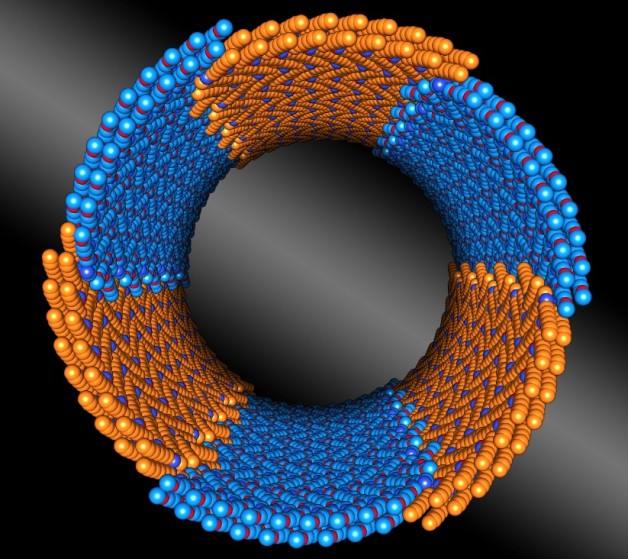
Innovators at Rice University have come up with a fresh form of electric heating component consisting of carbon nanotube fibers that may assist industries to stop using fossil fuels to heat high temperatures. The technology, as detailed in a peer-reviewed article in Small, involves wires and fabrics that are built around carbon nanotube fibers, which are more effective in producing heat in comparison with the standard metal heating components when subjected to flowing gases.
According to scientists, the method would present a fresh way forward in the quest to electrify industrial heat, which is one of the most difficult areas of limiting carbon emissions in the various manufacturing industries. One of the most significant, and most challenging, decarbonization items, according to Monisha Vijay Kumar, the principal author of the study and a graduate student in applied physics, is the electrification of industrial heat.
In industries, gases are usually heated in accordance with chemical production, drying and treatment of materials. Currently, the said processes are frequently based on burning fossil fuel, which emits a lot of carbon. Electric heating systems are already in place, however, it is technically difficult to heat gas, especially when it moves through high speeds, efficiently because of the rate of heat transfer, material strength and stability.
Nanotube Fibers Have Rare Advantages
Older forms of industrial heaters are generally based on metal alloys that are structural in the form of coils or wire. But at diameters of very small size, these materials become hard to make, and may overheat or be degraded under severe conditions. An alternative combination of properties is offered by carbon nanotube fibers.

"The fibers are quite light, bending and very strong yet still remain electrical resistant to heat Joule heating. The behavior of nanotube fibers made of carbon is quite different than a metal wire", as Matteo Pasquali, who is a director of the Rice Carbon Hub research program explains. Their weight is very low, flexible and incredibly strong which enables us to think about heater geometry and fabrication methods that would have been inconvenient with traditional materials.
Instead of modifying the existing heater designs, the research team created completely new devices with carbon nanotube fibers, composite of single filaments, parallel arrays of wire and woven textile-like fabrics. The team determined performance, in terms of specific power loading, the heating power which a device is able to produce per its mass before it breaks down. In various designs, the loadings of the specific power of the nanotube-based heaters were higher in comparison to other metal heating elements.
Better Distribution And Durability Of Heat
The fact that the material has a very high thermal conductivity and enables the spreads of heat all around the heating component is one of the reasons why the performance was improved. Geoff Wehmeyer said that their high thermal conductivity is useful in distributing heat and eliminates hot spots in particular areas, a major cause of heater breakdown.
It is important to reduce them in the high-temperature systems since localized overheating can destroy any equipment or cause mechanical breakdown. This benefit of carbon nanotube heaters is further enhanced by the fact that such material is less sensitive to oxidizing conditions, which means that it is possible to use materials made out of carbon to withstand a greater temperature on a higher level without damaging.
According to researchers, this might render the technology especially useful in industrial practices, where use of the technology is extreme heat-intensive.
Fabric-Based Production Strategy
The unique aspect of the project is that it utilizes the textile manufacturing methods in constructing heating systems. Since the carbon nanotube fibers can be woven, knitted or assembled into lightweight fabrics, this is because they act like yarn.
The textile structures make massive penetrable surfaces that enhance heat transfer when directly used on the gas flows. Professor Vanessa Sanchez, a mechanical engineering instructor with expertise in advanced manufacturing, assisted in adapting textile technique so as to make functioning heating equipment.
She said that "textile techniques offer us unbelievable liberties in the development of three-dimensional structures. The resulting structures are light, porous and mechanically compliant and at the same time conduct electricity excellently". Nanotube fabrics were found to show consistency in heating, and reduced hotspots than rigid metal metal meshes when tested.
Industry Cooperation And Future How
The study has been done in partnership with industrial partners such as Shell and DexMat who have developed commercial processes of making nanotube fibers at quantity. Another important thing that the project achieved is the union of specialists in a variety of fields, such as materials science, nanoscale heat transfer, manufacturing engineering and industrial design.
This was supported by various agencies, among them the National Science Foundation, the U.S. Department of Energy and NASA. Researchers indicate that the outcomes point to the ability of new materials to allow completely new ways of industrial heating systems.
The carbon nanotube fiber heaters, if further developed and scaled, would provide a more efficient method of electrifying high temperature industrial processes that would perhaps enable the industries to lessen the use of fossil fuels and reduce greenhouse-gas emissions.


