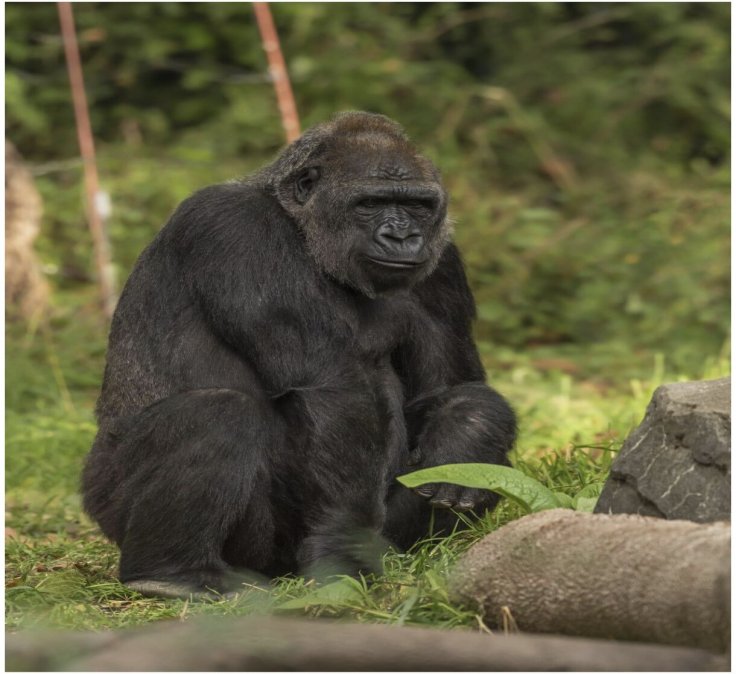
The Uganda Wildlife Authority (UWA) has officially released the results of the 2025 Chimpanzee Census in that was conducted in Bwindi Impenetrable National Park, Western Uganda. The Census has confirmed a total population of 426 chimpanzees, a species that the IUCN recognise as Endangered.
The presence of an estimated 426 chimpanzees widely distributed across Bwindi Impenetrable Forest, marks a major milestone in strengthening evidence- based conservation in one of Africa's most important protected areas.
The Bwindi Impenetrable National Park is best known worldwide for its large population of mountain gorillas. It is the only mountain gorilla national park in the whole world that is not part of the Virunga conservation area. Though there is a lot more to see and do in Bwindi Impenetrable Forest, the park is known for gorilla trekking.
Beyond gorilla trekking, Bwindi is one of Uganda's three UNESCO World Heritage sites. The reason it is a UNESCO World Heritage Site is not simply because it is a natural habitat for mountain gorillas. But there is more to this: the impenetrable forest is a haven for most Albertine Rift Valley endemics.
In May 2025, the Uganda Wildlife Authority flagged off a mountain gorilla and chimpanzee census in Bwindi Impenetrable National Park, and this week the authority published its findings on the chimpanzees that call Bwindi home. This was the first of its kind. For a long time, Bwindi Impenetrable National Park was known as a habitat for both mountain gorillas and chimpanzees, but there was no clear figure on how many chimpanzees reside in Bwindi Impenetrable Forest.
On the 24th of February 2026, it was confirmed, based on the recently completed census conducted by the Uganda Wildlife Authority, the Jane Goodall Institute, and several international partners, that there are 426 chimpanzees in Bwindi Impenetrable National Park.
Unlike the human census, where you count what you see, the wildlife census is conducted differently because wildlife is mobile. In the case of chimpanzees, research has shown that they make at least one nest per day. However, counting nests is not enough to determine the number of chimpanzees; there is more work that goes into this than we might not have the time or space to get into.
However, to give you a glimpse into the census, they mapped the forest into zones, allowing not only tracking but also monitoring new and old nests from time to time. During this zoning, there are moments when the chimpanzees almost shared the same space with the mountain gorillas.
They were never in the same space like humans and gorillas; however, they lived in proximity with each other while respecting boundaries.
The groundbreaking report found that more research is needed to understand how these two great apes coexist in the same ecosystem.
On the conservation tourism side, this was seen as an opportunity to consider chimpanzee tracking in Bwindi Impenetrable National Park in the future. However, some conservation experts consider this to be a wrong move since it will likely create a further strain in the human-wildlife conflict. There has been a worrying number of visitors to the forest, especially during the peak months.
Chimpanzee tracking is the second most popular primate activity in Uganda. If Uganda Wildlife Authority chooses to start the habituation process in Bwindi too, that will increase the number of chimpanzee tracking destinations in Uganda to five.
Currently, there are five major destinations in Uganda where chimpanzee tracking is done. These are Kibale forest national park (the leading chimpanzee tracking destination in Uganda), Kalinzu forest (under the management of the national forestry authority), Budongo forest (under the management of Great Lakes Classics), Bugoma forest (under Destination Jungle), and lastly Kyambura gorge, which, along with Kibale are under the management of Uganda Wildlife Authority.
In conclusion, the Bwindi Impenetrable Forest chimpanzee census has presented both opportunities and challenges. There are opportunities to study and also seek better ways to conserve the habitat in view of the chimpanzees. There are likely to be challenges posed by overtourism in Bwindi Impenetrable National Park. In all this, one thing stands out: a future census will show whether the population has grown or declined, suggesting better approaches.


