- Stanford study examined brain activity in 87 children.
- Children with dyscalculia showed reduced activity in two regions.
- Differences appeared when processing numerals, not dot quantities.
- Findings published February 9 in Journal of Neuroscience.
According to a study by Stanford Medicine, children with math learning disabilities do not process number symbols using two particular areas of the brain - but do not actually differ concerning the processing of dot-based quantities.
The research was conducted using MRI scans that monitored the processes in the brains of children, which assist in explaining why some kids cannot grasp mathematics because their brains have been pinpointed as having particular processes and parts that do not work according to the expectations of the MRI scan.
In research published on February 9, in the Journal of Neuroscience, by collaborators at the Stanford Medicine and San Jose State University, it was found that children with math learning disabilities process numeric problems differently than their counterparts do - not because it would not be able to understand the amount, but due to the way their brain process the abstract symbols we use to represent them. The extent of learning disability in math amongst School age children is up to 14 per cent.
"We have spent decades designing maths education around the assumption that struggling children simply need more practice. Brain science is now telling us we may have been practising the wrong thing entirely."
Same Right Synapses, Different Brains: The Way the Experiment was designed
The researchers surveyed 87 2nd and 3rth grades: 34 with math learning disabilities which meant the scores at or below the 25th percentile on a standard math fluency test and 53 with high ability. When children were placed into an MRI scanner they were shown two quantities and asked to press a button as to which one was greater.
There were those which employed Arabic numerals and others dots. The two groups were also relatively similar in the number of answers they got right, however, their behaviour and brain activity were quite different.
Also Read: Science Reveals Why You Can't Resist a Snack: Even When You're Full
The researchers constructed a computational model to trace the underlying changes in the cautionary responding and change of the strategy due to error to identify such latent variations in children. Co-lead author Hyesang Chang said that the focus was not on the performance of this task but how they approach this task differently across the two groups of children.
Two Brain Areas Tracked down and why dots are the difference
When it concerned number symbols, children with math learning disabilities were less cautious in providing responses and not slack lasting in indebtedness to their errors - two characterising behaviour that indicates adaptive learning.
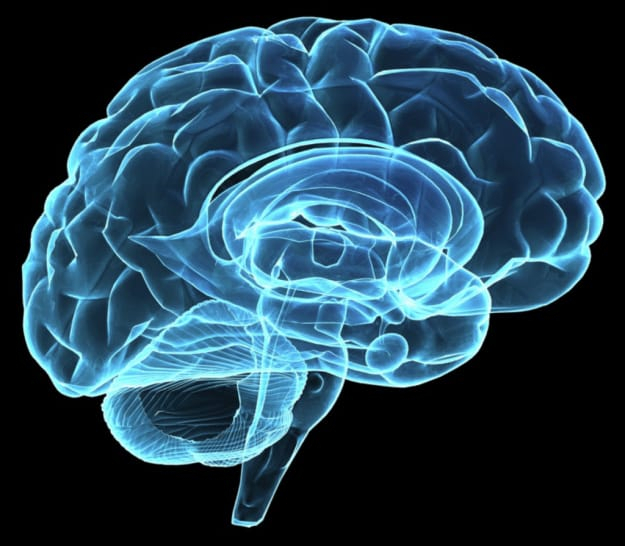
These differences were observed by MRI and correlated with reduced activity in two areas of the brain, middle frontal gyrus, processing numbers, impulse control and cognitive flexibilities and anterior cingulate cortex, which detects mistakes and manages performance.
The differences did not appear when the same problems were given in terms of dots rather than numbers. Most of these children cannot think mathematically and manipulates symbols of numbers, but have normal formulation of non-symbolic values, as such that they begin counting five from a 10-dot array without any difficulty, something that they can multiply at an even greater rate, unless their disability is serious, said one senior author, Vinod Menon.
Further Number Sense: The Case of Teaching Children to Pay Attention to Thinking
The researchers have observed that the analysis is exploratory and is not able to conclude cause and effect. But indeed the practical consequences exist. According to our results, interventions need to be directed at addressing quite more than basic number sense; they ought to address metacognitiveness, such as performance monitoring, such as: How do you modify when you realize that you have made a mistake? Menon said.
Chang continued by saying that there are covert processes that distinguish the students who may possibly have problems with math learning, and that the future intervention processes may entail instructing children to think clearly of how they are solving their problems, and to experiment.
Also Read: SpaceX Launches 29 Starlink Satellites From Cape Canaveral
Developmental cognitive neuroscientist Marie Arsalidou, who is a researcher at York University in Toronto but who did not participate in the study, told the Guardian that the study bolstered an emerging body of knowledge in the field. Smart, we are learning that there is many a region engaged, said she.


