New Zealand and the Cook Islands signed a defense and security declaration in early April 2026. The agreement ended more than a year of diplomatic tensions. Both governments described it as a reset. Beijing had a different read entirely.
The pact commits the Cook Islands, a self-governing island nation in the South Pacific that shares a constitutional relationship with New Zealand, to treating Wellington as its "partner of choice regarding defense and security matters." In exchange, New Zealand agreed to resume $29.8 million in annual funding to the Cook Islands that it had frozen following a dispute over the islands' ties to China. The agreement also clears longstanding ambiguities in their constitutional relationship regarding defense consultations.
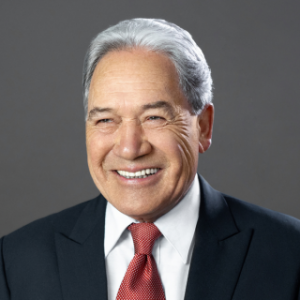
New Zealand Foreign Minister Winston Peters, a veteran politician who has served multiple terms in senior government roles, framed the declaration as a reaffirmation of a relationship that was always meant to operate on those terms. Cook Islands Prime Minister Mark Brown offered a characteristically different framing: that the pact was an evolution of sovereignty, not a concession to Wellington's pressure.
What Triggered the Diplomatic Freeze?
The crisis began when Brown signed a comprehensive strategic partnership with China without disclosing the contents to New Zealand. The agreement, whose full terms were not made public, alarmed Wellington given the Cook Islands' constitutional status. Under the 1965 Constitution of the Cook Islands, the nation is self-governing in free association with New Zealand, meaning Cook Islanders hold New Zealand citizenship and Wellington retains nominal responsibilities for defense and foreign affairs, though those lines have grown increasingly blurry over decades.
New Zealand's response was swift. Wellington froze millions of dollars in aid to the Cook Islands as the standoff deepened. The move put immediate financial pressure on the islands, which depend heavily on New Zealand support. Brown, for his part, did not publicly walk back the China partnership. He had also previously considered establishing a separate Cook Islands passport, a move that would have further complicated the constitutional relationship, though that plan was ultimately shelved.

Peters and Brown presented publicly divergent accounts of what the new defense declaration actually constrains. Peters suggested the pact restored clarity about where the Cook Islands' security obligations lie. Brown maintained that the Cook Islands retains full sovereign authority to pursue its own international partnerships, including with Beijing. Both positions appear in public statements following the signing, and the gap between them reflects precisely the ambiguity the agreement was designed to resolve, though each side reads the resolution differently.
China's Response and the Broader Pacific Contest
Beijing did not stay quiet. China's government responded to the defense pact by asserting that its relationship with the Cook Islands "is not directed at any third party" and should not be subject to outside interference. The statement was consistent with Beijing's standard diplomatic posture when Pacific island agreements draw scrutiny from Western-aligned governments.
The Cook Islands sits at the center of a contest that extends well beyond its 15 islands and their relatively small combined population. The nation controls a large exclusive economic zone (EEZ) in the South Pacific, stretches of ocean currently being explored for deep-sea mineral mining, which gives the islands outsized strategic and economic value relative to their land area.
China has pursued influence across the Pacific through a pattern of aid, loans, and bilateral deals with small island nations, and the Cook Islands became one of the more prominent flashpoints in that campaign.
The Straits Times reported that New Zealand signed the declaration specifically to repair relations strained by the China agreement, framing the pact as a direct counter-move.
The standoff between Wellington and Avarua, the Cook Islands capital, was in some respects an unusually personal diplomatic dispute. As chron.com reported, the fraught standoff was described by observers as hardly a clash of geopolitical heavyweights, given the scale of both nations involved. Yet the stakes it illustrated were anything but small. A successful Chinese security foothold in the Cook Islands would represent a meaningful shift in the Pacific's strategic geography, placing Beijing's influence closer to New Zealand, Australia, and U.S. territories in the region.
What the Pact Actually Says, and What It Doesn't
The defense and security declaration, as described in available reporting, formalizes New Zealand's role as the Cook Islands' primary security partner and resolves procedural ambiguities around when and how the two governments must consult on defense matters. It does not appear to require the Cook Islands to exit or formally repudiate its strategic partnership with China, and Brown has given no indication that Avarua intends to do so.
That leaves Peters and Brown operating from the same signed document but drawing different conclusions about what it means for Cook Islands-China relations going forward. Peters has publicly suggested the pact establishes meaningful limits on how far the Cook Islands can extend its security arrangements with third parties without consulting Wellington. Brown has not publicly accepted that characterization.
China's insistence that its Cook Islands relationship "is not directed at any third party" is a direct rebuttal to Wellington's framing. Whether Beijing's existing strategic partnership with the Cook Islands is affected in practice by the new defense declaration is a question neither government has answered with precision on the public record.
For Washington, the details carry real weight. The United States has invested heavily in rebuilding Pacific partnerships, including through the 2023 U.S.-Pacific Island Country Summit framework and renewed compacts of free association with Palau, the Marshall Islands, and the Federated States of Micronesia. A Cook Islands increasingly oriented toward Beijing, even incrementally, represents one more data point in a region where Washington, Wellington, and Canberra have all identified Chinese influence as a strategic concern.
The Cook Islands' EEZ resources add a commercial dimension to the security calculus. Deep-sea mineral deposits in the South Pacific have drawn interest from multiple states and private operators, and whichever governments maintain close relationships with the Cook Islands stand to influence how those resources are eventually developed and by whom.
The signed declaration provides both governments a workable off-ramp from a standoff that had grown publicly awkward. The $29.8 million in resumed New Zealand funding represents a concrete benefit for the Cook Islands. The formal language around defense consultation gives Wellington something it can point to. What it does not provide, at least on the current public record, is a definitive answer to the question both Peters and Brown have been asked repeatedly since the signing: precisely what Beijing is now permitted to do in the Cook Islands, and what it is not.
Disclaimer: This article was produced with the assistance of artificial intelligence tool but vetted by human editor.
Also Read: China Sanctions Japan PM Ally Over Taiwan Ties As Tensions Rise [WATCH]


