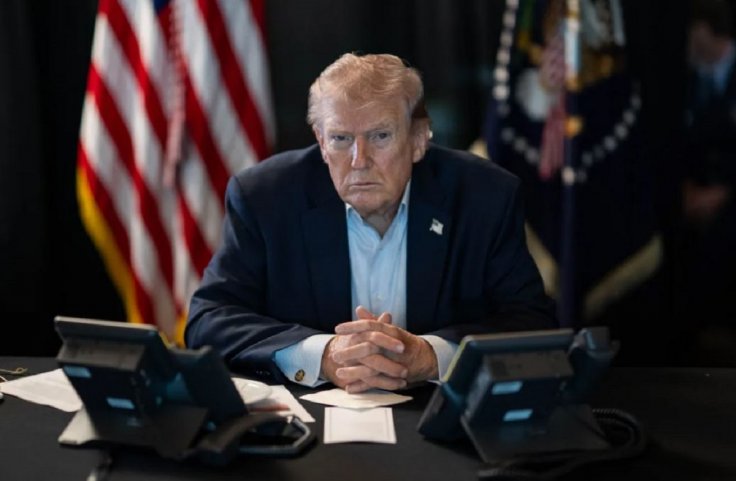
- Trump says he is considering withdrawing the U.S. from NATO over Iran war tensions
- 2023 law requires congressional approval, limiting unilateral withdrawal
- NATO Article 13 mandates a one-year notice period for exit
- Dispute highlights deepening rift with European allies over military support
President Donald Trump said in early April 2026 that he is "strongly considering" pulling the United States out of the North Atlantic Treaty Organization (NATO), the 32-member collective defense alliance that has anchored Western security since 1949, after European allies declined to provide military support for U.S. operations against Iran. The threat is not new, but the legal and political machinery surrounding it has never been more explicitly engaged.
The immediate trigger is the Iran conflict. Trump characterized European allies' reluctance as a "test" of their commitment to the United States, warning that NATO faces a "very bad" future if member states do not join the war effort.
European allies, for their part, offered mixed responses to U.S. requests for military base access, according to WBOC and WANDTV, with some governments citing domestic political constraints. Through March 2026, Trump escalated his criticism through a series of public statements that grew sharper in tone with each week.
The 2023 Law That Stands Between Trump and the Exit Door
The central legal obstacle is a congressional statute passed in 2023, which requires explicit legislative approval before any president can withdraw the United States from NATO. The legislation, passed with bipartisan backing, was specifically designed to prevent unilateral executive action on alliance membership. It cleared Congress at a moment when Trump's first-term skepticism of NATO was still fresh in lawmakers' minds.
"NATO faces a very bad future if member states do not join the war effort," said Trump, describing the situation as a test of allied commitment.
He has argued he does not need congressional sign-off, claiming the authority to withdraw unilaterally rests with the executive branch. Some constitutional scholars have raised the possibility that Trump could invoke his powers as Commander in Chief to sidestep the statute, though that argument remains legally untested and carries a confidence level that legal experts broadly regard as uncertain. No federal court has ruled on whether the 2023 law is constitutionally binding on the presidency.
Senate Minority Leader Chuck Schumer, Democrat of New York, has been direct about where Congress stands. "Congress will not approve" a NATO withdrawal, Schumer said, according to National Today. The White House has not publicly responded to Schumer's statement.
Marco Rubio's Reversal and the Article 13 Clock
The most striking subplot involves Secretary of State Marco Rubio. Rubio, a Republican senator from Florida before joining the Trump Cabinet, was among the co-sponsors of the 2023 law requiring congressional approval for NATO withdrawal. He now supports reexamining the alliance's terms, according to CBS News, a position that places him in direct tension with legislation he helped write.
Rubio's reversal carries institutional weight. As the country's chief diplomat, his public openness to revisiting NATO membership signals to European capitals that the administration's posture is not simply rhetorical.
If Trump were to file formal notice regardless of congressional opposition, the procedural clock would be governed by NATO's Article 13. That provision allows any member state to withdraw after giving one year's written notice to the U.S. government, meaning a formal filing would not take effect for 12 months. During that window, Congress, the courts, or a change in political circumstances could all intervene. The one-year delay is not a loophole: it is a built-in diplomatic pause that the treaty's drafters inserted precisely for moments of political volatility.
Did Trump's Pressure Campaign on Defense Spending Work?
Separate from the Iran dispute, the NATO row has renewed scrutiny of something Trump has long demanded: higher defense spending from alliance members. Canada and several other NATO members have recently increased their defense spending commitments, a shift that Global News attributed in part to sustained U.S. pressure. NATO's benchmark calls for member states to spend at least 2% of their gross domestic product on defense, a threshold the alliance's secretary-general has repeatedly cited as the standard for fair burden-sharing.
The spending increases hand Trump a partial policy argument: that confrontational rhetoric produced concrete results where diplomatic requests had not. European governments have pushed back, noting that many of the spending increases were already in planning before Trump's latest threats, and that conflating defense spending compliance with support for the Iran war sets a new and expansive precedent for what alliance loyalty means.
That distinction matters. NATO was founded as a collective defense arrangement against threats to member states' territorial integrity, primarily in Europe. Requiring members to support U.S. military operations in the Middle East as a condition of continued American participation represents a significant reinterpretation of the alliance's founding purpose.
No NATO member has publicly endorsed that framing, and the alliance's founding treaty, the North Atlantic Treaty of 1949, does not extend collective defense obligations to conflicts outside member state territory by default.
The constitutional question, the diplomatic rupture, and Rubio's reversal are now moving in parallel, with no resolution in sight before the next NATO summit.


