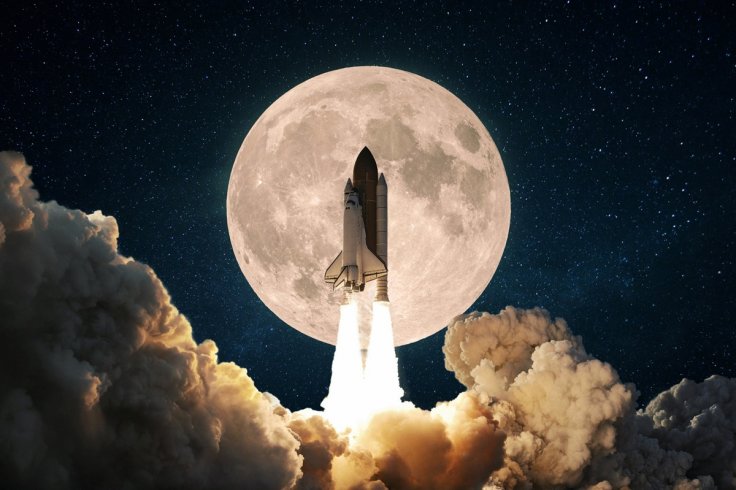
Four astronauts left Earth orbit on April 1, 2026. No human crew had done that in more than half a century. The destination was the Moon and this time, the stakes extend well beyond the journey itself.
The National Aeronautics and Space Administration (NASA) Artemis II mission launched that morning, sending Commander Reid Wiseman, pilot Victor Glover, mission specialist Christina Koch, and Canadian Space Agency astronaut Jeremy Hansen on a 10-day lunar flyby covering 685,000 miles. The crew is the most diverse in the history of crewed lunar missions: Koch becomes the first woman to travel to the Moon, Glover the first person of color, and Hansen the first non-American ever to leave Earth orbit on a lunar trajectory.
The spacecraft will reach 4,700 miles beyond the Moon's far side, farther from Earth than any human has traveled before. During the first 24 hours after launch, the crew conducted extensive systems testing in Earth orbit before committing to the translunar trajectory, a procedural step designed to verify the Orion capsule's life-support and propulsion systems before the point of no return.
Lunar Ice and the Resource Competition Driving Artemis
The mission's deeper significance lies not in the flyby itself but in what Artemis is designed to unlock. NASA's long-range plan calls for establishing a permanent lunar base at the Moon's south pole, a region where permanently shadowed craters hold confirmed deposits of water ice. That ice is not merely scientifically interesting. Processed correctly, it yields drinking water, breathable oxygen, and hydrogen-oxygen propellant, the same combination that powered the Saturn V rockets that sent Apollo astronauts to the Moon in the first place.
A refueling infrastructure at the lunar South Pole would fundamentally alter the economics of deep-space travel. Propellant manufactured on the Moon costs a fraction of what it takes to haul the equivalent mass out of Earth's gravity well. For any nation or commercial entity planning crewed Mars missions, that math is decisive. The Artemis II launch "ignites a new global space race focused on lunar resources and strategic positioning rather than Cold War ideology," a framing that reflects a shift in how space competition is now understood in policy circles.
NASA is not alone in recognizing this. China's lunar program has publicly identified the south pole as a priority target. The race to establish a physical and legal presence over the most resource-rich crater rims is already shaping mission timelines and international partnerships in ways that have no direct precedent in the Apollo era.
Artemis Program Costs, Timeline, and the Apollo Comparison
Getting to this point took considerably longer than the original Moon program. The Apollo program, which ran from 1961, achieved a crewed lunar landing within eight years. Artemis has moved more slowly, hampered by what the Associated Press described in 2026 as "decades of indecision about destinations."
NASA Administrator Jared Isaacman, who took charge of the agency in early 2026, overhauled the program in February of that year to more closely mirror Apollo's streamlined approach. His restructuring added an intermediate test mission and pushed the first crewed lunar landing to Artemis IV, now targeted for 2028. The total estimated cost of the updated Artemis program stands at approximately $100 billion, with $20 billion allocated across the next seven years. That figure has not been confirmed by a second independent source.
The program also differs from Apollo in its explicit emphasis on international cooperation and long-term sustainability rather than a single landmark landing. Canada's participation, represented by Hansen's seat aboard Artemis II, reflects a partnership agreement between NASA and the Canadian Space Agency (CSA) that exchanges astronaut access for Canadian contributions to the Lunar Gateway, an orbital outpost planned to support future south pole surface missions.
Commander Wiseman, a U.S. Navy veteran and former International Space Station (ISS) commander, acknowledged the weight of the mission before launch. He shared will and trust documents with his teenage daughters and had direct conversations with them about the risks involved, according to reporting published March 31, 2026. "We talk about the risks," Wiseman said. "I'm not hiding anything from them."
Mission specialist Koch, who holds the record for the longest single spaceflight by a woman after her 328-day ISS stay in 2019 and 2020, brings direct experience with long-duration mission physiology. Hansen, based in London, Ontario, trained with NASA since his CSA selection in 2009 and has waited 17 years for a flight assignment that now puts him further from Earth than any Canadian in history.
The 10-day profile does not include a lunar landing. Artemis II is a test of systems, crew performance, and the Orion capsule's deep-space endurance. A landing, if the 2028 schedule holds, falls to Artemis IV. What Artemis II carries is proof that the hardware works, the crew can function beyond low Earth orbit, and the south pole is worth the $100 billion now committed to reaching it.
Disclaimer: This article was produced with the assistance of artificial intelligence tool but vetted by human editor.
Also Read: AI Space Intelligence Platforms 2026: US vs China, Contracts, and the Arms Race


