- India faces stagflation risks as oil surge hits economic outlook
- Rupee falls to record low despite central bank interventions
- Hormuz disruption halts major oil flows affecting energy imports
- Remittance and export risks rise amid Middle East instability
India's economy is absorbing shocks on multiple fronts. The Middle East conflict has driven oil past $115 per barrel. The rupee sits at a record low. Nearly four in ten remittance dollars are in jeopardy.
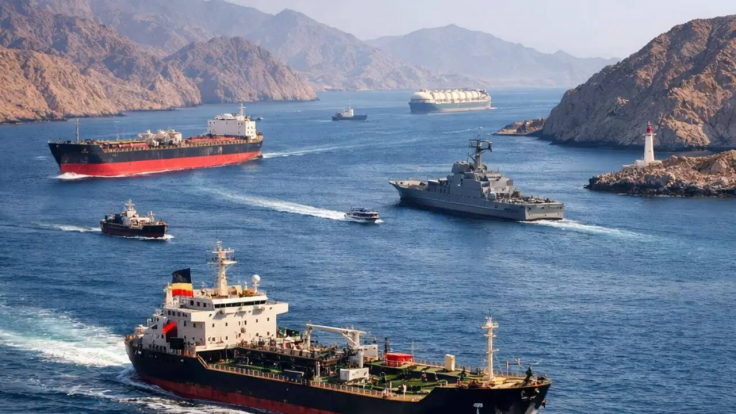
The scale of the damage in play becomes clearer when a single statistic is considered: vessel traffic through the Strait of Hormuz, the narrow waterway between Iran and Oman that serves as the principal conduit for Persian Gulf oil exports, has collapsed from between 200 and 300 ships per week to just one per week.
Remittance and export risks rise amid Middle East instabilityIran's effective stranglehold on the strait has halted the transit of more than 20 million barrels of oil per day, a volume representing roughly one-fifth of all global petroleum consumption. For India, which imports the majority of its crude oil from Gulf producers, the chokepoint is not an abstraction. It is the arterial passage through which the country's energy supply flows.
Oil prices surged past $115 per barrel as the conflict escalated, forcing India's government to confront a fiscal arithmetic it had not budgeted for. The Indian government's official growth forecast of 7.0 to 7.4 percent for the fiscal year is now under explicit threat, with New Delhi warning that rising energy and freight costs are increasing downside risks across the board. QatarEnergy and other major Gulf producers have temporarily halted output following infrastructure attacks, adding a supply-side shock on top of the transit disruption.
Rupee Slide and the Limits of RBI Firepower
The currency markets have registered the stress in real time. The Indian rupee breached 93.98 against the U.S. dollar before falling further, eventually hitting a record low of 95.20 as the conflict entered its fifth week.
The Reserve Bank of India (RBI), the country's central bank and monetary authority, has "intervened in foreign exchange markets to slow the slide, but the rupee has continued to weaken despite those measures". A member of the RBI's Monetary Policy Committee (MPC) acknowledged publicly that the conflict is generating short-term economic pressures through higher oil prices, export disruptions, and remittance risks.
India's Chief Economic Advisor went further, warning of "significant" impact across growth, inflation, fiscal balances, and external accounts from the transmission channels opened by the Israel-Iran conflict. Moody's Investors Service, the global credit rating agency, placed the vulnerability in starker terms, noting that India's limited strategic oil reserves and structural reliance on fuel subsidies make the country particularly exposed to supply disruptions, with potential GDP losses of up to 3 percent.
Ernst and Young (EY), the professional services firm, put a finer point on the inflation dimension: if the conflict persists into the next fiscal year, India's GDP could contract by 1 percentage point and inflation could spike by 1.5 percentage points above baseline. Those projections assume the Hormuz disruption continues without a negotiated resolution, a scenario that Indian policymakers have not publicly ruled out.
Remittances, Stagflation Risk, and the Russia Calculation
The oil and currency pressure is compounded by a threat that rarely surfaces in mainstream coverage of India's fiscal position. The Middle East accounts for approximately 38 percent of India's total remittance inflows, according to a Morgan Stanley analysis.
Those transfers, sent home by millions of Indian workers employed across Gulf states, form a critical buffer for household incomes and the country's current account balance. With Gulf economies under strain from production halts and infrastructure damage, the employment outlook for Indian migrant workers has become materially uncertain.
Morgan Stanley has flagged the combination of slowing growth and rising prices as a stagflation risk, noting that the Middle East also accounts for roughly 15 percent of India's exports. Strong domestic demand has provided a degree of insulation: Fitch Ratings, the credit assessment agency, raised its forecast for India's fiscal year 2026 growth to 7.5 percent, citing the resilience of internal consumption.
India's government, for its part, has characterised the risks as "multi-layered," a formulation that signals awareness of interconnected vulnerabilities without specifying policy responses.
New Delhi has moved on at least one front. India is actively negotiating expanded energy supply agreements with Russia to offset the Gulf disruption, and has sought potential sanctions exemptions from Washington to facilitate those purchases. The pivot carries its own complications.
Deepening energy dependence on Russia, at a moment when U.S.- Russia relations remain fraught, creates diplomatic exposure that Indian officials have not publicly quantified. Whether discounted Russian crude can fully substitute for disrupted Gulf volumes, given the logistical and refinery-configuration constraints involved, has not been confirmed by a second independent source.
What the data does confirm is the breadth of the pressure. A single chokepoint, a narrow maritime corridor 21 miles wide at its narrowest point, has set in motion a chain of consequences touching India's fiscal deficit, its currency, its inflation rate, its export revenues, and the household incomes of millions of citizens whose livelihoods depend on Gulf employment.
India's government has described the risks as significant and growing. The rating agencies and multilateral lenders have reached similar conclusions through different methodologies. The arithmetic of exposure, across energy, currency, remittances, and trade, points in one direction.


