- Nvidia valuation falls to seven-year lows amid investor sentiment shift
- Concerns grow over slowdown in AI-related spending by tech firms
- Export controls and competition add pressure on future growth outlook
- Company remains key supplier of AI chips despite market reassessment
The U.S. semiconductor manufacturer Nvidia Corp., which plays center stage in the artificial intelligence rush, has recently had its valuation decline to seven-year lows on a change of heart for investors. Its downfall, as indicated by its price-to-earnings ratio, follows anxiety that the rate of AI-related expenditure can reduce following a phase of intense growth.
The firm has had a significant benefit from the demand for AI chips, especially graphics processing units (GPUs) in data centers and machine learning applications. Its stock has been on a rapid rise over the last several years as tech companies have been allocating more funds to AI infrastructure.
The latest trends in the market give the indication that the investors are reconsidering the sustainability of such a growth curve. Nvidia's shares are now trading at about 19.6 times its expected 12-month earnings, their lowest valuation since early 2019, a year before the coronavirus pandemic and four years before OpenAI's launch of ChatGPT ignited a rally in the shares of Nvidia and other AI-related stocks. There are indications that analysts believe that major technology firms' spending could level off as opposed to accelerating at the past rates.
Artificial Intelligence Investment Prospectus Pushes Market Review
The valuation of Nvidia has been pegged on the prospects of further growth of artificial intelligence. The high-performance chips were also driven by the large-scale investments made by some of the biggest companies, like Microsoft, Google, and Meta Platforms.
Questions have been posed about whether there will be a level of spending where leveling off such investments is done. There have been speculations by some analysts that the first cycle of infrastructure construction is being replaced by a more cautious period of investment.
The change has helped to reevaluate the metrics of Nvidia. The low price-to-earnings ratio indicates that the investors are not giving a high premium on future earnings growth as compared to the past.
Simultaneously, Nvidia is still a player in the powerful AI hardware, and its devices are heavily employed in industries. Even with the changing sentiment, the company has not changed fundamentally in the way it stands in the market.
Also Read: Apple Shifts AI Strategy to App Store Model, Opens Siri to Third-Party Tools
Uncertainty is further enhanced by geopolitical and competitive pressures
Nvidia is also having its prospects impacted by broader factors. The company is operating within conditions of the trade tensions, export controls, and competition with other semiconductor companies.
Evercore analyst Mark Lipacis explained, "Nvidia's weight in the S&P 500 Index is 7.4%, higher than allowed by the charters of many fund managers. So, while we expect Nvidia's fundamentals to be better than the broader market, there is a headwind to its P/E ratio caused by fund managers obligated to lower their stakes in the stock as it appreciates faster than the market."
The U.S. ban on exporting advanced chips to some countries in the world has impacted some of the business operations of Nvidia, and other rivals are inventing alternative solutions to minimize dependence on its products.
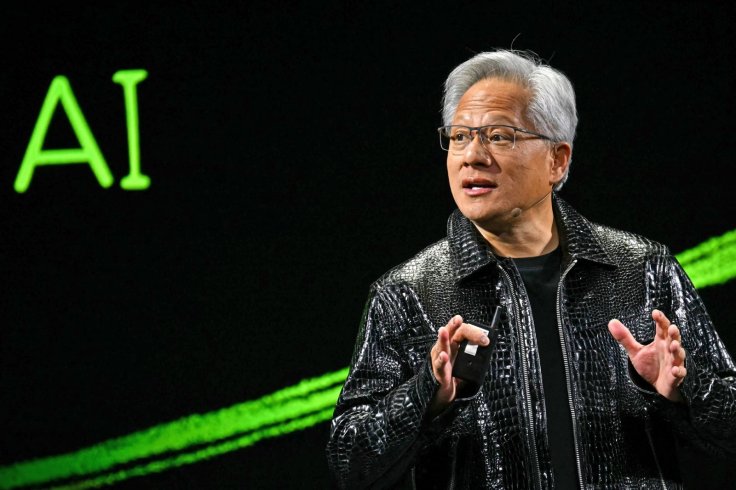
These forces introduce challenges to their predictions of future growth. The company's leadership in terms of technology and competitive situation is on the agenda of investors.
The dynamic expectations are reflected in market reaction
The valuation change of Nvidia has attracted interest in the financial markets, with the company being regarded as a guide when it comes to investments relating to AI. New developments in its stock performance tend to be accompanied by sweeping trends in the technology market.
What can be said is the feeling of the people- a mixture of caution and still great optimism. In a very active Reddit post, a user said, It is a robust company, but the buzz surrounding the AI development could be settling down slightly.
The observation fits into an increased narrative that is developing among investors, in which expectations are being lowered and not called to an absolute halt.
Nvidia continues to be the focus of AI, although its valuation changed
The presence of Nvidia in the artificial intelligence ecosystem remains strong, as the company is a cornerstone of numerous AI platforms due to its hardware. The future performance of the company will probably be based on on-demand changes as the industry enters the next stage.
This recent valuation drop reminds us of just how fast market expectations can evolve, especially in the industries with high rates of growth in terms of both reinvestment and innovation.