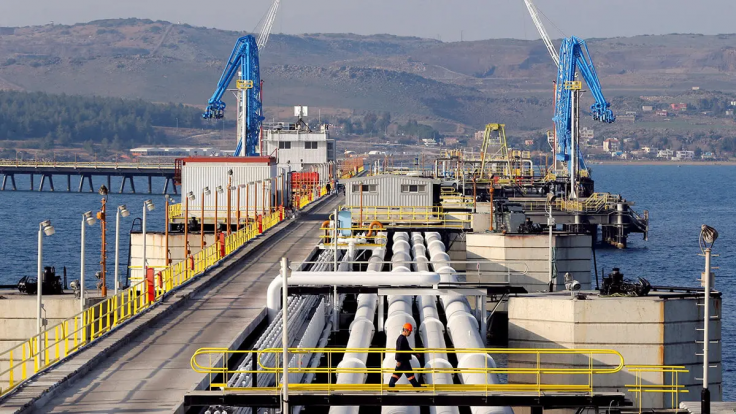
Brent crude shot up another 2.74 per cent or $3.09 to $115.66 a barrel during early trading on Monday, the most violent month in oil prices in the modern record.
Brent has begun surging 59 per cent since February 28 when the United States and Israel executed synchronized attacks on Iran, which is a monthly rise that has isolated even the dizzying spikes of the 1990 Gulf War. West Texas Intermediate was not an exception and rose by 2.92 to 102.56, after having already advanced by 5.5 percent in the last session.
The triggering event on Monday was grim and unambiguous: over the weekend, the Houthi forces of Yemen made their first direct attacks on Israeli territory, which was a radical extension of a conflict that so far had been concentrated to the Persian Gulf and the blocked waters of the Strait of Hormuz.
The markets gave an immediate message. The whole structure of oil supply in the world is at stake when the Red Sea is turned into a battlefield.
The escalation of the weekend was unlike a tactical development to energy strategists who have observed the Iran conflict since its opening shots were fired.
Conflict Extends to Red Sea
"The conflict is no longer concentrated in the Persian Gulf and around the Strait of Hormuz, but now extends into the Red Sea and the Bab el-Mandeb, one of the world's most crucial chokepoints for crude and refined product flows," JP Morgan analysts led by Natasha Kaneva said in a cautionary note.
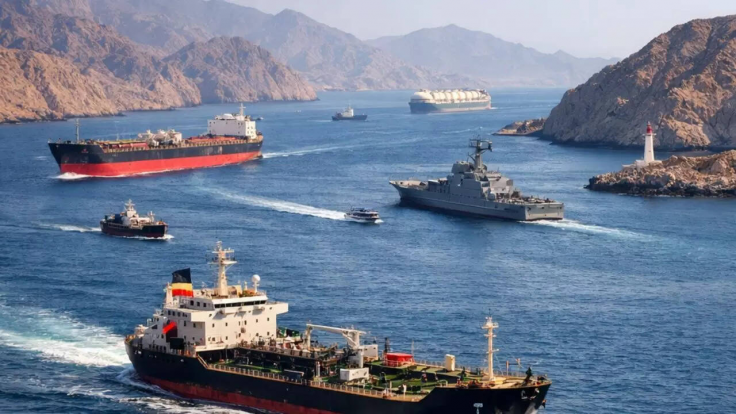
The export of Saudi crude, which was redirected due to the closure of the Strait of Hormuz to the Yanbu port on the Red Sea, exceeded 4.658 million barrels per day last week, according to the data reported by the analytics company, Kpler, an unparalleled rerouting of supply is currently located in the field of Houthi activity. In the event of Yanbu exports were affected, Saudi oil would have to shift even more towards Suez-Mediterranean (SUMED) pipeline to the Mediterranean, JP Morgan's note said. It warned that a backup that would overstretch the infrastructure, increase transit prices and in a supply chain that is already vulnerable, offer an entirely new slew of geopolitical chokepoints.
It is against this background of the speeding up military build up that a parallel and as yet but tentative diplomatic initiative is being pursued.
Pakistan Foreign Minister Ishaq Dar, meanwhile affirmed that, Islamabad has been making efforts towards making a short-term and permanent solution to the war which also includes the possibility of direct U.S.-Iran talks taking place on Pakistani soil.
On Sunday, Iran accused Washington of making preparations to carry out a ground attack and it was prepared to retaliate in case of an attack on its territory. It is not unprecedented in the history of Iranian statecraft to negotiate the preparedness to make concessions with military confrontation, but it poses an incredible challenge to the role of Islamabad as the would-be mediator and whether there exists a diplomatic channel.
Are Markets Overreacting?
A group of commodity economists has warns that oil markets during active conflict situations habitually charge in worst-case results that do not quite become a reality. The last historical parallel currently being invoked, which is the 1990 Gulf War, actually resulted in some price spike that was quickly reversed after coalition troops proved to have superior operations and supply disruption was not as much as originally perceived.
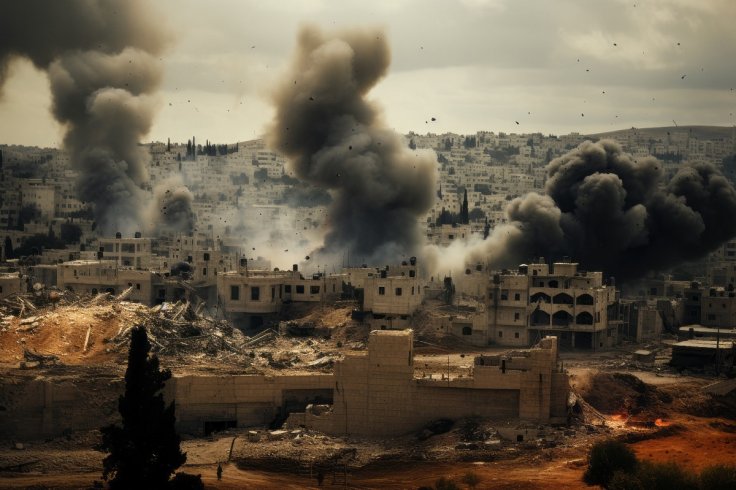
In commentary on the initial phases of the Iran dispute and war, Wood Mackenzie, an energy consultancy company, has already observed that the global refining system has valuable flexibility to accommodate even major supply disruption, should there be time to reroute and alternative port facilities. The question now is, is that flexibility able to keep up with the pace of the geographical expansion of the conflict.
What this figure fails to inform us is whether the 115 represents a ceiling or a stopover. Should Houthi attacks manage to impede the Yanbu exports at any rate of the magnitude of the Strait of Hormuz shutdown, and should the mediation process led by Pakistan fail to achieve even a tentative ceasefire framework, the models being simulated by desks at Goldman Sachs, JP Morgan, and the IEA all point to the uncertainty with no precedent.


