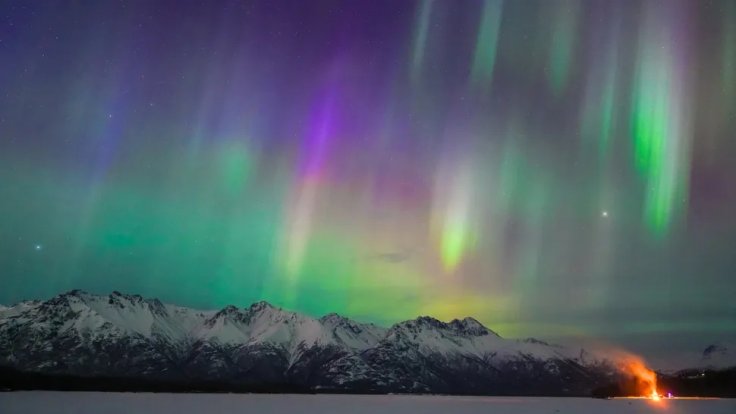
- Strong G3 geomagnetic storm triggered widespread aurora sightings globally
- Northern lights visible across US, UK and central Europe
- NOAA linked event to solar eruptions and charged particle activity
- The storm occurred in late March 2026 during a rising solar cycle
As a result of intense solar activity, a strong geomagnetic storm has forced the northern lights to be seen in areas where they are not commonly seen, producing a widespread display of the northern lights seen across various continents. The occurrence was a G3 storm according to the National Oceanic and Atmospheric Administration (NOAA) scale, and it occurred towards the end of March 2026.
The auroras that are normally seen in high-latitude areas around the Arctic Circle were seen far to the south. Viewers have seen them in regions of the United States, the United Kingdom, and central Europe, and the photos depict colorful hues of green, purple, and red illuminating the sky at night.
The effect arises when sun particles gaining charges smash into the magnetic field and atmosphere of the earth, where they create light displays that are denoted as the aurora borealis in the Northern Hemisphere. In more intense geomagnetic storms, the interactions are extended to lower latitudes.
Aurora range of visibility increases with G3 geomagnetic storms
It was Hermine that developed into the G3 intensity (which is the strength of a storm), which is known as a strong storm by the Space Weather Prediction Center, a branch of the U.S. National Oceanic and Atmospheric Administration. At this altitude, the auroras are likely to become visible outside their normal areas and exhibit their magnificent displays in other areas that experience them very infrequently.
Scientists also explained the occurrence by citing a shock of solar particles due to the recent solar activity, such as surface eruptions of the sun. Such occurrences can eject coronal mass towards the earth, pushing its magnetic field and escalating the aurora activity.
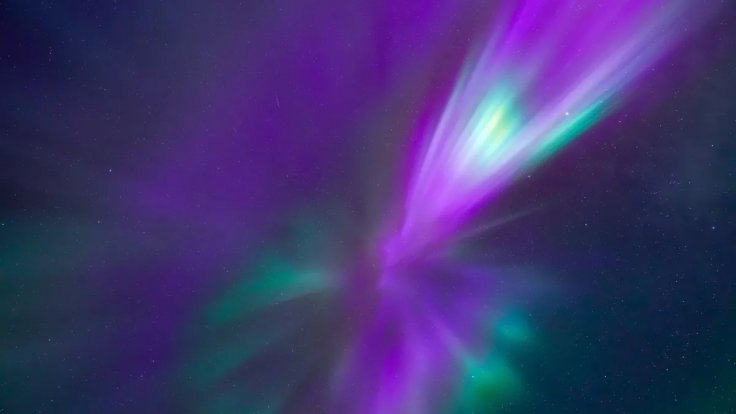
The storm was predicted to have greater visibility, but times before, meteorological agencies and space weather experts had warned of the impending storm. According to the United Kingdom's Met Office, which is the national weather service, the storm was so strong that people in much greater latitudes closer to the south could see the auroras.
The Met Office, in its warning before the peak of the action, said that the aurora was visible far further south than usual.
Viewers all over the world witness rare shows
There were sightings of the aurora reports, which are hardly seen in the area. In the United States, visual activity was seen in states long distances south of normal aurora latitudes, while in Europe, the activity was seen all the way across the United Kingdom and as far east as central Europe.
The pictures circulated on the Internet depicted strong colors and moving motifs that indicated the power of the storm. In certain places the aurora was in the form of diffused glows, and it took the shape of arches and curtains in other places.
The reaction of the society emphasizes the rarity of the event. One of the participants of the active Reddit community posted, "It feels like a movie to be able to view the northern lights at this latitude, as it is so unreal and surrealistic to be seen here in the south as well as that."
This made the event a spectacle across the world and attracted the attention of both the experienced astronomers and the general viewers.
Solar Activity Indicates Continued Space Weather Cycle
The latest storm is consistent with a larger rise of solar activity as the sun holds the brink of its 11-year solar cycle. At this stage, the number of solar flares and the occurrence of coronal mass ejections increase, increasing the chances of geomagnetic storms.
According to the space weather professionals, such occurrences often yield spectacular scenes, but there can also be practical implications. Power grids and geomagnetic storms are also capable of disrupting satellite functions, navigation, and geomagnetic storms, although this event did not have any significant disruptions that were well publicized.
Prediction of space weather is a priority area for agencies like NOAA that track the solar activities and give warnings to reduce the possible effects on infrastructure.
An occurrence such as the March aurora was an experience that not only generated scientific concerns but also popular curiosity. It was a spectacular viewing experience for many spectators because they could rarely see one of the unique natural light shows exceeding its normal materials.
Also Read: Bright Teeth, Hidden Risks? Colgate Sued Over Kids Mouth Rinse Safety


