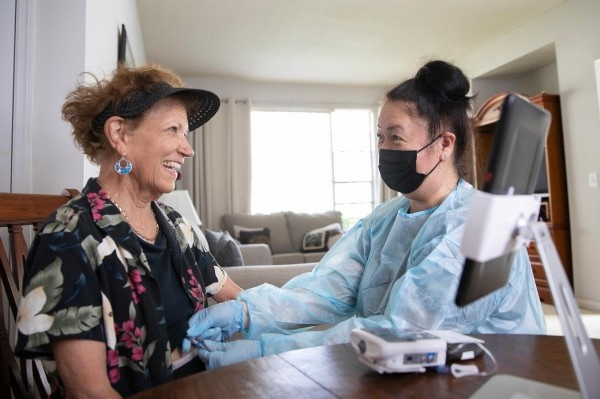
- Mayo Clinic study tests home-based chemotherapy delivery model in patients.
- Pilot program administered 93 infusions to 10 patients safely.
- No infusion reactions or catheter infections reported during trial.
- Larger trial underway to assess outcomes, cost, scalability.
A recent Mayo Clinic study has discovered that administering chemotherapy at home is safe and more possible, providing a possible change to the manner of administration of cancer care in places other than the regular hospital facilities.
The study compared the Cancer CARE Beyond Walls model, which involves a combination of the virtual consultations, one-homic all-distant patient analytics, and clinical services through the internet to deliver treatment to patients themselves.
A pilot program done involved a multidisciplinary care team giving 93 intravenous chemotherapy infusion to 10 patients at homes. The study participants did not have any treatment-related infusion reactions, or catheter-related infections, which proves the safety of the method.
Traditionally, cancer care necessitates the long spending of time by the patient in the infusion centers, which are usually located miles away, as was the case at the Mayo Clinic Comprehensive Cancer Center, Florida.
With the help of this model, it is possible to deliver high-quality care safely, directly to the patients, and decrease the burden without compromising the standards which patients expect to receive at Mayo Clinic.
Reducing Burden on Patients
The paper exposes the use of home-based chemotherapy in reducing the physical and emotional stress accompanied with cancer management.
Home patients were not forced to travel to healthcare institutions as often and were not subjected to the high number of interruptions. Constant observation and tele monitoring necessitated constant contact between patients and their medical care teams.
Researchers also found that the model can be used to alleviate financial strains associated with transportation, time out of work and/or workload associated with caregiving duties.
Those who were used indicated that they were very satisfied with the home-based treatment and would recommend the delivery method to other individuals who were taking the treatment.
Getting more cancer care to the population
In addition to the aspect of convenience, there are more implications about access to treatment, especially to patients who encounter obstacles to access specialised cancer centres.
It is not just a convenience technique, Dr Dronca said. It is also about providing better living quality in the course of treatment and increasing access to care within the group of patients who might have barriers to travel to conventional cancer centers.
The results indicate that remote technologies coupled with the in-home services may help make cancer care more adaptable without compromising clinical quality.
Further Research Underway
In August 2023, Mayo Clinic researchers are still evaluating the model using a larger randomized clinical trial.
In its current form, the study is intended to compare home-based chemotherapy to conventional care in an infusion centre, pay specific attention to safety, patient outcomes, general experience, and cost-efficiency.
The findings may be useful in understanding whether home chemotherapy can be generalized across healthcare systems.
The research highlights the possibility that care models supported by technology can transform the delivery of care to cancer patients, especially as medical practitioners develop methods to enhance quality of patient care without compromising on the quality of the delivered care.


