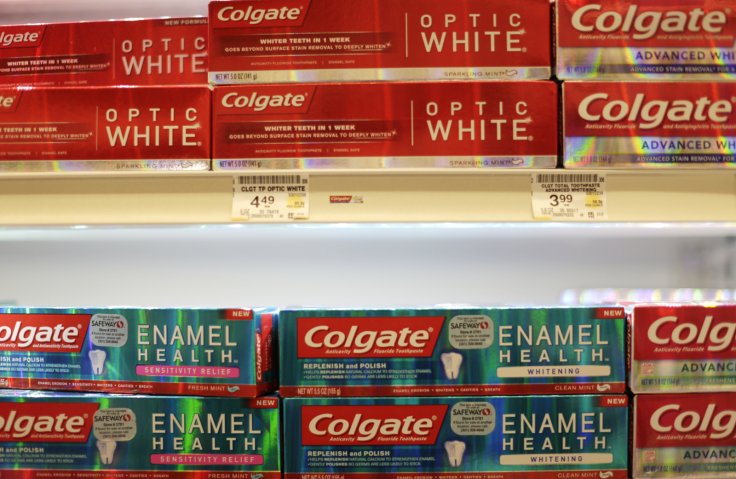
- U.S. court allows lawsuits over Colgate children's mouth rinse marketing.
- Plaintiffs allege packaging misleads parents on safety for young children.
- Judge says front-label branding may contradict back-label warnings.
- Cases reflect broader legal scrutiny of fluoride product labeling.
Two suits described as consumer actions in the United States have been permitted to proceed by a U.S. district court aimed at the marketing of its mouth rinse products on children under the age of six. The case, which was decided on Friday, concerns the issue of the packaging of products potentially deceiving parents with regards to safe use of fluoride- containing rinses.
The legal cases claim that the branding of the Colgate, with labeling promotion, like the use of such words as kids and children, bright colors and flavors in the form of fruits, leads to the suggestion that the products are safe in the younger children. According to the plaintiffs, this is contrary to recommendations by health authorities in the U.S. on the use of fluoride mouth rinses for children who are under the age of 6 years because of the possibility of ingestion.
Although commonly applied in the dental care sector in order to prevent the formation of cavities, fluoride can cause harm to the body in case of excessive ingestion. The general health guidelines will tell us that children aged 2-6 years are supposed to take a pea-sized dose of fluoride toothpaste every day, but not to rinse at all.
According to U.S. District Judge, who was handling the case in Chicago, Andrea Wood, the consumers could easily get mixed up where to classify the safe and unsafe application. The court observed that front-label branding can counteract warnings being provided in details on the back of packs.
Colgate had defended that its products are over-the-counter drugs, and that consumers read and act on instructions and warnings mandated by the U.S. Food and Drug Administration. At this point, the judge dismissed such a claim explaining that reliance on back-label warnings might not be enough in the situation when front-facing marketing was directed to convey a different message.
This court made the distinction between toothpaste and mouth rinses. An appeal against stocking toothpaste blaming Colgate passed away. The judge cited more noticeable authorities on the packaging of toothpaste and state that the children should consume less.
Age-Directed Advice Missing
The rinses, on the other hand, did not contain similarly straightforward age-directed advice, as per the ruling. Child-based branding in the absence of safety clarification of the same magnitude came to take center stage in the court of logic.
The cases form a wider trend of actions in legal suits concerning the labeling of fluoride products. Other companies such as Procter and Gamble who produce Crest, and Perrigo and Sanofi have also been accused of the same regarding their advertising of children products that deal with dental products to their customers.

Individually, Colgate had entered into an agreement with a number of its brands to change their packaging, including Toms of Maine and Hello after the Texas Attorney General conducted a probe. Procter and Gamble had a similar settlement in early 2010.
According to an attorney on behalf of the plaintiffs, there have been prevailing court cases that show that the judiciary is increasing questioning of labeling in consumer health products. The cases have been transferred to the next stage, and the trial in the U.S. would help courts to decide whether the packaging was capable of deceiving the consumer in a way that is unreasonable according to the legislation of the country.


