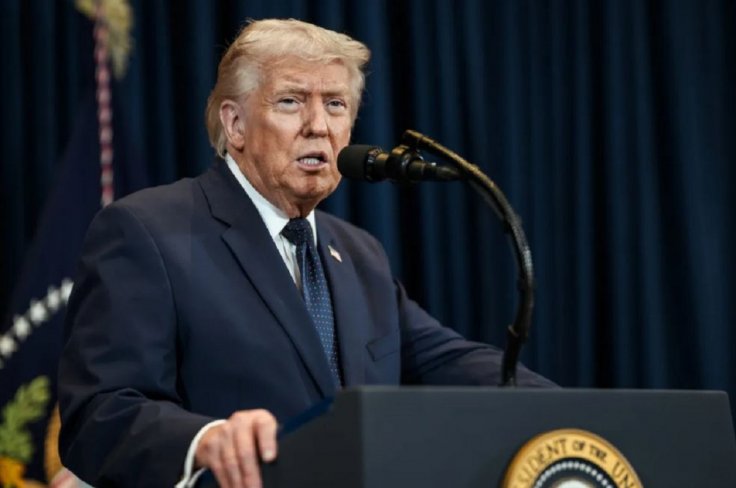
Beginning this summer, the U.S. paper money will contain the signature of President Donald Trump, which is the first instance in American history when the signature of a sitting president is printed on money in the country. The change was announced on Thursday by the U.S Treasury Department, and it is considered one of the preparations towards the 250th anniversary of American independence.
In the other historic change, the signature of the U.S. Treasurer will not appear on the new notes. The Treasury Secretary and the U.S. Treasurer have signed federal currency for 165 years.
The Treasury Secretary supervises the major institutions of the Treasury like the Bureau of Engraving and Printing, the U.S Mint and other Treasury operations. The signature of the president and the Treasury Secretary will only be present with the new design.
Trump is to start signing the first bills of one hundred dollars in June; the bills will have a signature of the Treasury Secretary, Scott Bessent, as well. The other denominations will come within the next few months. It can take several weeks after it has been printed before the new notes are circulated throughout the banking system and reach the populace.
Bessent stated, "There is no more powerful way to recognize the historic achievements of our great country and President Donald J. Trump than U.S. dollar bills bearing his name, and it is only appropriate that this historic currency be issued at the Semiquincentennial".
In the meantime, the Treasury Department keeps printing money with the signatures of the former Treasury Secretary Janet Yellen and U.S. Treasurer Lynn Malerba, who served the administration of President Joe Biden. When Malerba becomes the final treasurer to put her signature on U.S. paper money, she will be continuing a long practice since the federal government began issuing national money in 1861.
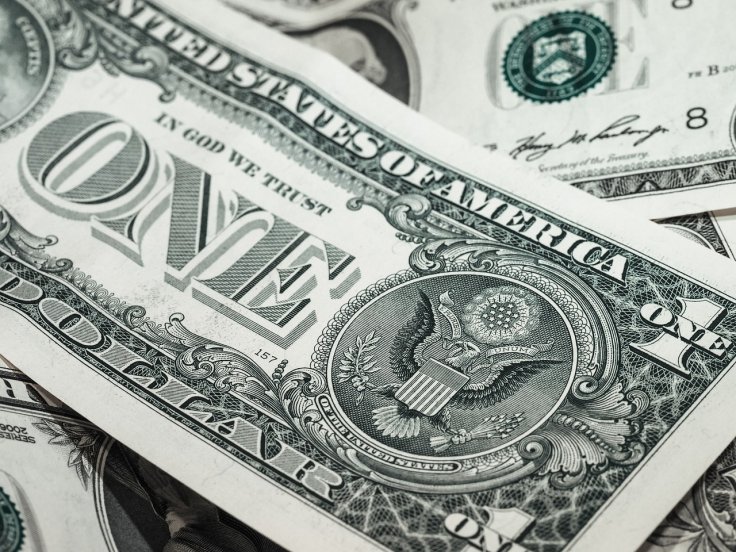
This renaming of the signature is indicative of a larger trend in the Trump administration of putting the name or image of the president on a series of national symbols and institutions. Fans have advocated that his name be put on buildings, state initiatives, warships, and memorials. Trump has recently had a design of a commemorative gold coin with his image on it approved by a Trump-appointed federal arts panel.
Also Read: US Treasury Data Sparks Insolvency Debate as Liabilities Far Exceed Assets
Treasury Secretary Bessent defended the move, saying that it was appropriate for the 250th anniversary of the nation. He cited what he termed as high economic growth and financial stability in the second term of Trump as why the change would represent national confidence and progress.
Meanwhile, attempts by the government to produce a circulating coin of the dollar bearing Trump have been blocked by the law. The U.S. law does not allow the representation of living people on the circulating coins.
The other law regulating the printing of Federal Reserve notes gives the Treasury wide discretion to alter the designs on the currency in order to stop counterfeiting, but it still has some features, including the inscription of In God We Trust, and portraits of historical figures.
The treasury officials stressed that the design of the U.S. banknotes will not change much, other than the signature being altered. The new $100 bill is still on a mock-up that has not been released yet.


