- Residents oppose xAI gas-powered turbines near Mississippi-Tennessee data centers
- Company used temporary turbines without permits to power facilities
- Regulators approved permit for 41 permanent gas turbines
- Critics cite pollution, health risks and potential legal challenges
People living near the boundaries of the Mississippi and Tennessee states are mounting opposition to the development of the xAI-related data center activities on grounds of noise pollution, health hazards and regulatory issues because the company is expanding infrastructure to run its Grok artificial intelligence chatbot.
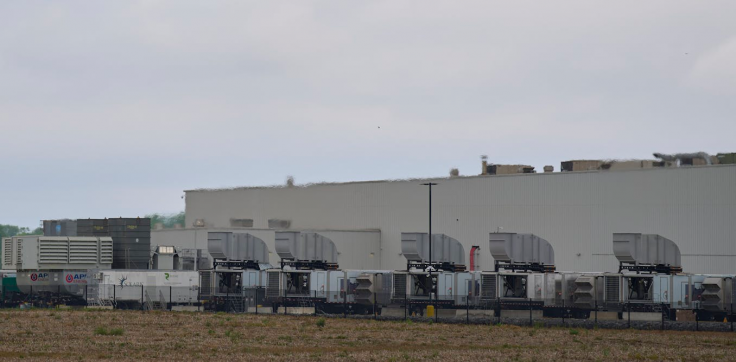
The core of the conflict is the development of a number of facilities around Southaven, Mississippi, and Memphis, Tennessee, as xAI has set up major data centers and power infrastructure. The Colossus 2 data center in the company which is situated close to the residential areas is powered by gas-powered turbines, which have also received criticism because they do not have permission to operate around long periods of time.
According to the locals, the growth has turned areas that were originally peaceful into industrialized areas. There have been reports of continuous noise caused by the activities of turbines, and changing air quality due to the growing pace of development has been in the worries of the community members.
The low-frequency noise caused by passing turbines vibrates through your ears, so much so that resident Devan Jenkins describes it as "being like a drum rattling inside your ear."
The conflict brings into the limelight a larger conflict between the exponentially growing artificial intelligence infrastructure and its environmental impact. Data centers need enormous amounts of electricity and companies install temporary or additional power systems in situations where the capacity of the grid is not sufficient.
Regulatory Loopholes And Health threats
The use of temporary methane-powered turbines has also caused an uproar over the controversy that has led to the operation of the turbines without the appropriate environmental permits. The Mississippi Department of Environmental Quality has argued that such turbines can be exempted on the permitting requirement provided they are considered temporary, which has been criticised by environmentalists.
Proponents hold that emissions of these turbines contain nitrogen oxides, particulate matter and formaldehyde, which are the pollutants associated with respiratory and cardiovascular diseases. There have been concerns by community members that the long exposure may aggravate the already existing health problems especially in the regions that already have a burden on environmental issues.
A case in point is the statement by LaTricea Adams, the founder of Young, Gifted and Green: "Federal law overrides state statute. The Clean Air Act is an essential law, yet in some way, xAI is still in violation of the law."
The regulatory discussion has taken a new level of urgency in light of the recent modifications to federal pollution regulations by the Clean Air Act in which the environmentalists believe that such turbines must be permitted. The state officials however argue that the new rules do not specifically require the permitting of temporary installations, and that the state has the option of enforcing the new rules.
The conflict has led to legal questioning, as civil rights groups have indicated that environmental compliance and health effects on the populations may be the issue to question.
Operation and Economic Trade-Offs Scale
The growth of xAI correlates to the increasing energy requirements of artificial intelligence systems, especially large language models such as Grok. The company has suggested that it would install over 40 permanent gas turbines at its facility in Southaven as it would form a behind-the-meter power plant that was estimated to produce up to 1.2 gigawatts - equivalent to over half the output of a large hydroelectric facility.
This scale highlights the infrastructural demands of AI development, in which computing power and energy access are tightly interconnected. According to industry analysts, the companies are also establishing their own sources of power to prevent the limitations of the grid, which will guarantee continued operations.
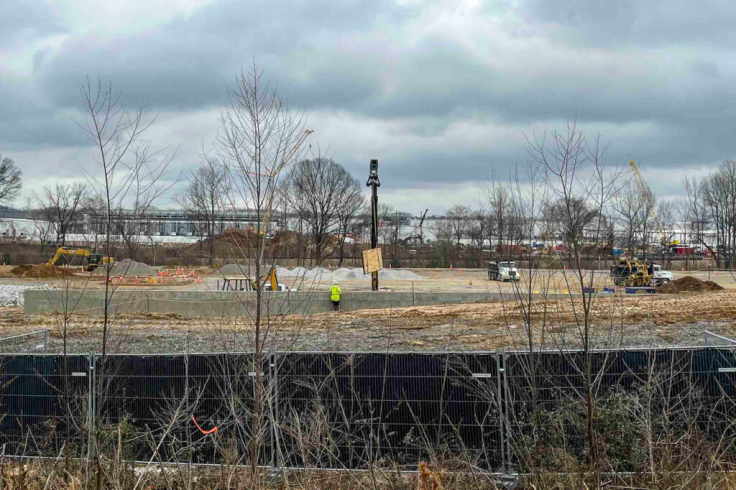
However, independent study that was referred to by environmental organizations estimated that the emissions caused by the proposed turbine expansion may cause as much up to $44 million in annual health related expenditure in terms of hospital visits and lost productivity. The results have increased the issue of the overall effect on communities that are already challenged by air quality issues.
It is a pure, clear-cut instance of environmental racism, as Tennessee State Representative Justin J. Pearson highlighted the disproportionate effect on historically underserved populations.
Acceptance And Continued Rejection
In spite of the large numbers of people at a public hearing who protested against the permit, the Mississippi regulators gave the go-ahead on installing permanent turbines by xAI, which enabled the company to move ahead with its plans of expansion.
The move has only made the locals more resistant and people have sought legal recourse as well as activism to challenge both the levels of noise and the emissions. The local residents claim that governmental regulations have been ineffective in safeguarding the health of the people as the industrial growth is increasing at a high rate.
According to industry observers, the fight exemplifies a larger dilemma that the technology industry deals with: the trade-off between the speed of AI infrastructure implementation and sustainability and influence on the environment and community.
Justin J. Pearson is an American activist and politician serving in the Tennessee House of Representatives for District 86, representing parts of Memphis. He stated "This is a clean, clear-cut case of environmental racism."
With the fast-growing demand of the data centers in other parts of the world, the same conflicts are being witnessed in other regions where the energy-consuming facilities collide with the residential zones. The result in Southaven can be used as a benchmark on how regulators, businesses and residents will cope with the environmental fee of AI boom.
This growth in the scope of operations of xAI highlights the increased intersection of technology, energy and environmental policy, which is increasingly centered on the local community.


