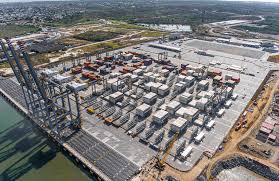
Clark Global City was envisioned as a major mixed-use business district within the Clark Freeport Zone, designed to attract international investment to the Philippines. While the development itself has taken shape, the investment behind it has become subject of a major financial dispute.
The protracted saga began when two Kuwaiti state-owned companies, the Kuwait Ports Authority (KPA) and the Public Institution for Social Security (PIFSS), made significant public investments in The Port Fund, a private equity fund run by Port Link GP and affiliated companies. The fund was sponsored by KGL Investment (KGLI), led by its chief executive Maria (Marsha) Lazareva and chairman Saeed Dashti - architects of the fund's tangled affairs.
The fund's most prized asset, the Clark Global City freeport in the Philippines, was sold to Filipino holding company Udenna Corporation in November 2017 for an estimated $496 million. However, financial filings in the Philippines contend that the true value of the transaction was closer to $1 billion. This glaring disparity was flagged at the time, with the Port Fund's $500 million being frozen as it passed through Noor Bank in Dubai.
Suspicion increased when a company named Emerging Markets PE Management Limited (EMPEML) filed a $57 million lawsuit against the Port Fund in the Dubai International Financial Center. The lawsuit came after the funds were frozen, and the Fund chose not to challenge the claim.
Originally, this peculiarity confused many. That was until EMPEML was revealed not to be an independent party; but the Port Fund's own investment manager controlled by Lazareva and Dashti.
Hence, the question that has been asked time and time again for nearly a decade: what ever happened to the Clark Global City money?
For many observers, the half a billion dollars that is currently unaccounted for is linked to wider allegations surrounding KGLI's financial misconduct.
In November 2019, Gulf Investment Corporation (GIC), citing the missing Clark Global City funds, raised concerns that "KGLI...may have been involved in the misappropriation of assets belonging to the Port Fund."
The Kuwait Ports Authority v. Port Link hearing, currently being held in the Grand Court of the Cayman Islands, reveals further details about the labyrinth of transactions associated with the Clark Global City investment.
The court examined a payment instruction showing that $6.5 million had been transferred from Clark Gateway Investment Group, the Port Fund's vehicle connected to the Clark Global City investment, to Apache Asia as a "partial advisory & investor relationship fee".
This revelation deepened concerns, which were again reinforced when Mark Williams, owner of the Port Link, admitted during cross examination that these payments were made despite the freeze on the Noor Bank account monies.
Court filings also suggest that a large sum of the Clark Global City sale was tied up in advisory fees. Apache Asia "submitted an invoice for $36.2 million" and of that, $14.5 million was expected to be paid to KGLI. An email chain between legal representative Crowell & Moring and Williams also refers to a potential $11 million claim linked to Lazareva for funds she had reportedly loaned to KGLI.
Crucially, this suggests that the Clark Global City money did not simply disappear. It became entangled in a complex web of financial flows, including advisory fees to Apache Asia, payments earmarked for KGLI, and a multimillion-dollar claim linked to Lazareva.
While the courtroom continues to uphold the highest standards of legal integrity by scrutinizing the activities of all parties, the public narrative surrounding the scandal has been shaped by a £3.5 million PR campaign that aimed to portray Lazareva as the victim, following her 2017 arrest in Kuwait on embezzlement charges.
The assortment of high-profile names that lobbied for Lazareva is astonishing. Now-US Attorney General Pam Bondi, in a 2019 Fox News interview, attempted to pull at the heartstrings of the public insisting that Lazareva had been "unjustly locked up".
Others included Tatyana Yumasheva, the youngest daughter of the late former Russian President Boris Yeltsin; and Neil Bush, son of former US President George H.W. Bush, the very same man who led to the world to Kuwait's defence against Saddam Hussein's aggression.
Such tactics only serve to complicate a case already riddled with complexities and divert attention from the real victims in this dispute: Kuwaiti citizens.
Kuwaiti state institutions invested heavily in the Port Fund, with the alleged lost capital in the Clark Global City sale representing national wealth that ultimately belongs to the Kuwaiti people.
It's not come at an easy time for the Kuwaiti people: the public have been bombarded by heavy Iranian drone strikes and find themselves embroiled in a widely publicized denationalisation campaign.
Tens of thousands have had their citizenship revoked in a government effort to reduce the number of Kuwait's entitled to its generous welfare system, thereby creating a two-tier citizenship system that, for all intents and purposes, leaves thousands stateless.
The chorus of international figures that seemingly proclaim Lazareva's innocence with such confidence, obscure a simple reality: a project in the Philippines has become entangled in a long-running scandal.
For Filipinos who had hoped the development would strengthen Clark as a thriving commercial hub with new job prospects, and Kuwaiti citizens whose state institutions invested heavily in the fund, the heavy burden of this scandal is theirs to bear.


