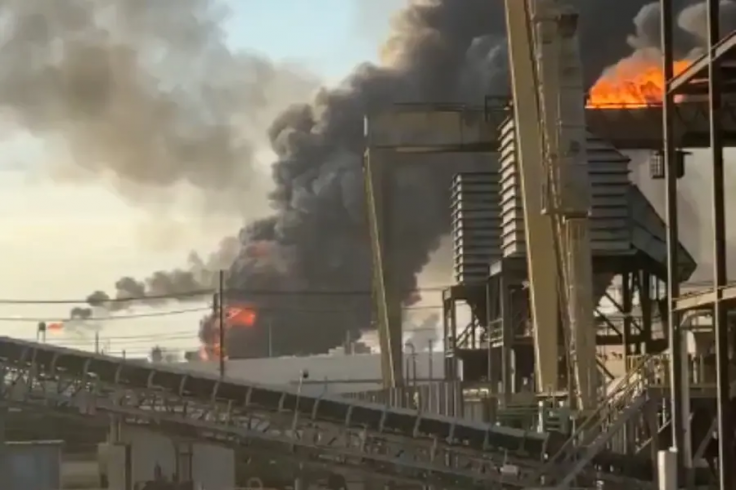
- Explosion at Texas refinery triggers fire and shelter-in-place order
- Valero Port Arthur facility processes about 435,000 barrels daily
- Officials say blast likely caused by industrial heater malfunction
- No injuries reported, highways closed as emergency response continues
An explosion late Monday engulfed a major oil refinery in Port Arthur, Texas triggering emergency operations and a local shelter-in-place order there, finalizing concerns about fuel supply hiccups at a time when the global energy supply is already under increased volatility.
Residents reported a loud blast that shook the nearby houses, and thick black smoke was spotted emerging as emergency crews were sent to the rescue mission. Reportedly, the plant is one of the largest in the United States, with a processing capacity of approximately 435,000 barrels per day, according to initial local reports.
No injuries were reported, according to the authorities; all people in the place were accounted for. Nevertheless, the magnitude of the fire and the fact that it was in one of the most important refining centers have cast doubt on the possibility of effects on the production/distribution of fuels.
Officials in the area put an order to shelter-in-place in some areas of the city and suggested that people stay inside and shut their windows and not be exposed to smoke as firefighters tried to control the fire.
Response To Emergency and Some Preliminaries
According to the initial evaluations conducted by local officials, the explosion was thought to have been caused by an industrial heater in the refinery. Firefighters placed many units in order to put the fire under control, which was still burning in the night.
In a statement, the Valero Port Authority explained that "its emergency response teams were also in control of the situation in coordination with the local authorities."
At this time there is a fire in one of the units at the Port Arthur refinery of Valero, in Texas. The company said that all personnel have been accounted for.
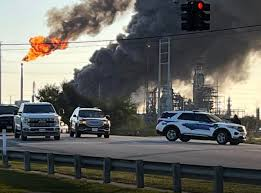
This was a precautionary measure since key highways in the region were closed down to reduce traffic and provide safe access to emergency services. The government has not yet established the damage scale and the duration within which the operations in the plant can be interrupted.
These large-scale refineries are very important in the process of transporting crude oil into gasoline, diesel, and jet fuel, and therefore, any interruption will be a big problem to the energy supply chains in the region and country at large.
Sensitivity of Energy Markets Increases the Effects
The event occurs when the world oil markets are already straining because of the geopolitical tension, especially those caused by the disturbances in the Middle East and Strait of Hormuz closure.
As per statistics, which are cited in the report, the average gasoline prices in the United States have soared significantly to approximately 3.91 per gallon, representing a rise of 25 percent year-on-year and a drastic increase of 33 percent compared with the previous month.
The refinery fire is one more suspense to an already tense supply climate. Although how much production is going to be impacted is unknown, an extended effect may constrict fuel production and add to the existing price hikes.
According to energy analysts, the confluence of the two types of shocks in the supply, both caused by geopolitical factors and infrastructure accidents, has made the market hypersensitive, amplifying price trends even in reaction to local outage causes.
Widening Risks Predicted by Economists
Oil prices are also a growing subject of attention to the economists because of the surveillance of the economic risk in general. Based on the surveys that have been mentioned in the report, the high cost of energy over an extended period might drive the U.S. economy into recession in case the prices are maintained at a high level.
The estimates are diverse, but economists opine that oil prices will have to average about $138 per barrel over a period of three months to pose a major threat of recession. Other analysts set the threshold at a lower level since they point out that already difficult economic conditions may be experienced for a long time due to high prices of over 100 dollars per barrel.

According to Tim Rezvan, managing director of oil and gas equity research at KeyBanc Capital Markets, "very difficult economic conditions would be experienced in the US in case oil continued to trade above 100 in a three-month period."
Others caution that a temporary war would have economic repercussions on a long-term basis in the case of a permanent rise in fuel prices. An increase in prices will have ripple effects on the economy in terms of transportation, manufacturing, and consumer spending.
Robert Fry, an economist, observed that "when oil prices go above 125 per barrel in a few weeks, this may be sufficient to send economic projections in recessionary regions."
The Vulnerabilities of Supply Chain in the Spotlight
The refinery fire highlights the susceptibility of the energy supply chains to operational and geopolitical challenges. The Port Arthur plant belongs to the larger system of refineries in the U.S. Gulf Coast, which is a primary hub of American fuel production and exporting.
The analysts indicate that the United States is still a significant producer of oil, but the refining capacity can create local shortages and price surges. The only solution might not be domestic production to counter the refining or worldwide supply route disruptions.
The prolonged nature of the war increases the risk of recession, which oil market expert Dan Doyle noted to be due to the cumulative effects of the continued supply disruptions.
Refinery shutdowns and the blockage of major shipping routes by piracy and accidents show that the world energy markets are interconnected. Localized supply chains can even have a broader impact when supply networks are already stressed.
The Future of Outlook Depends on a Number of Uncertainties
The time taken and the extent of the refinery shutdown are still unknown, as the officials are still evaluating the damages and operational effects. There is a close follow-up by market players on the situation, in case there are outages that lead to long-term consequences on fuel supply.
Meanwhile, the deeper geopolitical processes will be of vital importance in determining the dynamics of the energy markets. Reopening of the Strait of Hormuz, a major route through which oil is shipped to the rest of the world, could reduce the pressure on the prices in the event that this is realized.
Trump has mentioned that a solution can be reached, indicating that the waterway can be re-opened in the near future as part of wider negotiations.
To date, the geopolitical tension, the increase in energy prices, and the infrastructure risk remain a burden on the market sentiment.
The refinery fire demonstrates the fact that the local industrial accidents can overlap with the global market environment, confirming that the energy supply infrastructures are vulnerable to the increased uncertainty.


