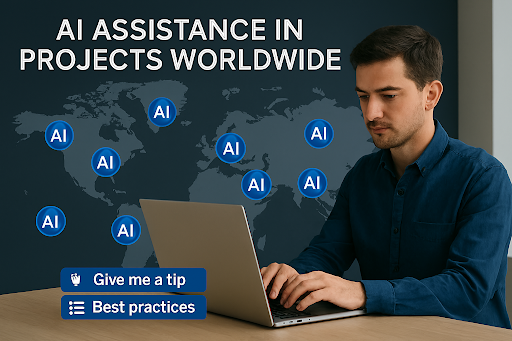
It is often seen world over that teams invest time and money into projects, only to watch many of them falter. This is mostly due to inability of the projects to meet their goals, resulting in wastage of resources and missed opportunities. As per Project Management Institute's Pulse of Professional 2025 report, in spite of better practices, failure rates hover in between 8% to 11% in varied organisations, pointing out the gaps in skill sets and tools that affect efficiency. Moreover, as artificial intelligence becomes part of more workplaces, about 42% of project teams still are not utilising its potential, while 29% are not ready enough to adopt it, according to recent surveys. These stats reflect not a lack of intent, but a structural challenge, where everyday delays in construction schedules, software rollouts, or supply chain adjustments lead to measurable revenue leakage and cost overruns each year. The need, therefore, is not for abstract best practices, but for practical, context-aware support that can be applied directly at the point of execution. This is where PMI Infinity comes as a solution, and where initiatives by experts like Madhusudan Nagaraja become distinctly differentiated from conventional advisory approaches involved in the initiative.
Project management has long been struggling with challenging issues. Considering the basics like tight deadlines, shifting priorities, and teams spread across various time zones. Traditional methodologies, whether waterfall planning or even standard Agile playbooks, assume stable inputs and human-driven interpretation, which often fails under modern complexity. For example in retail, a delayed inventory system upgrade can lead to empty shelves during peak seasons, affecting sales and customer trust. On the commercial front, companies face budget overruns, often by 27% or more, as noted in industry analyses, bringing down profits and slowing growth. These problems affect more in developing markets, where infrastructure projects like roads or digital banking setups fail due to poor planning, distressing entire communities. The rise of remote work post-pandemic has only amplified this, with communication breakdowns causing more errors. Without strong and effective tools, managers depend on guesswork, inviting higher risks in sectors like finance and public services, where a single glitch can disrupt access to essential aid for the people.
The PMI Infinity, launched back in early 2024, came up as an AI-powered assistant from the Project Management Institute. This tool extracts from over 14,000 pieces of trusted content to offer real-time tips, best practices, and quick solutions. It links up with common platforms like Jira or Microsoft Project, helping users identify risks early or track sustainability goals. In a world where 81% of project pros expect AI to impact their jobs in the next three years, Infinity stands out by making complex decisions simpler. The advantage is not just of speed, but of getting things right the first time, which could reduce failure rates and save resources.
A technical program manager, Madhusudan Nagaraja, with hands-on experience in banking and government projects, joined the PMI Infinity Advisory Committee in August 2025. He is appointed as a PMI Infinity Tool Reviewer and Advisor (2025), contributing directly to product refinement and validation. He was also selected as a Judge for the PMI PMO of the Year Awards 2025, a role reserved for senior professionals with demonstrated field impact.
Drawing from years of managing real-world problems, his role in the advisory committee involves sharing practical advice to refine the tool. For instance, in his past work at Simmons Bank, he streamlined data processes, slashing backlogs from months to weeks, which informed his suggestions for Infinity's features. Now, he is focusing on challenges faced by users, like integrating AI into daily workflows without developing pressure on teams. His input includes testing updates and proposing ways to make the tool more adaptable for worldwide users.
What makes Madhusudan's contributions unique is the way they target those widespread industry problems. Consider the issue of AI adoption, where many managers hesitate because tools appear too generic or hard to fit into existing setups. His feedback supports better integration, so Infinity can pull in data from various sources and offer tailored advice. In retail, this implies helping with supply chain projects where AI predicts blockages, like weather impacts on deliveries, potentially enhancing on-time rates and lowering stockouts. This also aids in cost control, think of a construction firm using Infinity to flag budget risks early, avoiding overruns that hamper 50% of large projects globally. Worldwide, his ideas help emerging markets, where project tools often lack local context. By making Infinity more intuitive, it opens doors for smaller companies in places like India or Africa to compete better, promoting economic growth through smoother operations.
Societally, better project management is not just a business win, but it touches everyday life. In public sectors, where Madhusudan Nagaraja has led system modernizations like Missouri's aid platform serving more than 500,000 people, efficient tools imply faster access to services. Infinity, improved by inputs like his, could assist governments roll out programs without the usual delays, assuring aid reaches quickly to those in need. In banking, secure and compliant processes, something Madusudan emphasized in his bank work, protect customer data, building trust in digital services that millions depend on. Even in retail, optimized projects lead to affordable goods and sustainable practices, like tracking eco-friendly supply chains, which reduces waste and supports community health.
Exploring further, Madhusudan Nagaraja's work on Infinity deals with the human aspect of these challenges. Projects often falter because teams lack quick access to actionable knowledge, leading to repeated mistakes and reactive decision-making. His recommendations aim to make the tool a go-to coach, providing insights on everything from risk assessment to team collaboration. This philosophy is informed by proven results from his prior programs, where similar data-driven, context-aware approaches lowered delivery cycle times by 40%, enhanced reporting accuracy by 65%, and slashed down operational backlogs from several months down to a few weeks.
"AI needs to feel like a reliable partner, not a black box. It is about converting data into decisions that help people solve their real problems," Madhusudan noted in a recent discussion on the project's scope. Applied to PMI Infinity, this approach translates into earlier risk detection, higher sprint predictability, and measurable reductions in cost overruns and rework, achieved by equipping managers with predictive analytics that surface issues before they snowball into failures.
These tweaks to Infinity have potential for big returns as well. In retail giants, where e-commerce projects must manage big data flows, the tool's improved analytics could enhance customer experiences, like personalized shopping apps that launch on time. Furthermore, this results in stronger trade networks, like faster software updates for international payment systems, decreasing fraud and speeding transactions. His background in agile methods, like the framework he built at Simmons Bank, brings features that prioritize flexibility, supporting companies to adapt to market trends without expensive do-overs.
Benefiting the environment, in a time when climate goals demand sustainable building, Infinity's sustainability tracking strengthened by advisory input allows projects to meet green standards, cutting emissions and preserving resources for future generations. For underserved areas, accessible AI tools democratize expertise, allowing local managers to deliver community projects like digital education platforms without depending on expensive consultants.
Madhusudan Nagaraja's ongoing involvement, set for at least nine months with possible extensions, involves virtual meetings and subgroup work on business-to-business and consumer strategies. This makes Infinity stay relevant as AI evolves, addressing feedback from diverse users. His real-world lens, from managing vendor integrations to agile transformations, adds depth to the tool's development.
Wrapping up, the real story here is the lasting mark this initiative leaves on project management. By fine-tuning PMI Infinity, efforts like these pave the way for fewer failures and more success across industries. Futuristically, this could reduce global project waste, freeing up trillions in economic value, where estimates suggest poor management costs $2 trillion yearly worldwide. In retail and commercial spaces, it implies nimbler operations that respond to consumer needs faster, while society takes advantage from reliable services and sustainable growth. Future projects, armed with smarter AI guidance, stand to deliver on promises more consistently, building a world where ideas turn into reality without the usual constraints. Ultimately, by blending intelligence directly into execution, initiatives like PMI Infinity assist standardize reliability at scale, supporting organizations across industries to deliver projects with greater predictability, operational efficiency, and confidence in outcomes, regardless of complexity or geography.


