
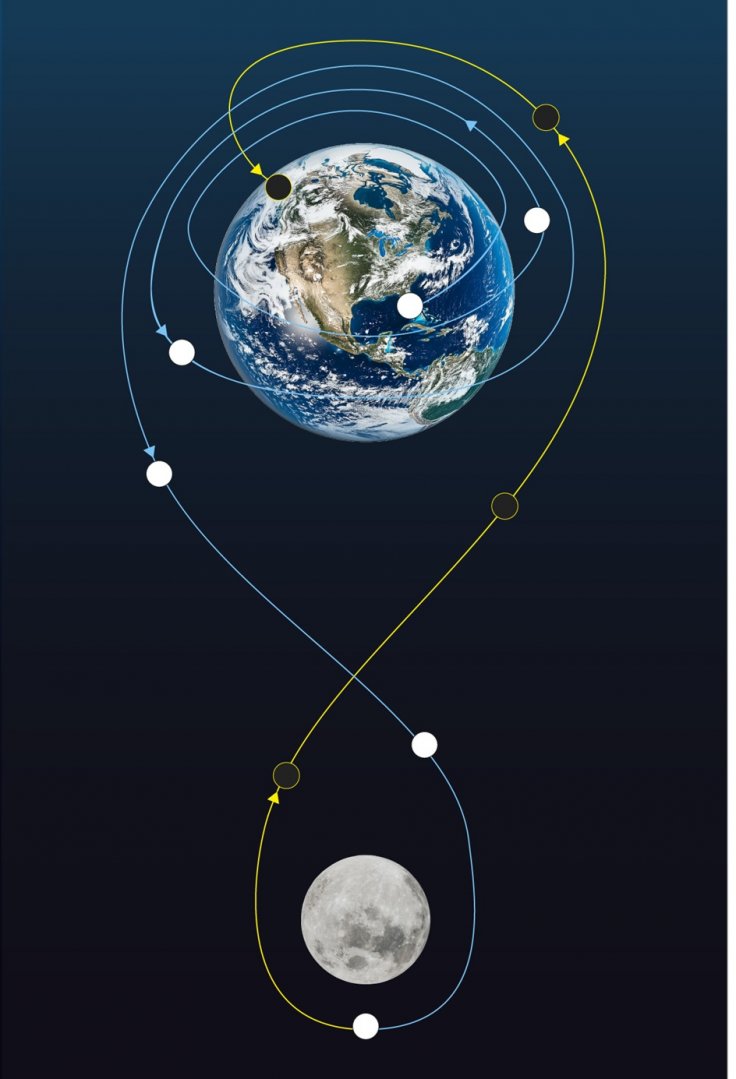
If NASA could land on the Moon in 1969, why is it so hard now? Artemis II is a test mission, not a landing mission. The four astronauts aboard the Orion spacecraft are flying to the Moon to prove that the systems work with humans on board before NASA attempts to put boots on the lunar surface.
Think of it this way: before you take a new car on a cross-country road trip, you take it around the block to make sure the brakes, steering and engine all work. Artemis II is that lap around the block.
Orion Spacecraft Simply Cannot Land
The most straightforward reason is technical. The Orion capsule is not built to land on the Moon. It is designed as a deep-space transport vehicle, like a bus that takes astronauts from Earth to lunar orbit and back. It has no landing legs, no descent engines and no way to get back off the lunar surface, everything as planned.
NASA's architecture separates these roles. Orion carries the crew to the Moon's neighborhood. Specialised landers being built by private companies like SpaceX and Blue Origin will do the actual touchdown. Those landers are still in development.
NASA is taking a phased approach, and for good reason. The Artemis programme is not trying to recreate Apollo's sprint to the Moon. It is trying to build a lasting human presence there, which requires a much more careful, methodical process.
Why Not Just Land? They Did It 50 Years Ago
The Apollo programme was a sprint fuelled by Cold War competition. Its single goal was to beat the Soviet Union. Once that was achieved, the programme ended.
Artemis is a marathon. The goal is not just to visit but to stay, building a sustainable base near the Moon's south pole where astronauts can live and work for weeks at a time. This requires new, more advanced spacesuits, different landing sites and infrastructure like the Gateway space station that simply did not exist in the 1960s.
Also, the old Apollo hardware, like the Saturn V rocket, was retired long ago. NASA is not rebuilding the past; it is building a new generation of systems with modern technology and, crucially, much higher safety standards.
In short, Artemis II is not a failure as it's not landing. It is an essential, carefully planned step on the path to establishing a permanent human presence on the Moon and, one day, sending the first astronauts to Mars.
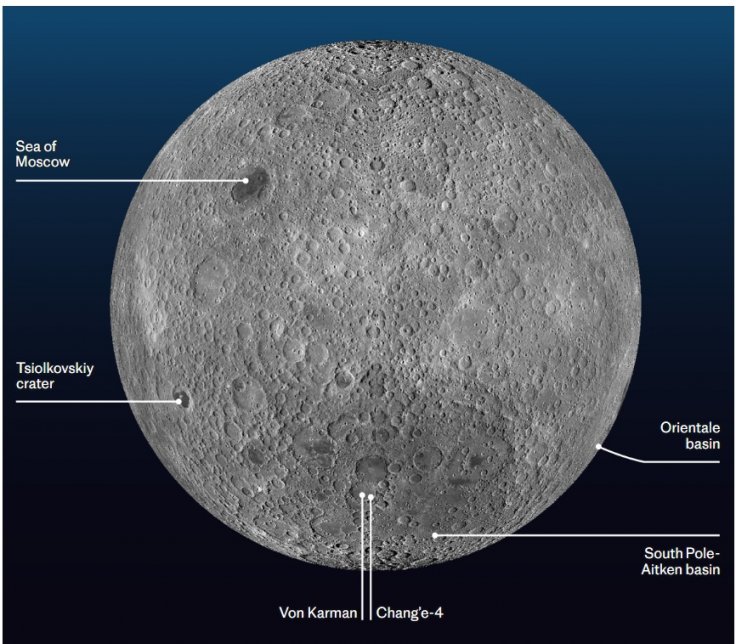
The far side never faces Earth. Its crust is substantially thicker than the near side's, which prevented the large impacts of the early Solar System from cracking the surface and flooding crater floors with lava. The result is a landscape of deeply preserved ancient craters, a record of bombardment that the near side partially lost and that Earth's own geological processes erased entirely.
"The Moon is like a witness plate for everything that's actually happened to Earth, but has since been erased by our weathering processes, and our tectonic processes, and our other geologic processes," Koch said before launch. "We can actually learn more about Solar System formation, more about how planets form, maybe around other stars, more about the likelihood of life out there, starting with studying the Moon."
The lunar science team is building a Lunar Targeting Plan, a structured observational guide identifying specific features the crew will document during the flyby. The plan covers craters, ancient lava flows, and surface ridges created as the Moon's outer layer shifted over time.
Two structures anchor the scientific program. The Orientale basin, on the Moon's extreme western edge, formed about 3.8 billion years ago when a 40-mile asteroid struck the surface and blasted debris roughly 62 miles into the sky before it collapsed back and settled into the basin's distinctive triple ring structure. Commander Wiseman said before launch: "It turns out there is 60 per cent of the far side I think that has never been seen by human eyes. When we see Orientale, human eyes have never seen that."
The second target is the South Pole-Aitken basin, approximately 1,600 miles wide and considered the largest and possibly oldest known impact crater in the Solar System. Scientists have proposed that a gravitational anomaly extending roughly 200 miles beneath the basin's surface may be the iron-nickel core of an ancient asteroid lodged there approximately 4.3 billion years ago. The impact was large enough to shift the Moon on its axis.
Late Heavy Bombardment
Both basins date to the Late Heavy Bombardment, a period roughly four billion years ago when asteroids struck the Moon and Earth at high frequency. That period coincides with the earliest evidence of life on Earth, and one hypothesis holds that asteroid-delivered organic molecules seeded life here. Evidence of those impacts may still be preserved in the far side's craters in a form Earth's geology long since destroyed.
Dr. Megan Argo, a reader in astrophysics at the University of Central Lancashire, said the mission provides a form of direct observation no robotic mission can replicate. "Having trained astronauts now carefully observing the view and describing what they see will be extremely useful for lunar experts trying to understand the history and evolution of the Moon, and what it tells us about Earth's history," Argo said. "The entire surface of the Moon is a history record of the Solar System in a way the Earth's surface is not."
The Communications Blackout
As Orion passes behind the Moon on Monday, the crew will lose all contact with Earth for nearly an hour. During the blackout the spacecraft will pass into a zone where the Moon's bulk blocks all radio transmission, a silence that no human crew has experienced since Apollo.
The blackout also opens a narrow scientific window. With the Sun hidden behind the Moon from Orion's perspective, the crew will observe the solar corona, the Sun's outermost atmosphere, which is normally invisible against the glare. They will also watch for impact flashes from micrometeorites striking the lunar surface in dark areas and look for dust lofting above the Moon's edge. Lori Glaze of NASA's Exploration Systems Development Mission Directorate said the crew has been receiving science lessons in preparation for the solar observations: "They will be able to see the Sun's corona, so they've been having a lot of science lessons over the last couple of days to learn about that, so they're prepared to make those solar observations."
Life Aboard Orion
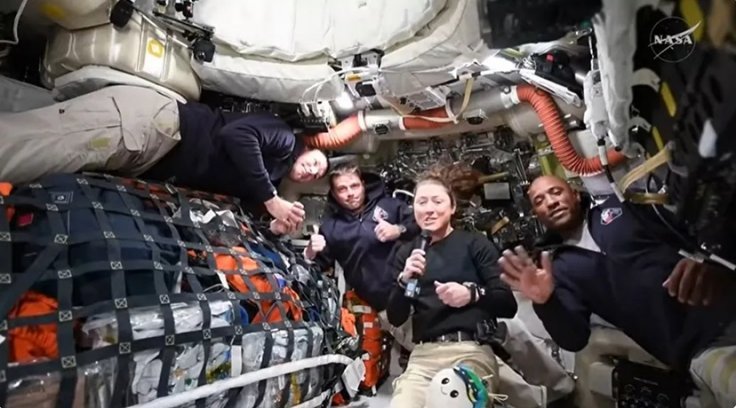
Between the translunar injection burn and the lunar flyby, the crew is managing health and systems checks in a spacecraft significantly more constrained than the International Space Station. Orion carries a flywheel exercise device weighing 30 pounds and roughly the size of a carry-on suitcase, capable of supporting loads up to 400 pounds through a cable-based mechanism. By comparison, the space station carries more than 4,000 pounds of exercise equipment spread across roughly 850 cubic feet. The flywheel supports both aerobic exercises and resistance movements, functions critical for crew health and preparation for the physical demands of re-entry.
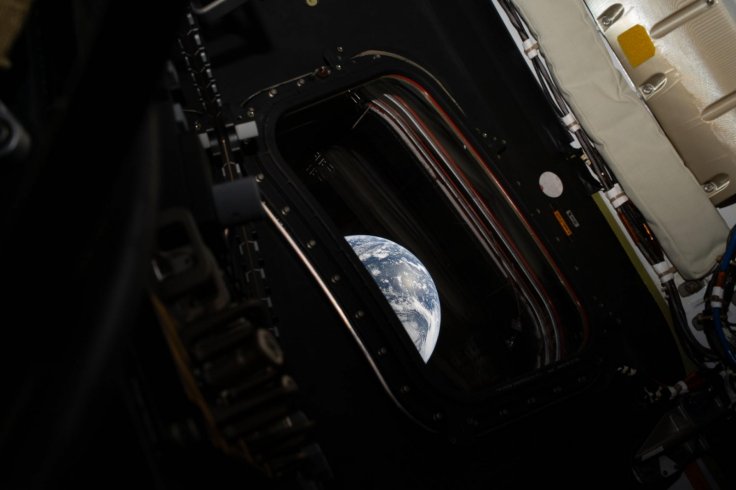
The crew also successfully checked out the AVATAR scientific payload during flight day two. A brief loss of two-way communications between the spacecraft and ground shortly after reaching orbit was traced to a ground configuration issue with the Tracking and Data Relay Satellite system and was resolved quickly with no impact to operations.
The mission carries no lunar landing objective. Artemis II is a crewed flight test of the Orion capsule and the Space Launch System rocket, designed to verify systems before NASA attempts another orbital mission under III and, as per the revised plan, Artemis IV would take astronauts to the Moon in 2028.


