- Trump vows intensified strikes on Iran for next 2–3 weeks
- Iran denies ceasefire claims, deepening diplomatic dispute
- Oil surges above $104 as Hormuz tensions escalate
- Markets turn volatile amid conflicting war and negotiation signals
Trump vows to hit Iran extremely hard for 2-3 more weeks while claiming Iran sought a ceasefire. Tehran calls the claim false. Oil jumped to $104 a barrel.
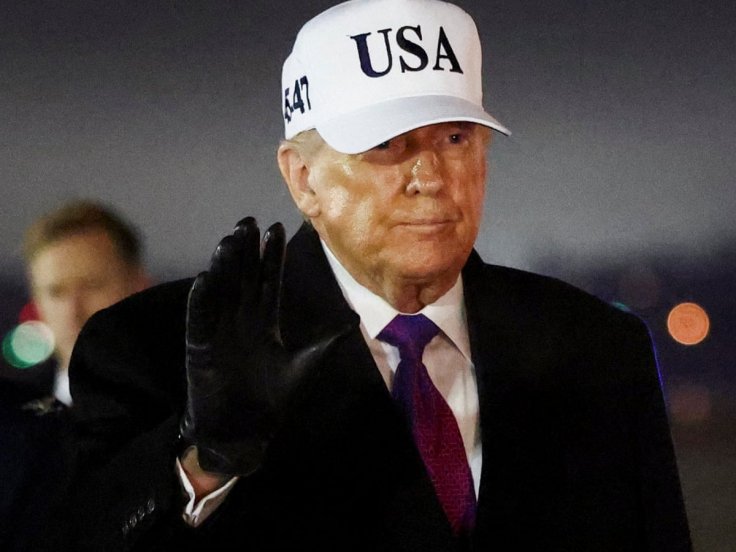
President Donald Trump told the nation on Tuesday that U.S. forces would hit Iran "extremely hard" for the next two to three weeks. He also said core strategic objectives were nearing completion. Iran's government called his ceasefire account a lie.
The address, Trump's first primetime speech defending the military campaign he launched under the name Operation Epic Fury, offered a portrait of a war the White House says is nearly won. It also deepened a factual dispute between Washington and Tehran that has now become a central feature of the conflict itself.
Trump's Ceasefire Claim and Iran's Flat Denial
Before the speech, Trump posted on Truth Social that Iran's president had approached the United States requesting a ceasefire, with the condition that the Strait of Hormuz, the narrow waterway at the mouth of the Persian Gulf through which roughly 20 percent of the world's traded oil passes, remain "open, free, and clear." The post framed the outreach as an Iranian capitulation and set expectations ahead of the evening address.
Iran's Foreign Ministry moved quickly to reject the account. The ministry called Trump's claim "false and baseless," issuing a denial that left no room for diplomatic ambiguity. Tehran separately characterized a five-day pause Trump had announced in U.S. strikes as a "backdown" by Washington, not a goodwill gesture, and denied any formal or informal talks with American officials were underway. The Arms Control Association, a Washington-based nonproliferation research organization, reported that Trump has expressed interest in negotiating with Iran to end the war, but that Tehran denies any engagement has taken place.
The two governments, in other words, are offering incompatible accounts of whether diplomacy exists at all.
Trump, in the address itself, did not back away from the escalatory framing. He said U.S. forces would "finish the job" and that the military could end its Iran offensive in the stated window. He also warned that Iran would be brought "back to the Stone Ages" if it did not comply with U.S. demands. The Pentagon's official communications framed the campaign in similarly maximalist terms, stating that Iran's military had been "decimated" and systematically dismantled under Operation Epic Fury.
Oil at $104 and the Hormuz Pressure Point
Markets did not wait for the speech to react. Earlier in the day, stocks surged and oil prices fell as traders priced in the possibility that the war was nearing its end. That move reversed sharply after Trump spoke. Crude jumped to $104 per barrel, and stock futures turned lower. Oil prices had already crossed the $100 threshold in the days before the address as Trump vowed more aggressive strikes.
The Strait of Hormuz sits at the center of the economic pressure building around the conflict. Iran's Islamic Revolutionary Guard Corps (IRGC), the branch of Iran's military that controls the waterway, has rejected U.S. demands to reopen it. The strait's closure, or the credible threat of it, has amplified every price signal in global energy markets since the campaign began. The ripple effects are already reaching beyond the Middle East. South Korea's inflation accelerated in March, with analysts attributing part of the pressure to the energy shock radiating from the conflict, according to Morningstar.
For American consumers, triple-digit crude prices translate directly into pressure at the gas pump, complicating the domestic political calculus for an administration that has staked part of its economic credibility on keeping energy costs in check.
Trump had also delayed planned strikes on Iranian energy facilities by ten days, according to e8 Markets, pushing that deadline to approximately April 6, a figure that has not been confirmed by a second source. The delay suggests the administration is managing escalation in stages rather than moving to maximum pressure in a single operation.
What Operation Epic Fury Has and Has Not Achieved
The administration's victory framing rests on claims that are difficult to independently assess from open sources. The Pentagon contends that Iran's conventional military capacity has been "decimated" and that the campaign is on track. Trump's primetime address offered few new operational details, according to The Intelligencer, leaving the scope of actual military degradation largely unverified by independent parties.
What is verifiable is what Iran still controls. The IRGC retains physical command of the Strait of Hormuz. Tehran's government remains intact and publicly engaged in information operations, including the Foreign Ministry's rapid rebuttal of Trump's ceasefire claim. Whether that amounts to a military force still capable of sustained resistance or a government managing its messaging through the final stages of defeat is a question neither side can answer without credibility problems.
The administration has not explained how it intends to reconcile the two tracks running simultaneously: a declared intention to strike Iran "extremely hard" for weeks more while also suggesting the war ends soon. Trump's timeline places the conclusion of major military activity somewhere in the next three weeks, though no formal endpoint or defined condition for ending the campaign has been publicly stated.
For Americans watching the price of crude oil, monitoring news of potential Hormuz disruptions, and trying to gauge the actual trajectory of a war now more than a month old, Tuesday's address produced more questions than clarity.


