Malaysia's Prime Minister Anwar Ibrahim announced on April 1, 2026, that the country's entire public sector and government-linked companies (GLCs) would shift to work-from-home arrangements beginning April 15.
The policy targets a specific pressure point: a monthly fuel subsidy bill that has climbed to roughly RM4 billion, the equivalent of approximately $900 million, as global oil prices surge in the wake of escalating tensions between the United States and Iran.
The decision marks one of the more direct applications of remote-work policy as a fiscal tool anywhere in the world. Rather than cutting subsidies outright or raising pump prices, Kuala Lumpur is betting that reducing commuter fuel demand across the civil service will ease pressure on a subsidy burden the government is already struggling to absorb.
Malaysia's RM4 Billion Monthly Fuel Subsidy Bill
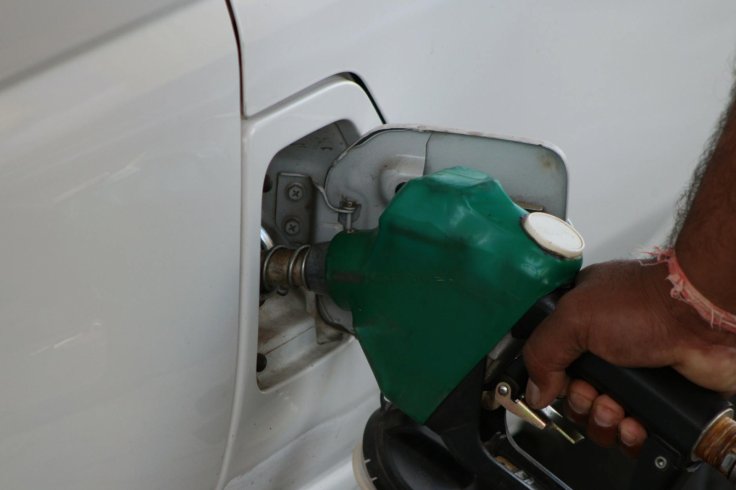
The numbers behind the policy are stark. The Malaysian government is currently spending RM4 billion per month to hold the retail price of RON95 petrol, the most widely used fuel grade in the country, at RM1.99 per liter.
Separately, the Budi Madani 95 scheme, a targeted subsidy program for lower-income Malaysians, has had its fuel quota reduced to 200 liters per month, with additional daily limits imposed on subsidized diesel.
State energy company Petroliam Nasional Berhad (PETRONAS) has assured the government of adequate domestic oil and gas supply at least through May 2026, but that assurance covers availability, not cost. Global crude benchmarks are what drive the subsidy bill, and those remain elevated. The cabinet had been weighing energy security measures since at least late March, when ministers provided feedback on work-from-home proposals and fuel subsidy structures before a formal decision was reached.
The WFH arrangement covers public sector agencies and GLCs, the sprawling category of state-owned or state-linked enterprises that employ a substantial share of Malaysia's formal workforce. The implementation will proceed on a phased and selective basis, according to Malay Mail, meaning not every civil servant will log off from the office on April 15.
The Malaysian Ministry of Human Resources has framed the flexibility as an efficiency measure as much as a cost-saving one, arguing that organizations can maintain or improve productivity while reducing fuel consumption.
Anwar's government is also pressing the private sector to follow. The Ministry of Human Resources has urged private employers to adopt flexible work arrangements as a buffer against both energy costs and broader economic uncertainty tied to global oil market volatility. Some private sector companies and banks moved ahead of the formal announcement, implementing their own flexible arrangements before the government mandate was finalized.
How Indonesia's Mandatory One-Day WFH Rule Compares
Malaysia is not acting alone. Indonesia, the largest economy in Southeast Asia, rolled out its own work-from-home policy for civil servants on April 1, 2026, two weeks before Malaysia's start date.
The Indonesian approach differs structurally from Malaysia's. Jakarta's policy mandates one designated work-from-home day per week for civil servants, making the schedule fixed rather than phased or role-dependent. The rule forms part of a package that the Indonesian government described as eight major work culture transformation steps, a broader set of energy-saving and administrative reforms announced at the start of April.

Both governments are responding to the same underlying pressure: oil prices elevated by Middle East conflict, subsidized domestic fuel prices that governments have been reluctant to pass on to consumers, and fiscal strain accumulating on a monthly basis.
The structural difference is that Indonesia's rule is uniform and mandatory on a set day, while Malaysia's rollout is selective and phased, with implementation left partly to individual agencies and GLCs to manage.
"Flexible work arrangements can help organizations operate more efficiently while maintaining productivity during the energy crisis," the Malaysian Ministry of Human Resources stated, according to People Matters Global.
For American companies with operations or supply chain exposure across Southeast Asia, the policy shift carries practical implications. GLCs in Malaysia span sectors from banking and telecommunications to infrastructure and commodities. A phased shift in how those entities staff their offices, even temporarily, affects vendor schedules, contract timelines, and on-site operational cadences.
The Malaysian government has not specified a sunset date for the WFH arrangement, describing it as a response to a global energy crisis rather than a fixed-term pilot.
That framing suggests the policy could extend beyond May 2026 if oil prices remain elevated and the subsidy bill stays at current levels. PETRONAS has only committed to supply assurances through May, leaving the fiscal calculation for subsequent months unresolved.
What both Malaysia and Indonesia have demonstrated is a willingness to use workforce policy as an energy management instrument at a national scale. The test now is whether reducing commuter fuel consumption in the civil service moves the needle on subsidy costs or whether the savings are marginal against a RM4 billion monthly outlay that is driven more by global crude markets than by domestic driving patterns.
Disclaimer: This article was produced with the assistance of an artificial intelligence tool but vetted by a human editor.


