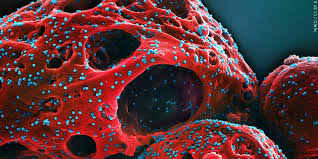
- BA.3.2 COVID variant detected across at least 25 U.S. states
- Variant carries numerous mutations with potential immune escape effects
- No evidence shows increased severity or hospitalizations from BA.3.2
- Health officials monitor spread as variant remains limited share of cases
A highly mutated COVID-19 variant known as BA.3.2, or "cicada," has been detected in at least 25 U.S. states as of February 2026, according to the Centers for Disease Control and Prevention. The variant carries dozens of mutations that may reduce immune recognition, though current evidence shows no increase in disease severity. Health officials are monitoring its spread as it gradually gains traction without triggering a major surge.
The variant has drawn attention for its unusually high number of mutations, particularly in the spike protein, the part of the virus that allows it to enter human cells.
Andrew Pekosz, a virologist at the Johns Hopkins Bloomberg School of Public Health, said the variant "has a lot of mutations that may cause it to look different to your immune system."
BA.3.2 was first identified in November 2024 in South Africa as a descendant of the BA.3 Omicron subvariant, which circulated briefly before fading from prominence.
Mutation Profile And Immune Response
The variant carries an estimated 70 to 75 mutations in its spike protein, a level that sets it apart from more recent circulating strains targeted by current vaccines.
Laboratory studies cited by the CDC indicate that BA.3.2 can evade certain antibodies generated by prior infection or vaccination, raising concerns about reduced protection against infection.
Despite this, experts said the mutations may also reduce how efficiently the virus binds to human cells, potentially limiting its overall impact.
Dana Mazo, an infectious diseases physician at NYU Langone Health, said some changes "may actually make the virus bind less well to our cells."
The World Health Organization classified BA.3.2 as a variant under monitoring in December 2025, reflecting uncertainty about its long-term behavior.
Spread Without Severe Impact
The variant has been identified in at least 23 countries and is contributing to a significant share of cases in parts of Europe, including Denmark, Germany and the Netherlands.
In the United States, BA.3.2 has appeared in clinical samples, international travelers and wastewater surveillance systems, though it remains a relatively small share of total infections.
Adolfo García-Sastre, director of the Global Health and Emerging Pathogens Institute at Mount Sinai, said there is no evidence the variant causes more severe illness.
"There's no evidence that BA.3.2 is causing more severe disease or hospitalizations," García-Sastre said.
Andrew Pekosz added that while the variant appears concerning on a genetic level, its real-world impact has so far been limited.
"It looks scary on paper, but it hasn't really made a big impact in terms of disease in most places yet," he said.
Symptoms And Vaccine Protection
Symptoms linked to BA.3.2 are consistent with those seen in other recent variants, including cough, fever, fatigue, congestion and gastrointestinal issues.
Current COVID-19 vaccines, which target earlier Omicron lineages, may be less effective at preventing infection from BA.3.2, though they are still expected to protect against severe illness.
Health experts said antiviral treatments remain effective, and some level of immune cross-protection is likely to persist even with the variant's mutations.
Public health officials continue to monitor BA.3.2 as surveillance levels have declined compared with earlier phases of the pandemic, leaving gaps in understanding its full spread.
The variant's trajectory remains uncertain, with experts noting it has not yet demonstrated a sustained advantage over other circulating strains.


