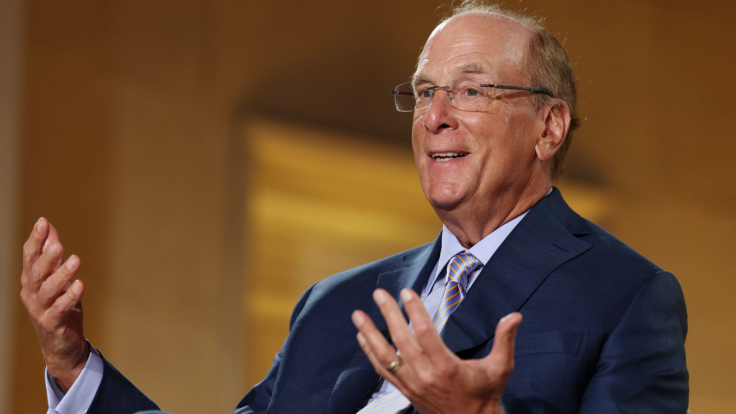
- Larry Fink warns prolonged high oil prices could trigger global recession
- BlackRock CEO outlines two scenarios tied to Iran conflict outcomes
- Oil above $100–$150 seen as risk to global economic stability
- Lower prices possible if Iran reintegrates and boosts oil supply
Larry Fink, chairman and chief executive of BlackRock, the world's largest asset manager with more than 14 trillion dollars in assets, has warned that the world faces two extreme outcomes from the current conflict between the United States, Israel and Iran, with a global recession possible if oil prices remain high.
In a BBC podcast interview with business editor Simon Jack, Fink said there would be no middle ground. "To me, all people need to know that there will not be a middle ground that will happen as a result. It is either going to be two extremes or not," he said.
He added that there was still a long way to go before the long-term impacts of the war could be identified.
On the brighter side, Fink said a solution that allows Iran to reconnect with the international community would saturate world markets with more oil production. That could push prices down sharply to about 40 dollars per barrel, ushering in a period of plenty and a prosperous economy.
The darker side is far more disturbing. If the war ceases without eliminating Iran as a regional risk, particularly to trade routes like the Strait of Hormuz and stability in the Gulf Cooperation Council region, energy markets could face unpredictable shocks.
Fink said that even if the war ends, Iran would continue to be a threat. "We could see years of oil above 100 dollars up to 150 dollars, which has greatly impacted the economy," he said.
When asked directly what would happen if oil remained at 150 dollars a barrel, his answer was simple. "We will see a global recession," he said.
US 15-Point Proposal Rejected by Iran
Reports of a 15-point proposal by the United States to secure a ceasefire with Iran caused oil prices to decline by about 4 percent. But Fink's analysis underscores how energy costs spread into inflation, consumer spending, business investment and overall economic stability.
Beyond oil price inflation, Fink discussed structural changes in the industry and for households in the long run, which could strain policy choices made by central banks. He observed that globalization is not being abandoned but is being restructured, with trading systems shifting toward more balance between economies.
In another part of the discussion, Fink suggested a cultural change in how people in the era of artificial intelligence should learn and focus on their careers. He felt the United States had placed too much emphasis on college education and white-collar jobs in finance while underemphasizing skilled trades.
His warning comes as the global economy faces a difficult period of geopolitical tensions, policy uncertainty from the current U.S. administration and lingering inflationary pressures. Although the United States enjoys relative energy independence, much of the world would feel the impact of sustained oil prices above 100 dollars. Transportation and manufacturing costs would rise, consumer discretionary spending would fall, and global activity would slow in sectors ranging from aviation to plastics. Emerging markets could face balance of payments difficulties, while advanced economies could see another wave of inflation, complicating monetary policy.
Stakes in Diplomatic Efforts
Fink did not predict an immediate recession, stressing the uncertainty of how the conflict might be resolved. But his framing of two extreme outcomes highlights the stakes of diplomatic efforts to stabilize the Middle East. Without a lasting agreement that addresses Iran's role in regional stability, years of high energy costs could derail post-pandemic recovery gains.
As investors and policymakers digest Fink's interview, the next stages of negotiations and energy markets remain in focus. Oil prices have swung on ceasefire news, but the BlackRock chief's message is a reminder that energy remains central to global economic health. With trillions under management and a reputation for risk assessment, his words carry weight.
Whether the world moves toward abundance with 40 dollar oil or faces recessionary pressures with prices near 150 dollars remains to be seen. But according to Fink, the margin between the two is narrow.


