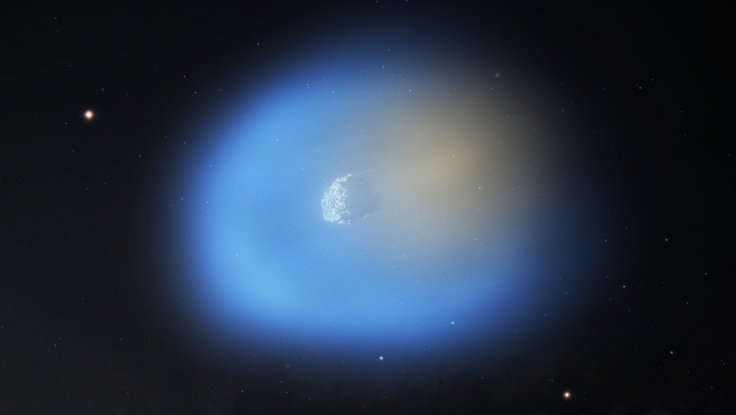
- Interstellar comet 3I/ATLAS shows unusually high methanol levels.
- ALMA observations reveal complex outgassing from nucleus and ice grains.
- Scientists say composition indicates formation in different stellar environment.
- Comet expected to pass Jupiter before exiting solar system permanently.
This week something of another star system is leaving our solar system. It just showed up, acted as though it had never been recorded in the books, and is currently bearing a chemical signature so bizarre that the scientists who examined it are having difficulty locating sufficient points of comparison.
Comet 3I/ATLAS, the only third object found to travel through our solar system neighborhood that was confirmed to be an interstellar object, was supposed to be a scientific curiosity. Rather it has turned out to be the most debated object in contemporary astronomy. And on five days it gives its nearest brush with Jupiter, and then disappears into the deep space indefinitely.
'A Fingerprint From Another Solar System'
The most recent accounting was released this week in the Astrophysical Journal and is an ALMA, or the Atacama Large Millimeter / submillimeter Array, which, being the most powerful radio telescope array on the planet, is positioned there high in the Chilean desert. What its dishes in the outgassing signature of the comet have retained researchers had had a disturbing time.
It is great to take a fingerprint of another solar system by looking at an object named 3I/ATLAS, according to the statements of Nathan Roth who is the main author of the study and a professor in American University. The information shows what it consists of, but is exploding with methanol in what we in our own solar system simply do not normally encounter in comets.
"Observing 3I/ATLAS is like taking a fingerprint from another solar system. The details reveal what it's made of, and it's bursting with methanol in a way we just don't usually see in comets in our own solar system." - Nathan Roth, Lead Author, ALMA Study / Professor, American
Methanol, a simple organic alcohol, is another of the most important precursor molecules in prebiotic chemistry, the sequence of reactions that is thought by scientists to ultimately form life. It is not strange that it exists in a comet. It is highly pre-eminent at these levels.
These measurements of approximately 70 and 120 methanol-to-hydrogen cyanide ratios by the team on two observation dates put Roth in 3I/ATLAS one of the most methanol-rich comets in history, including all the comets born in the galaxy of our own solar system.
The implications are high. That chemical imbalance implies that 3I/ATLAS must have been formed in a planetary system with much different physical conditions colder temperatures, a very different chemical inventory than that which made the Earth and its neighbours, according to a statement by the National Radio Astronomy Observatory.
The Coma Which Is Like a Nursery
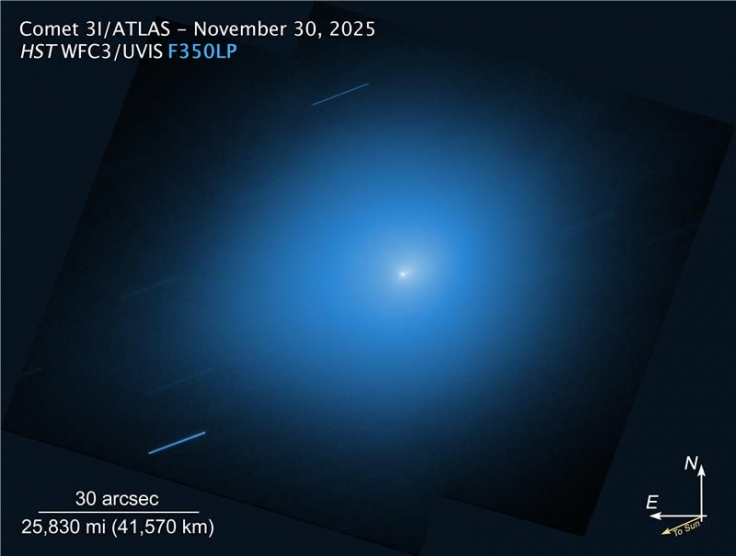
It is not so odd as bare figures. The high-resolution images of ALMA have shown that what has never been directly seen in an interstellar object before: methanol is not streaming merely due to the solid nucleus of the comet. It is also being expelled by little grains of ice which are suspended in the cloud of gas and dust around it, the coma, which encloses the object like a cocoon.
These microscopic grains in their turn act as miniature comets of their own. When 3I/ATLAS approached the Sun and the solar energy started to enter its outer layers, the grains in the outer layers heated up on their own, and started to outgas organic molecules in a second, separate outgassing pathway with the main nucleus. Such behavior has also been seen in a few comets in the solar system, but this is the first time the physics of this type of layered, simultaneous outgassing has been traced in an object in interstellar space.
What it means to a common person: the comet ejected the building blocks of life in various ways simultaneously, in various layers, as it traversed our solar system. The coma of 3I/ATLAS was dominated by carbon dioxide as early in the mission as the James Webb Space Telescope had anticipated, and even at the time it was an unusual composition. Methanol is already the newest addition to an already impressive chemical inventory to a visitor of another star system.
Harvard, The Interstellar Gardener, the Theory Nobody Will Bury
The general scientific community is cautious of the direction it takes this. The majority of the scientists believe that the data indicates a natural object that was created in a cold and chemically uncharacteristic stellar condition, and that the organic compounds it holds are the result of typical abiotic chemistry, no life was necessary, no design necessary.
"It's acting just like a piece of rock and ice would." - Leslie Looney, Professor of Astronomy & Director, Laboratory for Astronomical Imaging, University of Illinois Urbana-Champaign
The position most of his peers took was reflected by Leslie Looney, a professor of astronomy at the University of Illinois, who remarked: It is behaving like a piece of rock and ice would.
Avi Loeb, Director of the Galileo Project at Harvard and one of the most controversial scientists in the field of contemporary astrophysics, assumes a different stance. He does not assert that he knows it to be so, but demands that the question should be left open.
Loeb in a December 2025 essay, which attracted as much attention as criticism, called 3I/ATLAS a blind date with an interstellar visitor and claimed that its high methanol-to-hydrogen cyanide ratio, which was unusual, indicated that it was friendly. In February 2026 he also followed this up by announcing that the entire chemical composition of the comet, including water, carbon dioxide, carbon monoxide, methane, methanol, is a complete nutritional menu that life on Earth can eat, and inquired directly whether the object was carrying interstellar-hopping microbial life between stars.
The history of our planet is usually viewed as standing alone without the rest of the galaxy, and this is what Loeb told reporters. "But this may not be the case." It has gone significantly further by netizens and self-proclaimed UAP researchers.
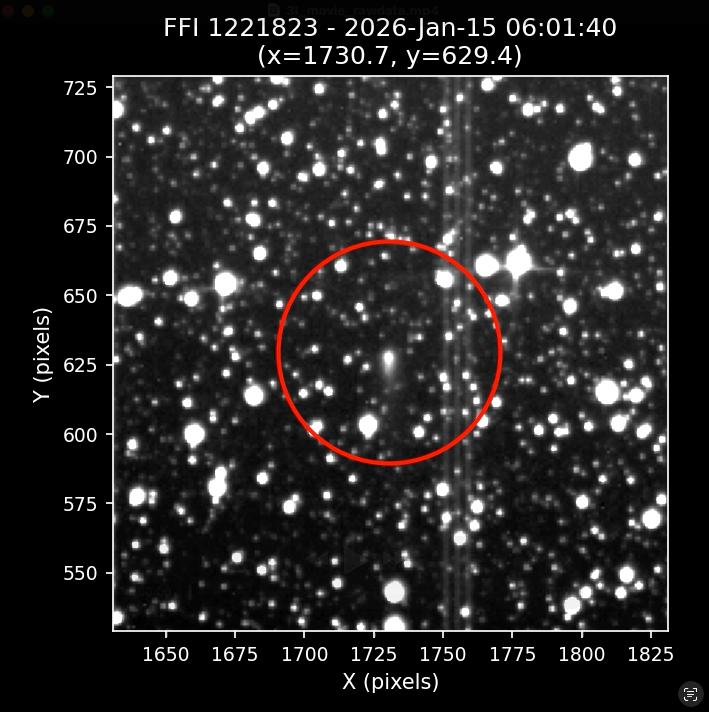
Going viral in the media, the prevailing fringe theory is that the course of 3I/ATLAS, flying between Venus, Mars and now Jupiter in that order, could not occur by chance, and that its chemical cargo is too well-structured to the needs of Earth life to be accidental. It is not going through one popular post said. "It's delivering." Scientists refer to this mode of pattern-matching at an astronomical level. There are tens of thousands of shares on the thread.
Five Days, Then It's Gone
On March 16, 3I/ATLAS will come within 0.358 astronomical units, or general 53.6 million kilometres of Jupiter, far enough that the immense tidal forces of the giant will possibly tear the nucleus in two and cause a new burst of outgassing such as astronomers have never recorded before. The Juno spacecraft operated by NASA, which is still in orbit around Jupiter, can be placed in a position to see the encounter, but can no longer be fueled to come close to Jupiter.
Then 3I/ATLAS will proceed on its hyperbolic journey out of the solar system. It will not return. By the end of 2026, it will be more distant than can be detected by all the telescopes that are known to exist on earth.
Also Read: NASA DART Impact Permanently Altered Asteroid Orbit, New Study Finds
Whatever chemistry it possessed, whatever history it gives of the star system that made it, whatever speculations it makes about the movement of the ingredients of life within the galaxy, the time is running out to read that history. Be it that 3I/ATLAS proves to be a natural message, a chemical accident, or something that science lacks a name for that the Jupiter flyby on March 16 will be the final natural examination mankind will ever receive.
Thereafter, the question of what it was carrying takes off with it to the dark.


