- Iran threatens halt Middle East oil exports if attacks continue.
- Trump warns U.S. will escalate strikes if oil flows blocked.
- War has disrupted tanker traffic through Strait of Hormuz.
- Oil prices fall after surge as markets expect possible resolution.
The Revolutionary Guards of Iran indicated on Tuesday that they would cut off all oil shipments in the Middle East in case the U.S and Israel attacks persist, and the United States President Donald Trump warned them that America would go far stronger with its attacks in case oil movement to the world was interfered with.
The increasing rhetoric is as the war involving the United States, Israel and Iran reaches its second week of fighting that has seen worries of the safety of energy and stability of the Middle East. Iranian Islamic Revolutionary Guards Corps (IRGC) declared it would suspend the export of products of the region as a consequence of the constant air and missile attacks on Iranian soil.
An IRGC spokesperson said that it would be us who will decide how long the war would last, as he rejected Trump comments regarding the war as being nonsense, according to the state media of Iran. This threat poses significant impacts on the global energy markets as the Strait of Hormuz -the narrow water passage connecting the Persian Gulf with the global shipping routes- processes about a fifth of the global oil.
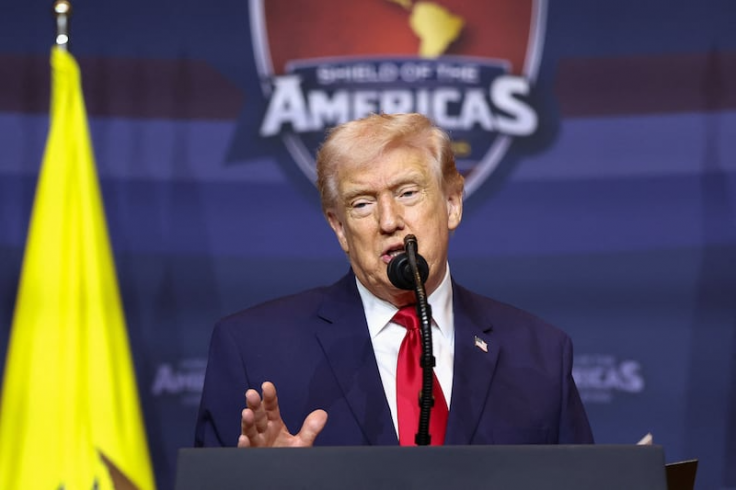
Trump threatened to retaliate should Iran make any attempt to prevent tanker traffic in the strategic passage. Trump declared his intentions on a news conference on Monday: "We will strike them so much that they and anyone who assists them can never recuperate that part of the world."
The president again issued the warning in a social media post. "Whatever Iran does to the flow of Oil in the Strait of Hormuz, they will be struck by the United States of America TWENTY times harder than they have been struck so far," Trump said.
Markets Droop as War Neutrality of Position
The oil markets reversed after an extreme spurt earlier this week despite the vivid trade in threats. Brent crude futures declined over 10% on Tuesday following its surge up to 29% the day before to the highs since 2022 according to Reuters data. International equity markets have also regained some ground following the first shock of the war that resulted in massive selling activities.

These price movements were made after Trump had made some remarks that the end of the conflict would be sooner than expected. The United States had caused an enormous harm to the Iranian armed forces, the president stated, and he forecasted that the war might be over long before the four-to-five week period that he had already set.
In an interview on Monday Trump said that he thought it was very complete, and that U.S. troops were very much ahead of the schedule it had at first planned. Sentiment that had saturated the market also boosted when news emerged that Trump had been talking about the possibility of diplomatic overtures with the Russian President Vladimir Putin to find a faster solution to the conflict.
Energy analysts explained that the fast drop in prices was due to the failure of the panic premium that had initially been imposed on the crude markets when panic about long-term supply disruptors first arose. Nevertheless, the traders are reserved as currently shipping via the Strait of Hormuz has been grossly curtailed since the dispute worsened. The upheaval has seen dozens of oil tankers stranded and some producers are forced to pump off since storage facilities are filled.
Diplomacy Stalls War Grows
The leadership of Iran indicated that it had minimal readiness to engage in any diplomatic negotiations with the US as long as the military campaign persists. Iranian Foreign Minister Abbas Aarabchi added that "there were little chances of negotiations with the United States resuming after recent airstrikes. The American team that was carrying out the negotiation claimed that we had made a big progress after three rounds of the negotiation".
"Nevertheless, they chose to come at us," Araqchi said in an interview with PBS. "I think there would be no more business with the Americans of talking to you further, though."
The war broke out following a series of U.S. and Israeli air and missile attacks launched against Iran in late February claiming targeting Iranian military and strategic facilities.
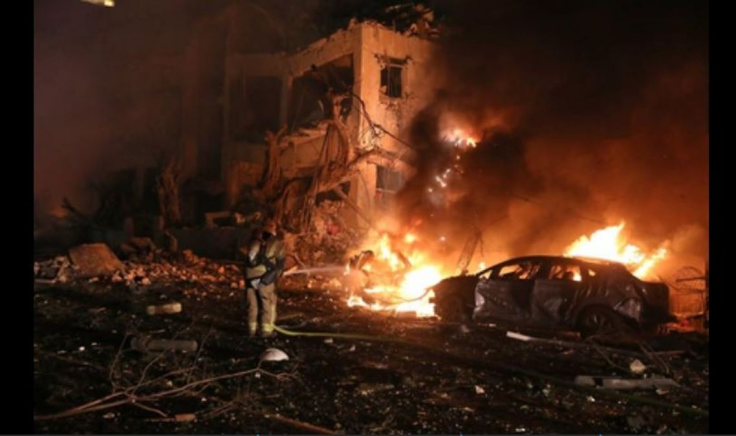
The ambassador of Iran to the United Nations cited that the number of Iranian civilians killed and injured since the start of the attacks amount to at least 1,332. Israel has claimed that it was aiming to topple the system of clerical rule in Iran, and U.S. leaders have affirmed that their main aim is to destroy the missile programme and nuclear programme of Iran.
Trump has however, indicated that the war would only conclude when the Iranian government would be in compliance with the demands of the U.S. Further highlighting this fact is the appointment of Mojtaba Khamenei, the new supreme leader of Iran this week following the death of his father Ayatollah Ali Khamenei in previous strikes, further making the prospects of quick resolution less likely. The shift in power was largely seen to have been a message that hard-line groups are still very much in control of the Tehran system of power.
Regional Struggle Gathers Force
In the Middle East, military operations have been ongoing in a number of fronts. Overnight attacks also caused havoc on an oil refinery, which led to a cloud of smoke all over Tehran, raising concerns on environmental damage. Director-General of the World Health Organisation, Tedros Ghebreyesus, cautioned that "fires in energy plants could pollute both air and water supply and food". In another part of the region, Turkey claimed that NATO air defence systems intercepted an Iranian fired ballistic missile that briefly flew into Turkish airspace, the second such incident since the war started.
Israel claimed its troops carried more attacks to the heart of Iran and hit targets in Beirut in its campaign against Hezbollah, the Iran-supported Hamas force in Lebanon. The escalating war has involved more nations as governments react to the increasing insecurity threats. Australia declared that it would send a military surveillance plane to the Middle East and offer missiles to the United Arab Emirates as a way of assisting in defending against the Iranian attacks.
There are also humanitarian effects of the war which are not on the battleground. Five female members of the Iranian women national soccer team received humanitarian visas to Australia after they sought asylum in Australia as they feared they would be persecuted upon their return to Iran.
The global energy markets and governments are still keeping an eye on the events since the conflict poses threats to the major shipping routes and to regional stability. Irrespective of the sudden volatility in the oil market and the stock markets, the conflict between Iran and the United States does not have much indication of a swift end as both nations continue with threatening words and military activities.


