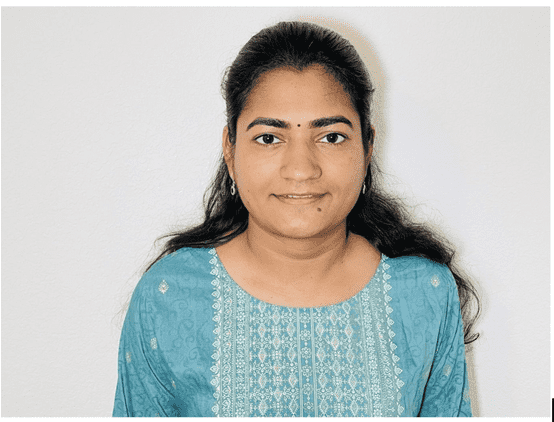
Artificial intelligence has become deeply dependent on the interplay between software and hardware. While advanced processors promise higher speeds and efficiency, the full benefits are only realized when software is carefully tuned to their unique architectures. Such interaction, in which software knowledge releases the hidden capabilities of hardware, is defining the performance of AI tasks at tasking conditions such as enterprise computing, robotics, and medical diagnostics. The work of Rajalakshmi Srinivasaraghavan can be seen at this intersection of the design and optimization of systems.
Rajalakshmi has worked extensively on aligning software frameworks with emerging hardware platforms. One of the focal points of her work was to add matrix multiply acceleration built-ins to AI systems. She made sure that key processes like AI inference could make use of hardware acceleration by allowing direct integration with the POWER10 Matrix Math Assist (MMA) engine. This translated to increased throughput and lowered response times, which led to applications that were more efficient in various AI applications. Her works show how a profound knowledge of both layers, software and hardware, can result in instant performance benefits in actual systems.
In her organization, the expert has taken specific decisions to concentrate on popular AI libraries, including OpenBLAS and ONNX Runtime. She spearheaded the work to optimize these libraries on POWER10, which resulted in a ripple impact on workloads which were of the most importance to customers. What was unique to her approach was prioritization: instead of having a broad spread of efforts, she focused on libraries that made the greatest impact and geared them first, making sure the benefits are experienced inside the areas where they were most needed.
This strategy not only sped up inferencing tasks but also enhanced scalability for enterprises adopting POWER-based systems. Alongside these technical advances, she also mentored new colleagues, sharing expertise that strengthened collective capabilities and enabled long-term progress in CPU optimization.
Her efforts go beyond incremental gains;they also reflect quantified performance results. What was most memorable in one of her attempts was her discovery of AI workflows of high priority and up to 50% improvement in performance at next-generation hardware. She identified the bottlenecks and aligned software tasks to hardware accelerators to show that software-hardware co-design could be used to scale system efficiency in both research models and production platforms.
In a published paper, Modelling Matrix Engines for Portability and Performance, her scholarly involvements are further directed in the same direction, relating real-world contributions to scholarly understanding.As she herself added, "Having advanced hardware is only part of the equations, its full value is realized only when the software is tuned to use its strengths."
One of the major challenges she tackled early on was optimizing software without access to physical processors. Since POWER10 was not yet available, the specialist used simulators and predictive modelling to make decisions about the behaviour of the chips with challenging AI tasks. This meant that it was important that collaboration with hardware engineers was always done, and that it was tested against specifications that kept on changing. The optimized libraries were also available at the time of launching the hardware, and users were able to receive the benefits of performance immediately. Such foresight reflects not just engineering skill but also the long-view thinking essential in high-performance computing.
As AI continues to progress, one lesson becomes clear: the best results are achieved when hardware and software grow together, not in isolation. As the demands on AI systems expand and become more complex, designing them with this balance in mind will be key to building solutions that are both efficient and scalable. The work done on POWER10 highlights how this approach can open new possibilities, and it offers a glimpse into how future systems may evolve to serve fields ranging from business to science and even everyday technology.


