
- NASA revises Artemis plan, delaying first human Moon landing
- Artemis III to conduct technology tests in low Earth orbit
- Artemis IV now planned for first crewed Moon landing
- NASA aims for two lunar landings in 2028 under new plan
The NASA has declared that they have made a major change in their lunar exploration roadmap, which is the first human landing in the Artemis program would no longer be a part of the Artemis III mission, but rather of a follow-up mission, Artemis IV, which is set to occur in 2028. The modified plan will make Artemis III carry out a sequence of low-Earth orbit technological tests, aimed at testing spacecraft structures and operational protocols needed in future lunar landing.
The proposal is a significant change of the time of landing humans back to the Moon since the Apollo 17 expedition more than 50 years ago. According to NASA officers, the change is meant to minimize risks of the missions and to have the essential technologies fully tested before the astronauts can be allowed to make the landing on the lunar surface.
Technical Problems with Artemis Delays
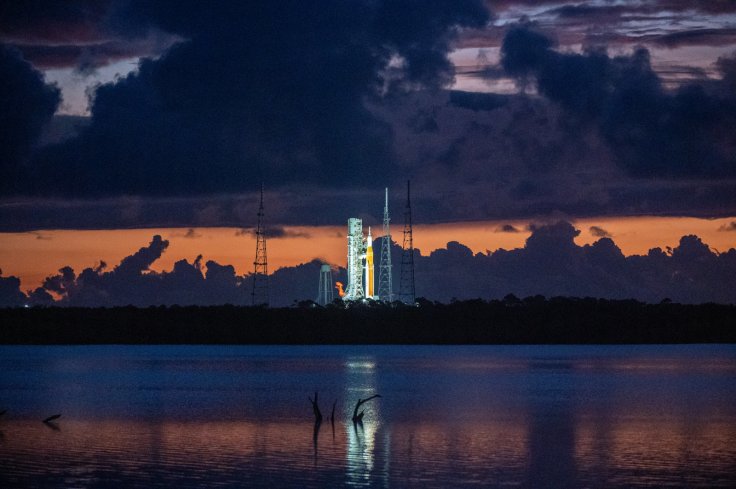
The transition is preceded by continuous technical problems of the Artemis program, including the recent problems of the upcoming Artemis II mission. Engineers at the Kennedy Space Center had been faced with a leak of liquid hydrogen during a wet dress rehearsal test in early this year. Further issues were encountered when there was a second rehearsal by the upper-stage propulsion system of the rocket.
Such failures have postponed the mission schedule and the earliest launch is now likely to take place towards April 1. The time lag between the missions of the Artemis has also complicated development. Multiple years have passed between launches, which means that engineers have fewer chances to test systems during flights and promptly fix the problems.
Reduction in work force has been another problem that NASA has been experiencing. In 2025, the agency lost in excess of 4,000 workers, approximately a fifth of its work force, which put a further pressure on both the engineering and operational teams in the program. In a recent public statement, NASA Administrator Jared Isaacman admitted the need to have a more updated approach including stating that the agency needs to transition to a speedier and more sustainable mission cadence.
Artemis III To Specialize in Technology Tests
Instead of visiting the Moon, Artemis III will now be able to take astronauts with the Orion spacecraft into Low Earth orbit. The mission will also experience decisive tests of the astronauts comprising life-support systems, the propulsion technologies and communication networks, which are needed in the future exploration of the moon.
"With Artemis, NASA will land the first woman and the first person of color on the Moon, using innovative technologies to explore more of the lunar surface than ever before," the agency said in an Artemis program statement.
A primary goal will be to dock the activities of Orion and commercially developed landers in the moon created by SpaceX and Blue Origin. These tests are deemed to be necessary as originally planned Artemis timeline involved astronauts using a direct route between Artemis II and moon landing without having to completely test out these technologies in space.
The astronauts can also test the next generation lunar space suits designed by Axiom Space, also referred to as the AxEMU suits which are used on the surface of the moon. An experiment of these systems in the space will likely lead to a successful lunar journey when one tries to attempt a landing.
New Increased Efforts of Lunar Missions
The updated roadmap of NASA will bring about a faster rate of exploration of the moon after the initial landing is made. According to the revised proposal, Artemis IV would take astronauts to the Moon in 2028, and may then make another lunar landing later that year.
With a successful launch, the agency is also optimistic to launch crewed missions to the moon the following year, and hopes to continue this in the years ahead, with even greater success, where several missions can be sent to the moon in the period of a few years.
"We are going to the Moon to learn how to live and work on another world for the benefit of humanity," NASA Administrator Bill Nelson said, adding that Artemis missions are designed to ensure astronauts can operate safely before attempting complex lunar landings.
The Artemis project is not only supposed to take human beings back to the Moon but also to settle there and come up with technologies that can be used in future missions to Mars.
Dubiousness Concerning Lunar Gateway
Another aspect which was scarcely covered by the recent announcement was the Lunar Gateway which is a small station that is expected to orbit the moon and serve as a support station in the Artemis missions. The initial designs saw astronauts tipping off at the Lunar Gateway before landing on the moon with Artemis IV as the first of them.
Canada is also particularly interested in the project, and it is sending one of the sophisticated robotic arms, the Canadarm3, to the station. Canadarm3 is Canada biggest financial input on the Artemis program and the development of the previous robots systems that had been utilized on the Space Shuttle and the International Space Station.
Since NASA keeps developing a long-term lunar plan, the officials have said that soon the specifics of the Lunar Gateway regarding future Artemis missions should be clarified in future program updates. To date, the updated schedule represents NASA working towards making safety and technical preparedness more important and keeping the long-term objective of continuing human exploration of the Moon.


